
Fruit trees
Kumquat
Fortunella
Synonyms: Kumquat, Fortunella, Fortunella Swing.
Kumquat – a genus of evergreen citrus trees and shrubs in the Rutaceae family. Native to the southern part of China. Cultivated in Southeast Asia, China, the Middle East, Japan, the southern part of Europe (especially on the island of Corfu), and also in the southern United States (especially common in Florida); it is grown to a limited extent in South Africa and Australia. Often grown as a houseplant. The earliest mention of kumquats appears in Chinese literature in 1178. It was introduced to Europe in 1646 by Robert Fortune, a collector of the London Horticultural Society.
It is an evergreen shrub or small tree 2.5-4.5 m high. Crown compact, small-leaved. Grows slowly. Under indoor conditions the growth period begins in late April – early May and lasts 30-50 days depending on growing conditions. Unlike other citrus species, the kumquat has one growth period, while young plants have two. Annual increment 6-10 cm.
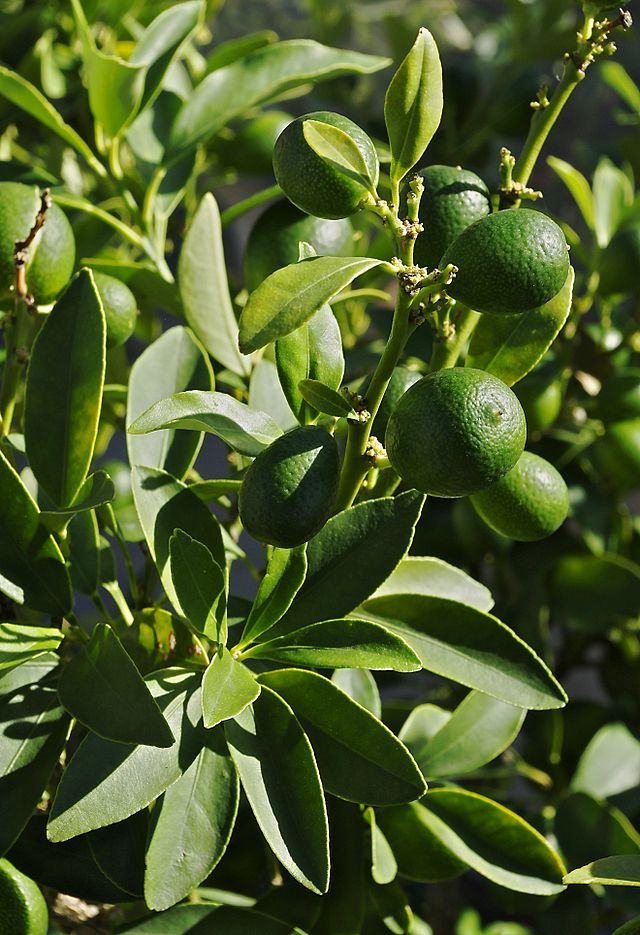
Shoots triangular, flattened, smooth, covered with short spines (less often without), light green in color, growing at an acute angle.
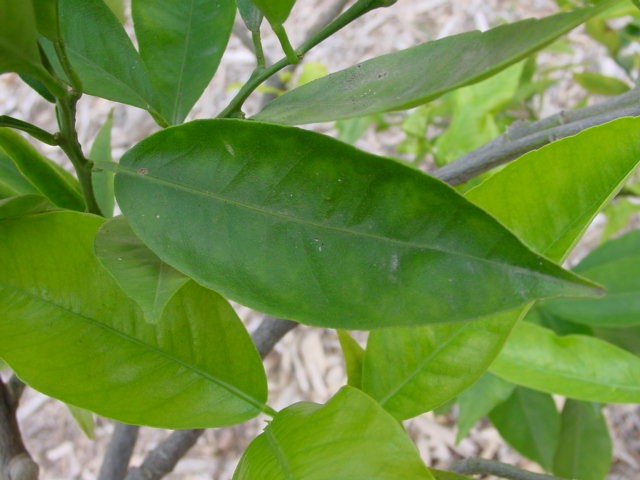
Leaves simple, lanceolate, dark green on the upper side, lighter beneath, glossy, with translucent glands, 4-6 cm long and 1.5-2 cm wide, finely toothed from the tip to the middle.
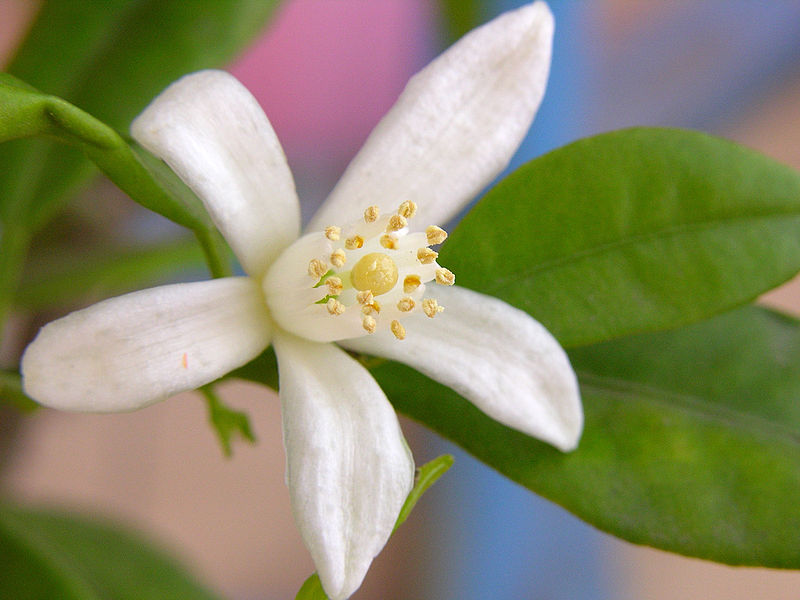
Flowers axillary, arranged 1-3 per axil, white, five-petaled, sweetly scented, appear in late spring. Flowers are bisexual, pollination is cross-pollination, self-pollination is also possible. Under indoor conditions it blooms in July-August for 5-7 days. Under good growing conditions, the tree may bloom again in 2-3 weeks.
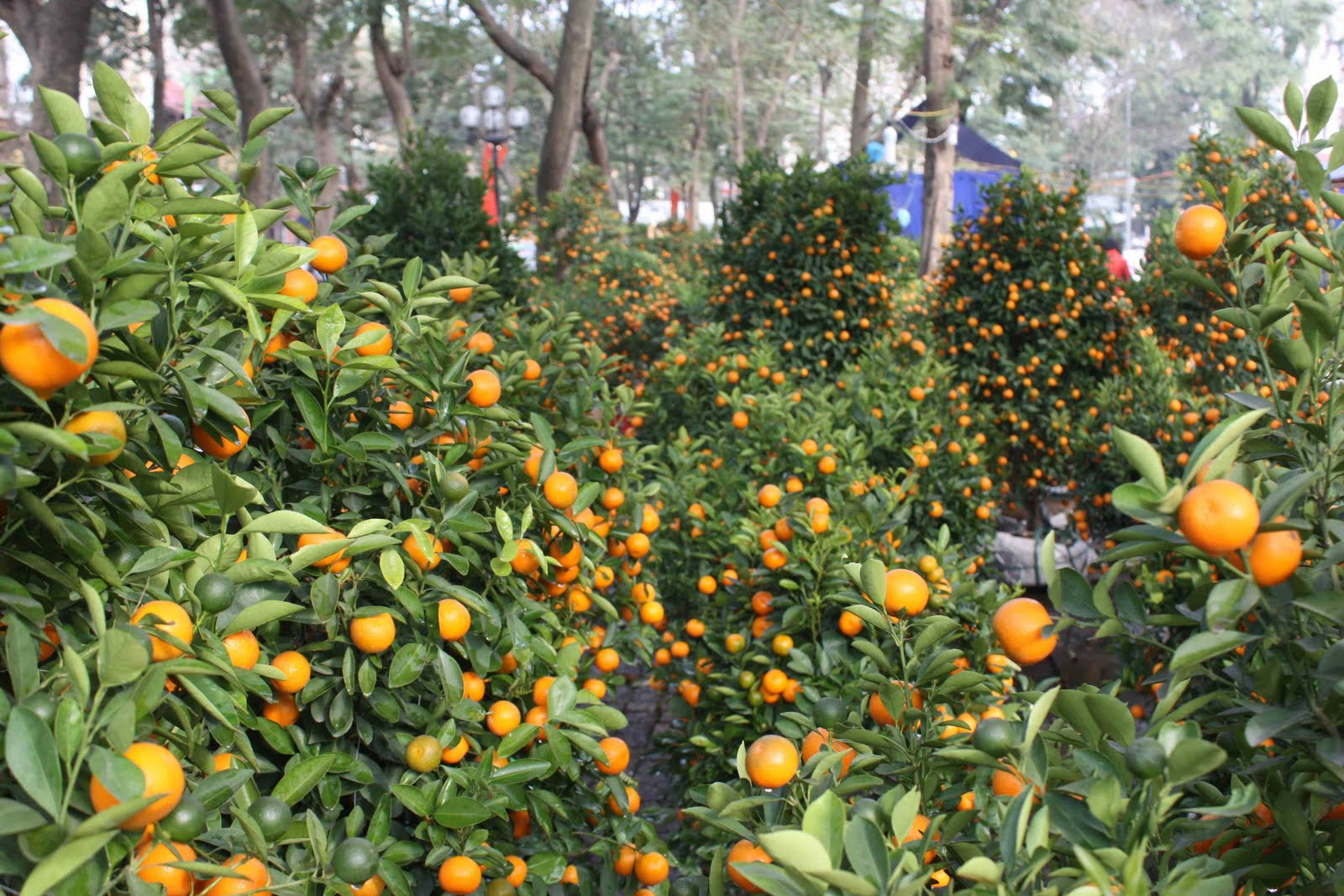
Fruits round or elongated-oval, 2-2.5 cm in diameter, golden-yellow to reddish-orange in color, resembling a small orange. The pulp is sweet-and-sour, divided into 3-6 segments, juicy; the rind is spicy-sweet. The fruit is entirely edible, including the peel. Small seeds occur inside the fruit, elongated-oval, white. Under indoor conditions fruits ripen in December-January.
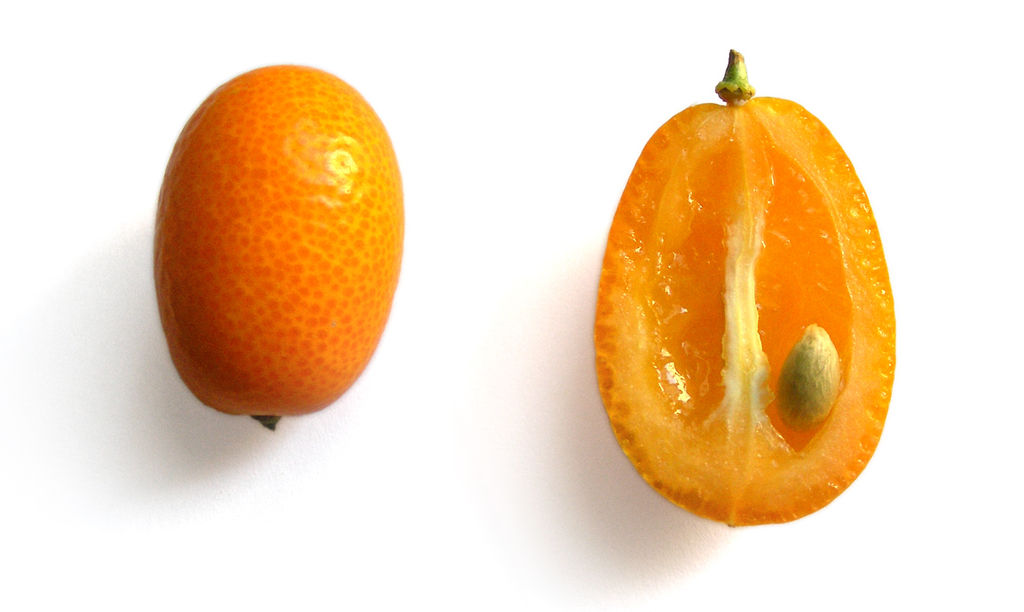
Species: divided into 6 species
- Hong Kong kumquat (Fortunella hindsii)
- Malayan kumquat (Fortunella polyandra)
- Marumi kumquat (Fortunella japonica)
- Meiwa kumquat (Fortunella crassifolia)
- Nagami kumquat (Fortunella margarita (Citrus margarita Lour.))
- Nordmann Nagami — a variety of Nagami kumquat
- Variegated kumquat — a variety of Nagami kumquat
- Fukushima kumquat (Fortunella obovata)
Hybrids:
- Ichangquat (Citrus ichangensis x Fortunella sp.) — Ichang lemon and kumquat
- Kalamondin (Citrus reticulata x Fortunella margarita) — mandarin and Nagami kumquat
- Kumandarin (Citrus reticulata x Fortunella sp.) — mandarin and kumquat
- Limequat (Citrus aurantiifolia x Fortunella sp.) — lime and kumquat
- Lemonquat (Citrus limon x Fortunella sp.) — lemon and kumquat
- Orangequat (Citrus unshiu x (F. japonica x F. margarita)) — satsuma mandarin and kumquat
- Citronquat ((C. sinensis x P. trifoliata) x Fortunella sp.) — citrange and kumquat
- Citrusquat (Poncirus trifoliata x Fortunella sp.) — trifoliate orange and kumquat
- Kucle ((C. deliciosa x C. salicifolia) x Fortunella margarita) — clementine and Nagami kumquat
- Procimequat ((C. aurantiifolia x Fortunella sp.) x Fortunella hindsii) — limequat and Hong Kong kumquat
Hardiness zone: zone 9a (−15-10 °C)
Light: in summer requires diffused light. In winter it is preferable to provide as much natural light as possible and, if possible, allow direct sunlight by placing the plant on a south-facing window. Artificial supplemental lighting can also be used in winter. To form an even crown, the plant should be rotated on its axis. The plant does not like abrupt rearrangements, so when repotting, mark the "front" side of the plant.
Temperature: the plant prefers a hot summer (+28+30°C) and a cool winter (+15+18°C). In summer it is preferable to move the plant outdoors and keep it in light shade. To prevent overheating, the pot can be placed in a box with moist peat or moss, sawdust or sand; it can also be partially buried in the ground and shaded from the sun with insulating material. Avoid excessive cooling at night. The topsoil can be mulched with manure, peat or grass. During bud formation the optimal soil and air temperature is +15+18°C.
Air humidity: prefers humid air. In winter, with insufficient humidity it may drop leaves or be attacked by pests. Regular spraying of the crown with standing water at room temperature is recommended.
Watering: in spring usually water every other day, in summer – daily. In winter water moderately and infrequently, 1-2 times a week. Use standing water at room temperature for watering, as cold water may cause leaves to yellow and drop.
Fertilization: timing and amounts depend on the plant's age, soil fertility, container size, plant condition, time of year and other factors. The smaller the pot and the larger the plant, the more often and the more it should be fertilized. From March to November the plant is fertilized 2-3 times a month, and during the rest of the year – no more than once a month. For fertilization use an aqueous solution of mineral fertilizers at the rate: 1-2 g potassium chloride or potassium salt, 2-3 g ammonium nitrate, 4-6 g superphosphate dissolved in 1 l of water. A solution of wood ash can also be used. In spring and summer it is recommended to alternate mineral (non-chloride) feedings with applications of manure slurry (cow manure and water in a ratio of 1:10).
Diseases and pests: mealybug, spider mite, scale insect. Immune to citrus canker, susceptible to scab, leaf spot, anthracnose, stem rot, melanosis, and gummosis.
Planting: repotting is recommended no more often than once every 2-3 years, at the end of February and before the beginning of March (before shoot growth begins). Use the "transplant with a soil ball" method from one container to another, completely renewing the drainage system. As drainage you can put shard pieces of pots with the convex side up at the bottom of the pot and cover them with coarse sand in a 3-4 cm layer. The transplanted tree should be watered abundantly and placed in a shaded location for 10-15 days. During this period daily spraying of the crown is recommended. Soil mix: turf soil, fertile and structured garden soil, leaf humus or well-rotted manure and medium-grain sand in a ratio of 2:1:1:0.5. For young plants a lighter soil is recommended; for fruiting plants a heavier mix (adjusted by decreasing or increasing the amount of turf or garden soil by 1.5-2 times).
Propagation: propagated by seeds, cuttings, grafting, layering.
With seed propagation varietal characteristics are not preserved, and fruiting is late (after 10 years). The seed method is used to obtain rootstock for grafting and breeding. With seed propagation the first sprouts appear after 30-40 (60) days. Seedlings should be pricked out at the 4-5 leaf stage. They react poorly to transplanting. 10-15 days before pricking out, it is necessary to trim the tap roots without removing them from the soil – without such trimming the roots grow long and curl at the bottom of the pot. For such trimming, insert a knife into the soil at a 45° angle at a distance of 8-10 cm from the plant and to a depth of 8-10 cm. After pricking out, plants are transplanted into separate pots.
Cuttings: kumquat can be cut any time of year, but best rooting is achieved in April. Before planting the cutting, it is recommended to treat it with a root stimulant. Use autumn shoots for cuttings, which should be cut into 5-8 cm cuttings with 2-3 buds. Make the lower perpendicular cut 0.5 cm below the bud, and the upper slanted cut 1 cm above the bud. Trim the leaf blade by one-third or two-thirds depending on its size. Treat the lower cuts with powdered charcoal to prevent rotting. Rooting is carried out under a glass jar. Place drainage (gravel or sand) at the bottom of the pot, cover it with a thin layer of moss or sphagnum, then a layer of fertile soil and a 3-4 cm layer of washed river sand. Plant 3-5 cuttings in a small pot, cover them with a jar, place in a warm spot in diffused light. At an optimal temperature (20-25°C) and with regular watering using water 2-3 degrees above room temperature, roots form on the cuttings in 15-20 days.
Uses: can be grown in bonsai style. Found in decorative front gardens, patios, greenhouses. In Ukraine it is grown as a houseplant. Fruits are eaten fresh and also used for making preserves, jams, marmalade, cocktails; suitable for brewing with green or black tea.