
Indoor plants
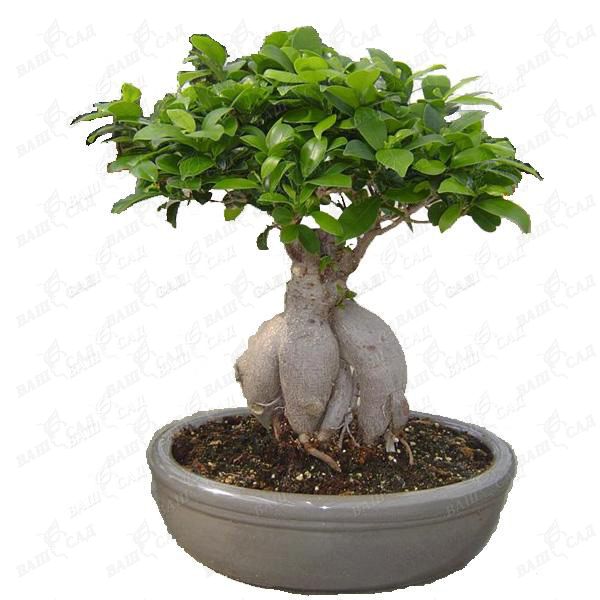
Ficus microcarpa Ginseng
Ficus microcarpa Ginseng
In nature Ficus microcarpa is a tropical tree with smooth light-gray bark and entire glossy leaves 5–6 cm long. In a humid, warm subtropical climate it can reach up to 12 meters in height and forms a large number of supporting roots.
In the wild Ficus microcarpa grows in China, India, Australia and other countries of tropical Asia. Its natural habitats are tropical forests, riverbanks, swamps and mangrove forests. The plant is thermophilic but can withstand temperatures close to 0 ° C.
Ficus microcarpa is widely cultivated as an ornamental plant, used in urban landscaping, and often planted in gardens and parks.
As a houseplant, specimens grown by a special technique in bonsai form are used. In this case the thickened root system of the ficus rises above the soil surface, taking on the most whimsical shapes.

Care. Ficus microcarpa is undemanding in care.
Temperature. The optimal temperature for the ficus is 25–30° C. The roots, as well as the above-ground part, need warmth, so it should not be placed on a windowsill or cold floor in winter.
Lighting. Ficus microcarpa prefers shade and partial shade and does not tolerate direct sunlight. In winter the plant should be kept away from heating radiators.
Misting. Regular misting of the leaves with soft water is recommended.
The soil should be loose and permeable, with a slightly acidic or neutral reaction. Composition: leaf mold, turf soil and sand in a 2:2:1 ratio, or leaf soil, turf soil, peat and sand mixed in equal parts. To increase permeability, small pebbles or crushed bricks can be added.
Water as the substrate dries out, avoiding both drying out of the root ball and overwatering. Water moderately in winter. Excess moisture causes root rot and dark spots on the leaves. Ficus microcarpa is sensitive to water quality, so water with settled (at least 12 hours) room-temperature water.
Fertilizers. In spring and summer Ficus microcarpa is fed every 2 weeks with universal fertilizers for ornamental foliage plants or sprayed with a weak solution of mineral fertilizers. If the plant is grown in bonsai style, specialized fertilizers are used.
Pruning is used to give the crown the desired shape, preventing the plant from forming too large a crown that would distract attention from the main decorative element — the thickened roots.
Ficus rarely blooms indoors. The flowers are inconspicuous.
Propagation by cuttings. Ficus cuttings root easily in soil or sand, but it is unlikely that a bonsai tree can be formed from a rooted cutting. It is better to buy an already formed plant at a garden center.
Repotting. Ficus microcarpa is repotted every two years to renew or partially replace the substrate. It is important to provide the plant with good drainage. The best time of year for repotting is spring.
Overwintering. Winter temperature should not be lower than 14–16 ° C. Reduce watering, mist at least once a week, and keep away from heating radiators. In excessively dry and cold air the ficus may lose leaves.
Pests and diseases. Overwatering causes root rot and dark spots on the leaves. Underwatering makes the plant look sick and wilted and leads to leaf loss. Leaf drop can also be caused by watering with cold water or sudden temperature fluctuations.
Pests: spider mite, scale insects
Uses. Ficus microcarpa is used in traditional medicine in India, Malaysia, China and Japan. In Japan the bark, aerial roots and dried leaves are used for pain and fever; in China the plant has been traditionally used against influenza, malaria, bronchitis and rheumatism. The plant contains substances that exhibit antioxidant activity, antibacterial, antitumor and antidiabetic properties.
Buy a Ficus microcarpa Ginseng bonsai