
Fruit trees
Fig
Fícus cárica
Fig (lat. Fícus cárica) – a deciduous subtropical fig from the mulberry family. The fig is believed to originate from the mountainous region of ancient Caria – the southwestern coast of Asia Minor (now part of Turkey). The fig tree is presumed to be the oldest cultivated plant.
Synonyms: Fig, Fig tree, Common fig tree, Smokva, Wine berry, Carian fig, Smyrna berry.
Description: The fig is a deciduous tree of medium height (up to 8 m) with smooth light-gray bark and a thick white milky sap. Young branches are densely pubescent. The plant is dioecious.
Distribution area: Uzbekistan, Tajikistan, Crimea, Georgia, Armenia, Azerbaijan, Turkey, Krasnodar Krai.
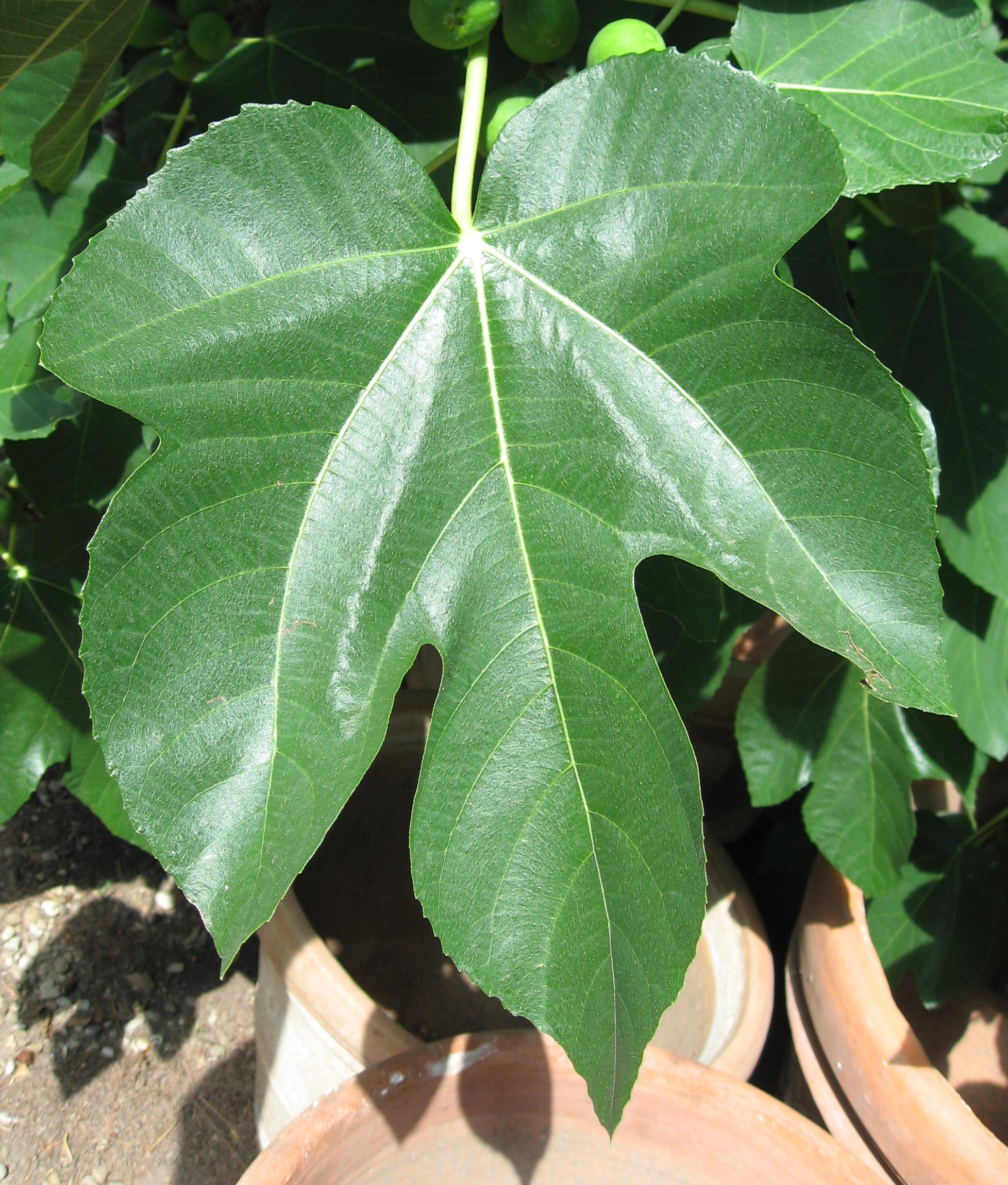
Leaves: alternate, large, simple, petiolate, 3-5-7 palmately-lobed or divided, up to 20 cm long, stipules fall off. Lower leaves entire or slightly emarginate, cordate. Upper surface green and rough, underside gray and finely hairy. Generative shoots – caprifigs and figs – develop in the leaf axils.
Flowering: flowers are small, hidden in the syconia – caprifigs and figs. Caprifigs contain short three- or four-petaled staminate flowers that produce pollen; figs contain long pistillate flowers with five underdeveloped petals.
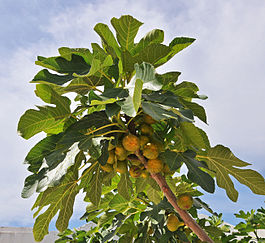
Fruits: In fertilized female flowers edible fruits develop – pear-shaped nuts, inside which are seeds. The average fruit weight is 30–50 g. The fruit skin is thin, covered with fine hairs, and yellow-green or black-blue in color. Fruits have a cloying, slightly sweet taste. At the apex of the fruit there is an ostiole with small scales. In caprifigs syconia develop – inedible structures that remain hard and fall off. Fruits ripen in August–October.
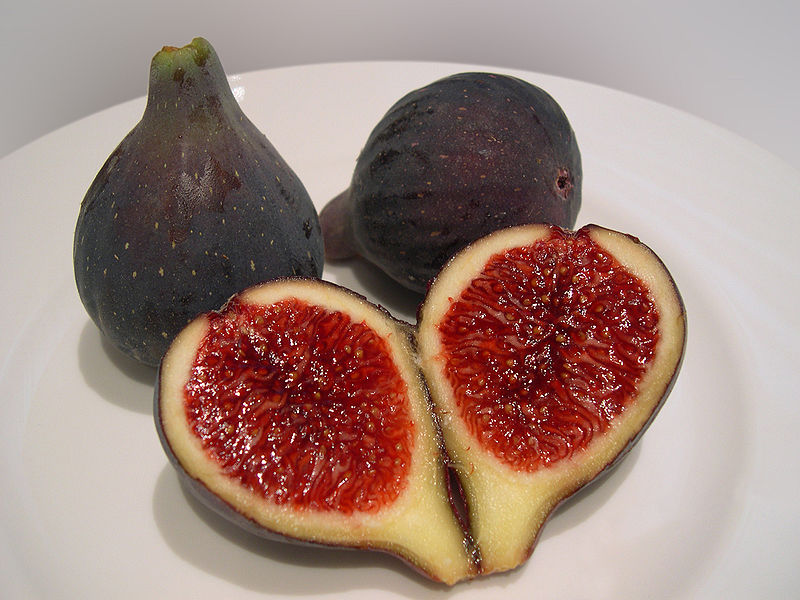
Chemical composition of the fruits. Fig fruits contain: proteins, fats, carbohydrates, organic acids, fiber, sugar (glucose, fructose), tannins. Vitamins: A (beta-carotene), B1, B2, niacin, folic acid, C. Macro elements: potassium, calcium, magnesium, sodium, phosphorus. Microelements: copper, iron. Caloric content: 49 kcal per 100 g of fig.

Conditions: The tree is heat-loving. It is undemanding to soil – can grow on poor soils and among rocky screes. Prefers sites with good access to water. Indoors it requires abundant watering. Begins to bear fruit in 2–3 years.
Varieties: Dalmatica, Brunswick, Nut, Gray Early, Kadota, Abkhazian Purple, Blanche, Chapla.
Planting and care: not demanding in care. Grows quickly – in some varieties summer growth can reach 1.5 m. Therefore young shoots should be pinched to shape the crown. Can be grown outdoors (some varieties tolerate frosts down to -20 degrees Celsius) as well as in pots. When grown indoors a cold winter rest is necessary (0 degrees Celsius). For outdoor cultivation in Ukraine, winter shelter is required. Belongs to climatic zone 7.
Propagation: propagated mainly by cuttings, less often by seeds and layering.
Diseases and pests: when grown outdoors it is practically not affected by diseases and pests.
Uses: fruits are used fresh and dried, and also for canning.