
Indoor plants
Japanese spindle
Euonymus japonica Thunb.
Synonyms: Masakia japonica (Thunb.) Nakai, Euonymus japonicus
Japanese spindle – a species of evergreen woody plants of the genus Euonymus (Euonymus) in the family Celastraceae. The only Euonymus species that can be grown indoors and in the garden. Naturally occurs in Japan, China, and Korea. In cultivation since 1804. Mesophyte, mesotrophic.
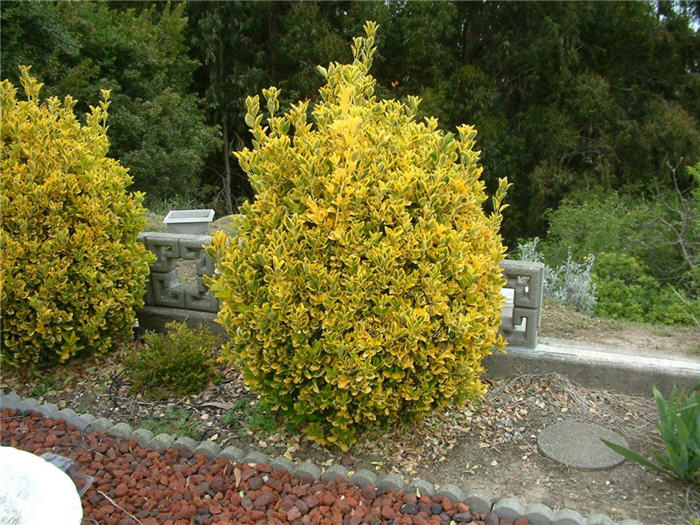
Еuonymus japonica aureomarginata.
It is an evergreen small upright tree or shrub. Crown rounded, dense, and richly branched. Branches brownish, thick. Shoots green, glabrous. In the wild it can reach 2–8 m in height. In suitable conditions it grows quickly, 15–20 cm per year.
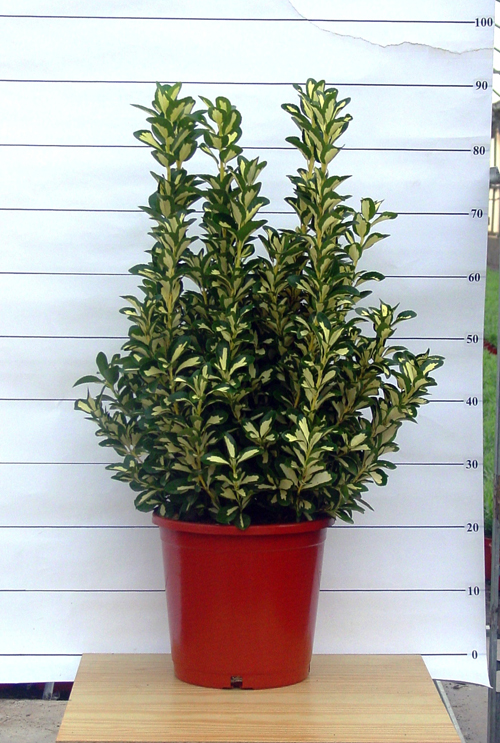
Euonymus japonica "M. Picta Gold Queen"
Leaves simple, opposite, on petioles 0.5–2 cm long. Leaf blade 3–7 cm long, 2–5 cm wide, elliptic or obovate, less often oblong-elliptic, shortly acuminate, with a cuneate base, with an obtuse, rounded or truncate apex, bluntly and finely serrate, glabrous, leathery, glossy, densely dark green.
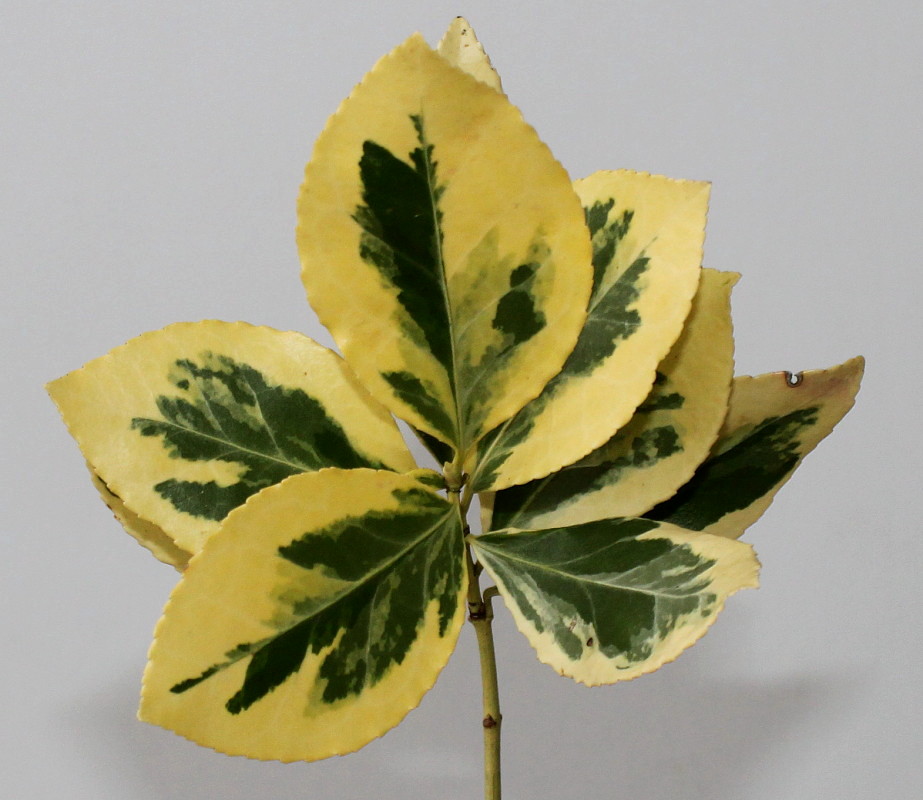
Еuonymus japonica aureomarginata.
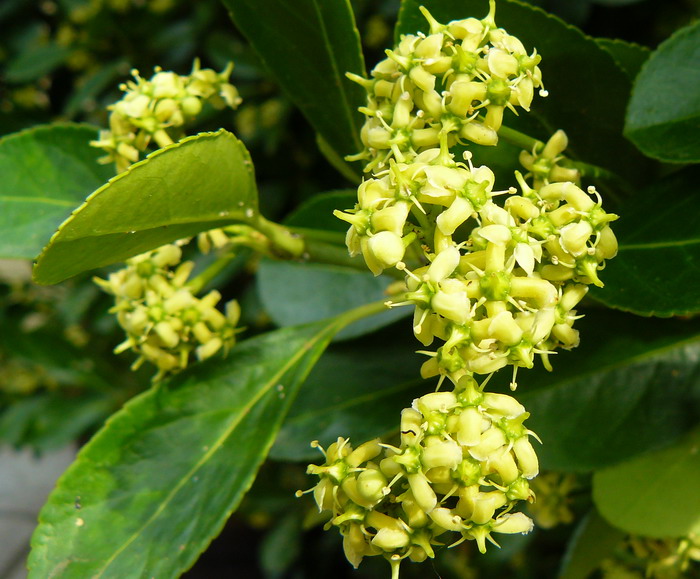
Flowers small, 0.8 cm in diameter, greenish-white, grouped in 5–15 (up to 40) in forked many-branched 3–5 times partial umbels on slender common peduncles up to 5 cm long. Perianth actinomorphic. Number of petals 4. Blooms in June.
Fruits – numerous small dry capsules, 0.8 cm in diameter, broadly rounded, not lobed, greenish-red, becoming delicate pink at full maturity. Fruits from September to mid-autumn. Seeds white, ovoid, 0.5–0.8 cm long, covered by an orange aril.
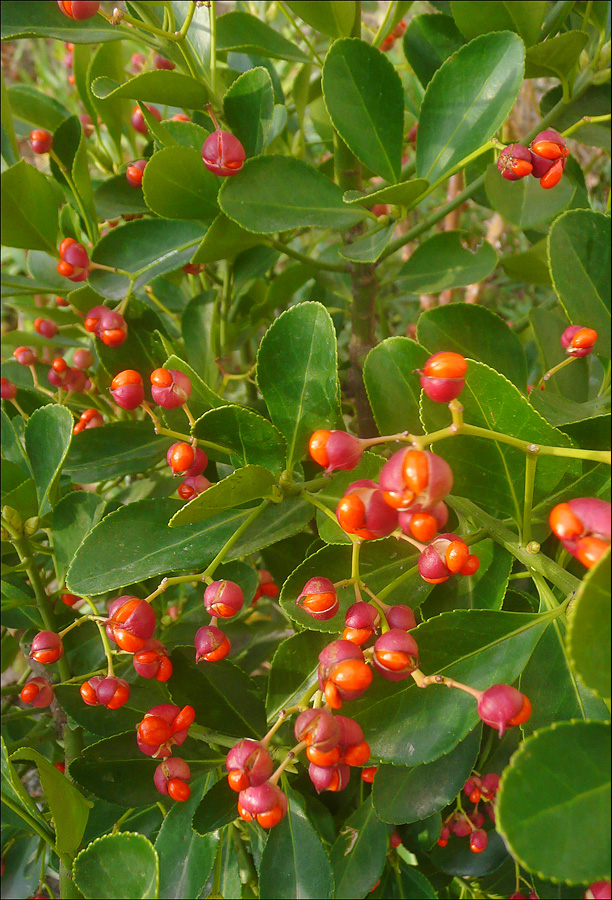
The plant is poisonous to humans and all animals.
Varieties: 'Albomarginatus', 'Bravo', 'Chollipo', 'Green Spire', 'Kathy', 'Latifolius Albomarginatus', 'Ovatus Aureus', 'President Gauthier', 'Еlegantissimus aureus', 'M. Picta Gold Queen', 'Аureomarginata'.
Hardiness zone: 6b–9 (-18°C). In most parts of Ukraine it may suffer frost damage but recovers quickly.
Location: tolerant of urban conditions. Grows well on neutral and alkaline soils; lime should be added to acidic soils. Prefers light partial shade. Variegated forms can tolerate direct sunlight for a short time, but midday sun is undesirable.
Soil: not demanding regarding soil composition. Optimal soil mix – leaf mold, turf, peat and sand in ratio 1:2:1:1. Regular garden soil can also be used, consisting of turf soil, greenhouse soil and sand in ratio 3:2:1.
Care: if the Japanese spindle produces two growth flushes it means the conditions are comfortable. When small scaled buds form at the shoot tip, the growth period ends. When the buds open forming new leaves – the next growth flush begins. At the start of the growth period apply nitrogen fertilizers, in the middle – complex fertilizers, and at the end – phosphorus-potassium fertilizers. No feeding during dormancy.
Pruning: requires frequent formative pruning, which is carried out in summer. To shape an attractive crown, the longest shoots are shortened. Older plants can be rejuvenated by cutting them back almost completely.
Temperature: moderate or cool, poorly tolerates heat. Winter minimum for indoor Euonymus 10–12°C. In heated rooms in winter, as well as with sudden temperature changes, it may respond by dropping leaves. In summer place outdoors in partial shade. Optimal summer temperature 23°C.
Light: bright diffused light with a small amount of direct sun. Suitable for west- and east-facing windows. On a south-facing window shade only during the hottest hours. Variegated Euonymus acclimates to sun and may not require shading even on a south window.
Watering: plentiful from spring to autumn. Soil should remain slightly moist during the growth period, avoiding drying out. Moderate watering in winter.
Humidity: regular misting; occasionally a warm shower can be given. If kept in a heated room during winter, place the pot on a tray with water.
Repotting: repot annually in spring, as the root system expands quickly. Euonymus is grown in pots and tubs. Plant only into moist soil; bottom heating of the pot is useful during establishment. Part of the roots may be pruned during repotting.
Propagation: garden forms are propagated in spring by division or cuttings. Cuttings are taken in June–July, 5–6 cm long with one internode. Rooting substrate for cuttings – bottom layer of river sand, top layer composed of leaf mold, humus and turf soil with sand. The plant roots in about 1.5 months. Before planting, cuttings are recommended to be treated with Kornevin. For seed propagation, seeds need stratification at +2–3°C for 3–4 months. When 80% of the seeds split, they can be sown. For this, the seeds are freed from the coat and disinfected in a weak solution of potassium permanganate. For seed storage they should be stratified immediately after collection in coarse heated sand or in semi-decomposed constantly moist sphagnum peat.
Pests: Euonymus may shed leaves when pests appear. Attacked by aphids, spider mites, and scale insects.
Diseases: susceptible to fungal and infectious diseases. One of the most common is powdery mildew.
Companions: indoors it grows well with hibiscus, pittosporum, Fatsia and Schefflera. In summer it can be placed near flowering balcony plants.
Uses: in maritime Atlantic regions Japanese spindle is grown as a substitute for boxwood. Ornamental due to glossy dark green or variegated leaves and good tolerance of formative pruning. In Ukraine it is grown as a tub, balcony or house plant.