
Flowering shrubs
Sessile-leaved broom
Cytisus ssessilifolius L.
Synonyms: Tephrosia sessiliflora (Poir.) Hassl., Cracca brevipes (Benth.) Kuntze, Cytisus cajan L., Rhynchosia sessiliflora (Poir.) DC., Tephrosia brevipes Benth., Cytisus sessilifolius
Sessile-leaved broom (Cytisus sessilifolius L.) – a species of deciduous plants of the genus Cytisus (Cytisus) in the family Fabaceae (Fabaceae). The species was first described by Carl Linnaeus in "Species Plantarum" in 1753. N.N. Tzvelev (1987) and S.K. Cherepanov (1994) treated this species as Cytisus (some botanists consider this species as Cytisophyllum).
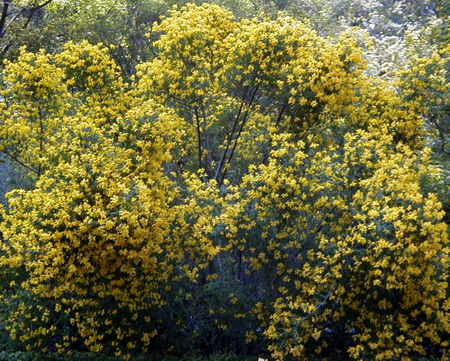
Photo A. Barra. Royal Botanic Garden of Madrid (Spain)
Occurs naturally in the Mediterranean regions of France, Italy, Spain, Moldova, Ukraine (Chernivtsi, Ivano-Frankivsk, Khmelnytskyi, Crimea, Lviv, Ternopil, Transcarpathia), North Africa. Most frequently found in the Alps of Upper Provence (France). Grows on the edges of broad-leaved or mixed forests, on open slopes. Associates with xerophilous oak, hornbeam, shrubs, and less often with pines. Ascends mountains to elevations up to 1200 m above sea level.
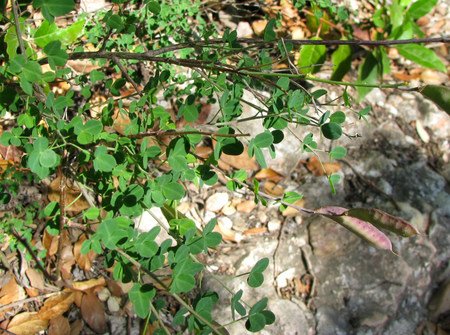
Photo V. Papchenkov. Spain, Catalonia, Barcelona, Montserrat monastery
It is an erect shrub 0.5-2 m tall with numerous branches. Shoots are ribbed, green or brown, densely covered with leaves. Young shoots are glabrous.
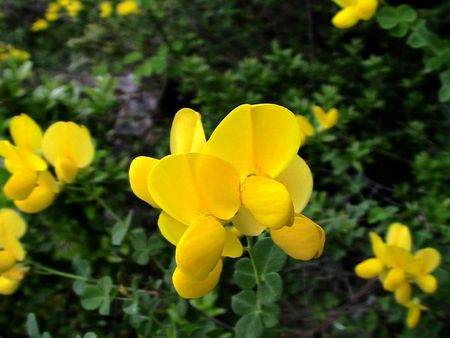
Photo Isidre Blanc. Camarasa (Spain)
Leaves trifoliate. Leaflets broadly elliptic or obovate in shape, with an acute apex, dark green, glabrous. Lower leaves shortly petiolulate, upper ones sessile. Petioles very short, 1-3 cm long, glabrous.
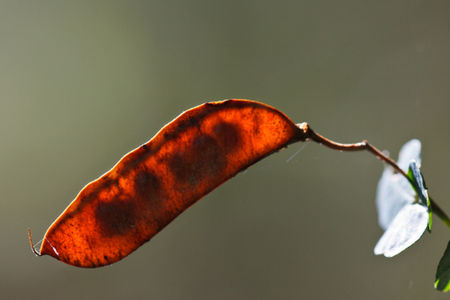
Photo Sarah Gregg.
Flowers terminal, simple loose racemes with 3-12 flowers, on short peduncles. Flowers bright yellow, up to 1.5 cm long, similar to sweet pea. Calyx short, bilabiate. Lips uneven, short, truncate above. Corolla ends in a short beak. Blooms abundantly in May-June, for about 30 days.
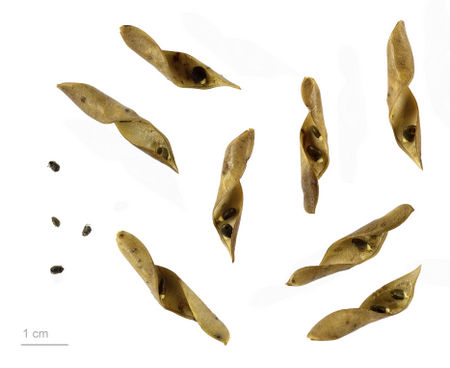
Photo Roger Culos.
Fruits – small pods 2.5-4 cm long, up to 0.8 cm wide and 0.6 cm thick, linear or slightly curved, brown, glabrous, with 1-6 seeds. They ripen in late August - early September. Seeds shiny, flat, pale yellow or black, 2.7 x 2.3 x 1 cm. Weight of 1000 seeds 5.7 g. Seed yield 15-17%. Begins flowering and fruiting at 4-5 years.
Hardiness zone: zone 6-8 (-23°C). Suffers frost damage above the snow cover. Requires winter protection.
Location: very sun-loving. The best place for planting is an open site with southern exposure, preferably sheltered from cold winds. Not recommended to plant near ponds with fish.
Pruning: after flowering it is recommended to cut back the faded shoots by half, without cutting into old wood.
Propagation: by seed, sown in spring after 2 months of stratification, and also by green cuttings in summer. Sowing rate 2 g per 1 m. Seed germination 25%. Summer cuttings root 100% in heated greenhouses/frames with soil heating and the use of growth stimulants.
Soil: drought-tolerant, does not tolerate prolonged water stagnation or overwatering. Does not like clay soil. Prefers fertile, slightly acidic soil. Optimal soil pH 6.5 - 7.5.
Planting: soil mix – one part sand and one part turf soil, peat-compost or humus; you can add a complete mineral fertilizer or Kemira-Universal (120 g per 1 m2). Does not like transplanting. Recommended spacing between plants 30-50 cm. Root collar at ground level. Drainage is mandatory (on heavy soils – layer 15-20 cm, on light soils – 10 cm). After planting mulch the root circle with soil or peat 3-5 cm thick.
Care: does not require watering. For better flowering it is recommended to fertilize the plant twice a year – first in spring, second before flowering. In spring apply urea (20-30 g per 10 l of water), in summer - 60 g granular superphosphate and 30 g potassium sulfate. To stimulate growth wood ash can be applied - 200 g per bush. Cultivate to a depth no deeper than 8-12 cm.
Diseases: Powdery mildew (treat dormant buds with copper sulfate (5%), in summer regular treatments alternately with Fundazol, copper-soap solution, colloidal sulfur (0.8%)), Black spot (treat dormant buds with iron or copper sulfate; in summer spray with Fundazol, Polycarbacin (0.2-0.4%), copper oxychloride (1%), Captan (0.5%), Bordeaux mixture (1%)).
Pests: broom moth (spray with chlorophos (0.2%)), broom geometrid (treat with organophosphate or bacterial insecticides).
Uses: a good honey plant. Used for creating low hedges, for decorating forest edges, rocky slopes. Can be used for soil stabilization.