
Fruit trees
Apple quince
Cydonia
Apple quince - a cultivar of domestic selection. Seeds were obtained from the Caucasian quince. In nature it is distributed from Central Asia to the southern regions of Europe. It is cultivated in North and South America, Europe, Australia and Oceania.
It is a tree-like shrub, 2-3 m in height, with a dense spherical crown. Branches are obliquely directed upwards. Bark thin, scaly, red-brown, dark gray or brown-black. Young branches are brownish-gray, shoots – gray-green.
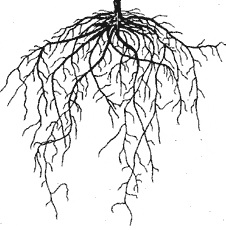
Root system superficial, powerful, well-branched.
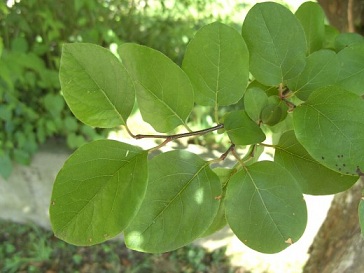
Leaves alternate, ovate or elliptical in shape, with a cuneate or cordate base, dark green in color.
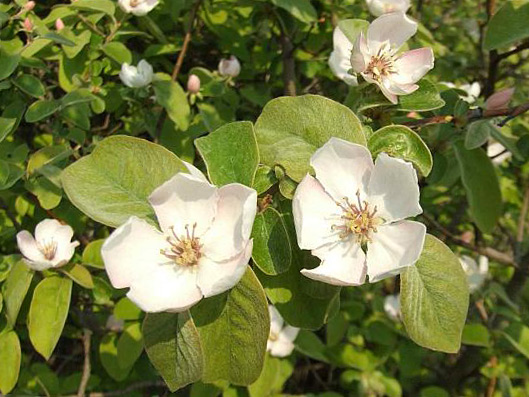
Blooms in mid-season, flowers white, of a beautiful regular shape with short pedicels, typical for quince. The cultivar is self-fertile.
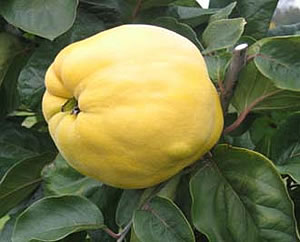
Fruits large, 200 g, some may reach 300-350 g. Fruit shape apple-like. Skin glossy, smooth, lemon-yellow, without pubescence. Flesh very juicy, white, low in astringency, very aromatic, with a slightly sour-sweet taste. Picking ripeness occurs at the end of October. Fruits are used for fresh consumption and preservation. Stored until March. Begins fruiting early - in the 3rd-4th year after planting. Yield regular, high (100-110 kg from a 15-17-year-old tree)
Winter hardiness very high. Resistant to scab.
Location: prefers sunny and sheltered-from-strong-winds sites. Grows well on loamy soils. Produces well in mixed and single-variety plantings.
Uses: fruits are used fresh, dried and preserved. The fruits contain more gelatin, therefore jams and compotes made from apple quince are thicker.
Planting: planting in autumn is preferable, but spring is also possible. The top layer of soil from the hole should be mixed with mineral fertilizer and bone meal. The hole is dug to a size so that the roots can easily fit in it. The plant is planted next to a support stake, which should fall slightly short of the lower branches of the seedling. Distance between trees – 3-6 m depending on the cultivar (trunk form).
Propagation: quince is propagated by seeds, hardwood cuttings, budding, layering, root suckers.
Diseases and pests: the most common diseases are scab and monilial blight. Pests: codling moth and oriental fruit moth
Applications: fruits are used fresh and for canning. Mucilage is used in the textile industry to increase the luster of fabrics. Widely used in folk medicine. Also used as a rootstock for grafting pears, and for hedges.