
Conifers
Monterey cypress
Cupressus macrocarpa Hartw. ex Gordon.
Synonyms: Callitropsis macrocarpa (Hartw. ex Gordon) D.P.Little, Cupressus lambertiana Carrière, кипарис макрокарпа, Cupressus lambertiana hort. ex Carrière, Cupressus macrocarpa Hartw. ex Gordon var. lambertiana (Carrière) Mast., Callitropsis macrocarpa (Hartw. ex Gordon), Hesperocyparis macrocarpa (Hartw. ex Gordon), Neocupressus macrocarpa (Hartw. ex Gordon), Cupressus macrocarpa Gordon, Neocupressus macrocarpa (Hartw.) de Laub., Monterey cypress, ciprés Monterrey., Cupressus Lambertiana, Cupressus Hartwegi, Cupressus guadolupensis S.Watcons, Cupressus torulosa Lindley, Cupressus Reinwardtii Beisnerr Nadelholzkunde, купрессус макрокарпа.
Monterey cypress (Cupressus macrocarpa Hartw. ex Gordon) – a species of evergreen coniferous trees of the genus Cupressus (Cupressus) in the family Cupressaceae. The species was discovered in 1838 by the English botanist Aylmer Bourke Lambert, who collected seeds and sent some of them undetermined to his homeland and others to the Horticultural Society. In 1849 the species was first described by George Gordon. The species was named in honor of the German botanist Karl Theodor Hartweg, who studied plants of America and brought representatives of the species in 1847 to the Royal Horticultural Society (RHS).
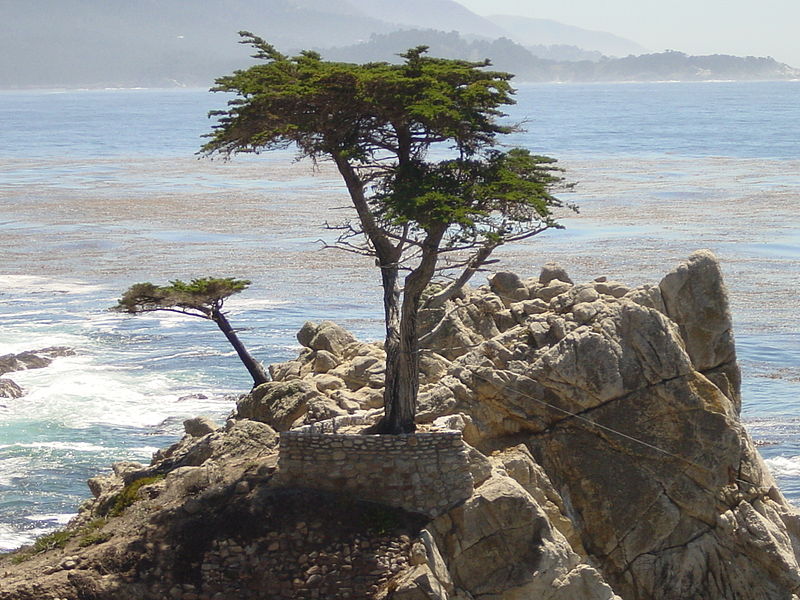
Native to the central coast of California, where it occurs from Cypress Point in Pebble Beach to Point Lobos near Carmel, California. Trees grow on the tops of two headlands, clinging to rocks, which gives them an unusual trunk form. Forms pure stands or occurs alongside Monterey pine in loamy or sandy soil over granite or in rock crevices. The species has spread beyond its natural range, especially along the coasts of California and in Oregon. In Europe it grows in the United Kingdom (including the Channel Islands and the Isle of Man), France, Ireland, Greece, Italy, Portugal and Sicily, New Zealand, and North Africa. It is grown experimentally in Kenya.
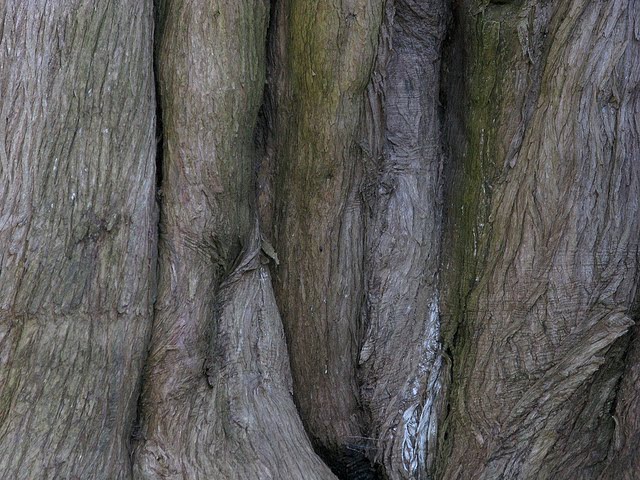
It is an evergreen coniferous tree reaching 20-25 m in height and 2.5 m in diameter in natural conditions. Fast-growing. In youth trees have a columnar crown; with age branches bend and form a flat-umbrella spreading crown, but a characteristic feature – the obliquely upward directed branches remain. Bark coarse, thick, reddish-brown, over time becoming light gray to almost white, peeling in narrow plates. Shoots grow at various angles, 1.5-2 mm in diameter, four-angled. Wood aromatic, yellow or brown. Root system strong. Lifespan 50-300 years.
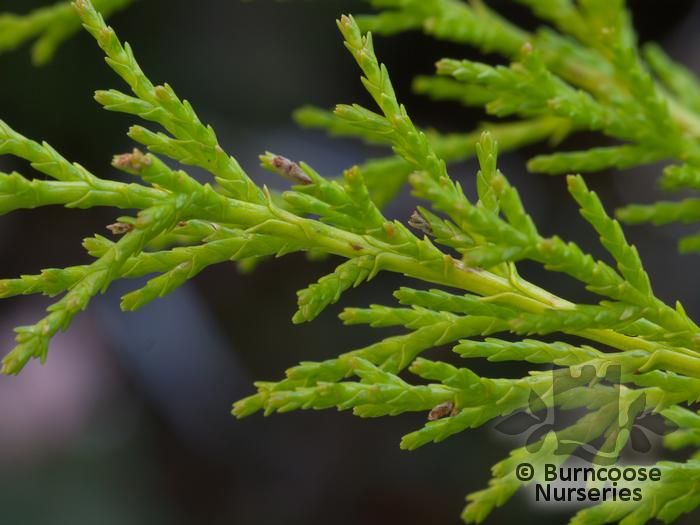
Foliage evergreen, scale-like, ovate-rhomboid in shape, tightly appressed to the shoots, green, when crushed emits a lemon scent, without glands or with faintly visible ones. On seedlings up to one year old there is needle-like foliage 4-8 mm long.
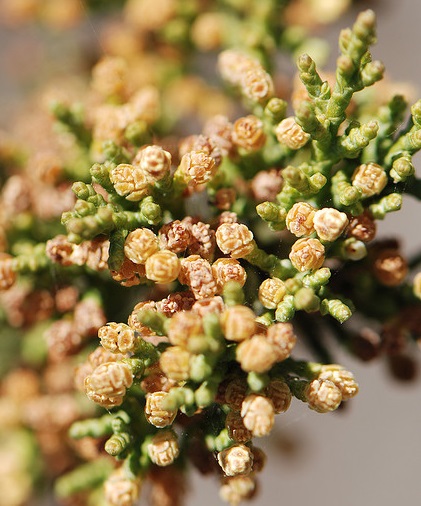
Pollen cones 4-6 mm long and 2.5-3 mm wide. Pollen sacs 6-10. Pollen is released in late autumn or early spring.
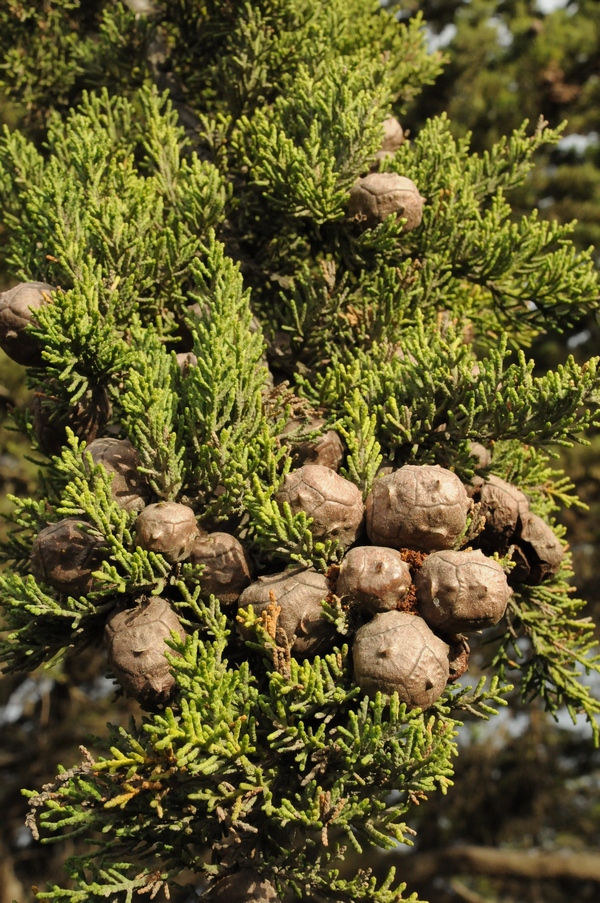
Cones oblong-globose, large, 2-4 cm in diameter, with 8-12 (14) multi-angled (four-sided) scales, slightly convex or flat, with a short point in the middle, at first green, later gray-brown, not dull. Seeds small, 5-6 mm in diameter, dark brown, wing narrow, resin glands small, located on both sides of the seeds. Seeds mature 20-24 months after pollination. Up to 140 seeds per cone.
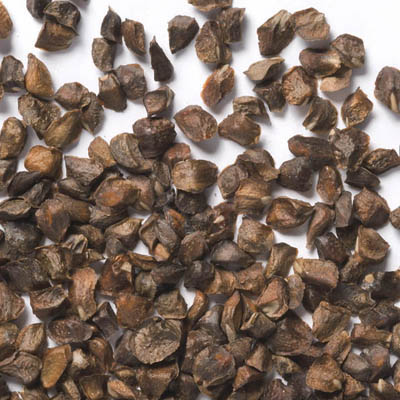
Chromosome number: 2 n = 22
Hybrids: with Cupressus nootkatensis D. Don – Cupressus × leylandii A.B. Jacks. & Dallim.
Forms:
- f. fastigiata Carr. - pyramidal
- L Lambertiana Mast. - Lambertiana (branches strong, directed upwards and slightly curved, in old age crown umbrella-shaped).
- f. pygmaea A. B. Jacks – dwarf (up to 10 cm in height and with variably shaped foliage). Used as a houseplant.
- f. Crippsii R. Smith - Crippsii juvenile form with awl-shaped foliage, spreading away from the shoots.
- f. flagellifortnis С г i р р s - weeping (thin, pendulous shoots).
- f. guadalupensis Mast - Guadalupan (thin shoots, glaucous foliage, globose cones and large-plated blood-red bark). Considered by some botanists as a separate species.
- f. lutea Webster - yellow (annual shoots, foliage and cones yellow and shiny).
- f. variegata Lеm. - variegated (young shoots white-variegated).
- f. farallonensis Mast - Farallon (blue foliage)
Cultivars: Goldcrest, Lutea, Aurea Saligna, Brunniana Aurea, Gold Rocket, Golden Pillar, Greenstead Magnificent, Lambertiana Aurea
Hardiness zone: 8 (-12°C)
Site: requires a mild, humid, maritime climate. Light-loving but shade-tolerant, sensitive to cold. Poor drought tolerance. Prefers to grow by the sea, not harmed by strong sea winds and salt spray.
Soil: prefers fresh, well-drained, relatively light loamy soil, but can grow on sandy soil. Tolerates presence of lime.
Planting: Soil mix: turf and leaf soil, peat and sand in the ratio 1:2:1:1. Root collar above ground. Needs drainage.
Care: in hot and dry summers to maintain decorative appearance it is recommended to water the plant 1-2 times a month at a rate of 1-2 buckets per plant.
Pruning: tolerates clipping and pruning well.
Diseases: canker Coryneum cardinale, young seedlings are susceptible to damping-off and root rot.
Pests: bark beetle Ernobius conicola, moth Laspeyresia cupressana and Henricus macrocarpara
Propagation: propagated by seeds and semi-ripe cuttings. Seeds appear at 6-7 years of age and retain viability for 4 years. For germination seeds require bare mineral soil and sunny places. Seedlings are sensitive to excess moisture and insufficient light.
Conservation status: listed in the IUCN Red List as Vulnerable.
Uses: used to create windbreaks and stabilize dunes on seashores. In landscape design used as solitary plantings and small groups in parks. Some forms are used as houseplants. A number of cultivars allow creating almost all bonsai styles.
Indoor plant:
Temperature: requires moderate temperatures – winter minimum -5°C, optimal for overwintering 8-10°C. From late May until late August it is preferable to keep outdoors in a shaded and draft-protected place.
Light: needs diffused light and shading from summer direct rays. In winter it is better to place in a bright location. In summer it can be put on a north-facing window, and in winter – on a south-facing one until bright spring. With insufficient sun the cypress elongates and loses crown shape; with excess sun the foliage yellows and drops.
Watering: from spring to autumn watering is abundant, in winter – moderate. Does not tolerate excess water or drying out of the soil. In the winter period watering depends on room temperature – at 8°C water once every 10 days, at 12-14°C – once every 5-7 days.
Feeding: from May to August you can feed with a liquid mineral fertilizer for indoor conifers. Feeding is recommended once a month.
Humidity: in spring and summer needs daily misting. In winter, if it is not possible to keep in a cool room, it is also necessary to mist with warm water in the morning and evening.
Repotting: repot annually in April-May. Does not tolerate transplanting well, so a full repot with replacement of soil is done only when necessary. Usually use lifting (re-potting with the rootball) with partial replacement of the top layer of soil.