
Deciduous shrubs
Black-fruited cotoneaster
Cotoneaster melanocarpus Fisch. ex Btytt
Synonyms: Cotoneaster laxiflorus J. Jacq. ex Lindl., Cotoneaster melanocarpus Lodd., G. Lodd. & W. Lodd., Cotoneaster melanocarpus var. laxiflorus (Jacq. ex Lindl.) C.K. Schneid., Cotoneaster niger (Wahlenb.) Fr., Mespilus cotoneaster beta nigra Wahlenb, Cotoneaster integerrima (Lindley) Medikus var. melanocarpa Krylov.
Black-fruited cotoneaster (Cotoneaster melanocarpus Fisch. ex Btytt – a species of non-spiny shrubs of the genus Cotoneaster in the family Rosaceae). The first scientific description was published in the plant illustration and description collection «The Botanical Cabinet» in 1828, issued by «Conrad Loddiges and Sons», the author and editor of all descriptions was the well-known British gardener George Loddiges. Cultivated since 1829.
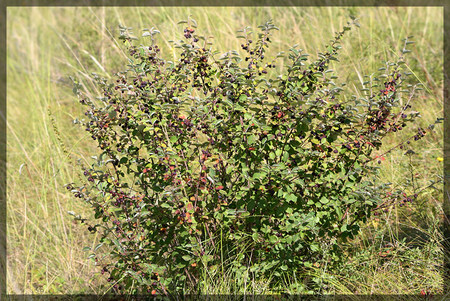
Occurs naturally in Western Europe, Turkey, Kazakhstan, Transcaucasia, Central Asia, in the northern part of Mongolia and China (Gansu, Hebei, Heilongjiang, Jilin, Inner Mongolia, Shanxi, Xinjiang), as well as in Japan and Russia (European part, Siberia, Far East, Caucasus). Grows in sparse forests, shrub thickets, meadow steppes, stony or scree slopes and on rocks. Found at elevations of 700-2800 m above sea level.
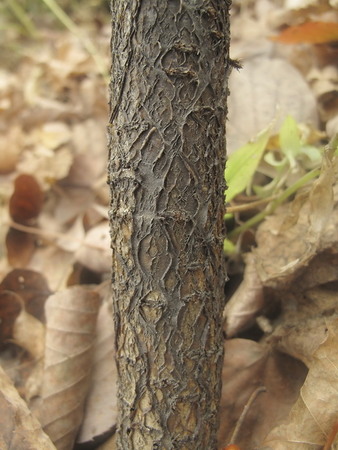
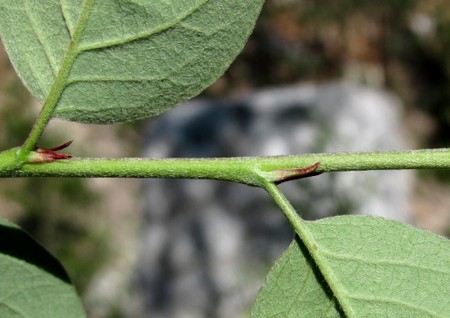
A deciduous shrub 1.5-2 (4) m tall. Crown spreading, not dense. Branches rough from corky outgrowths, rounded in cross-section. Young shoots brownish, less often reddish, pubescent, later becoming naked and glabrous. Buds conical-elongated, up to 6 mm long, loose, scales reflexed with slightly divergent tips, hairy. Leaf scar small, one mark well visible, the other two noticeable only on cross-section. Pith white, small, rounded or slightly angled.
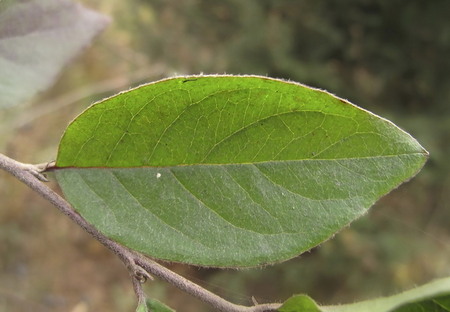
Leaves ovate or elliptic, up to 2-6 cm long and 1-3 cm wide, with obtuse or emarginate, more rarely acute apices, and a rounded base. Petiole pubescent, short. Stipules partially persistent, lanceolate, pubescent. Margins entire. Leaf blade dark green above, initially pubescent, later glabrous; beneath whitish-woolly. In autumn the leaves acquire yellow-orange-red tones.
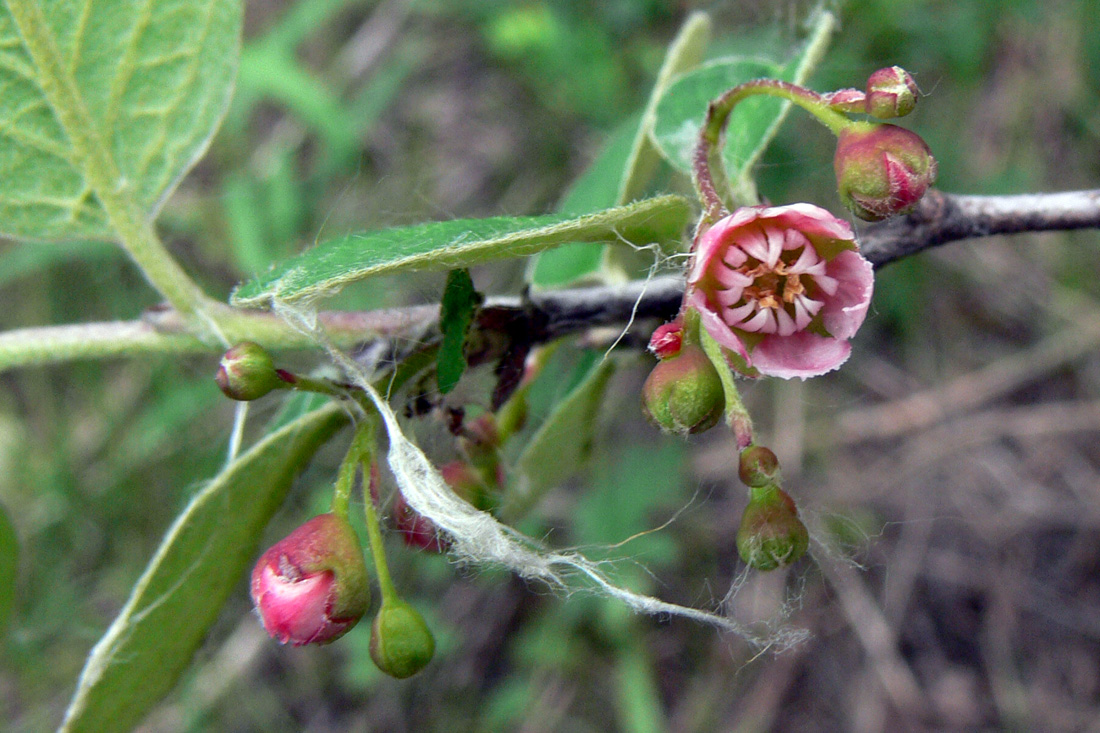
Flowers small, gathered in loose pubescent raceme-like inflorescences, consisting of 3-15 flowers, 2-4 cm in diameter. Flowers up to 7 mm in diameter. Floral axis and pedicel pubescent. Bracts linear and pubescent. Pedicel 3-7 (9) mm long. Hypanthium glabrous, more rarely slightly pubescent, bell-shaped. Sepals triangular, 1.5-2.5 mm long, with an obtuse apex. Blooms in May-June. Petals erect, pinkish, reddish or red-white, rounded, 3-4 mm in diameter. Stamens 20 in number, they are shorter than the petals. Ovary pubescent at the apex. Styles 3, more rarely 2, they are free and shorter than the petals. Flowers in May-June, lasting up to 25 days.
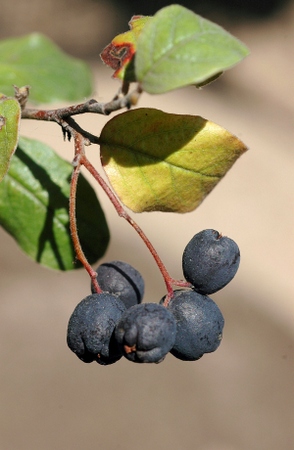
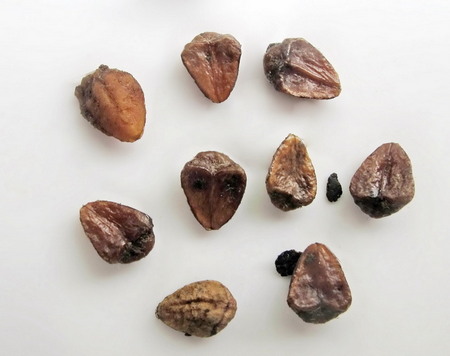
Fruits bluish-black with a glaucous bloom, nearly globose, 6-7 (10) mm in diameter, edible. Contain 2-4 stones. Flesh mealy, tasteless or sweet-sour. Fruits ripen in September-October.
Chromosome number: 2n = 48—52
Hybrids: C. megalocarpus M. Pop.
Varieties:
- Cotoneaster melanocarpus var. chailaricus G.Klotz
- Cotoneaster melanocarpus var. commixtus C.K.Schneid.
- Cotoneaster melanocarpus var. laxiflorus (Jacq. ex Lindl.) C.K.Schneid.
Hardiness zone: zone 5-8 (-29°C).
Exposure: prefers sunny locations, but can grow in shade. Grows even in the most environmentally unfavorable sites. Tolerates urban conditions well.
Propagation: Propagated by seeds and green cuttings. Seed viability – 80%. Rooting of cuttings – poor.
Soil: an undemanding plant. Can grow on any garden soil from slightly acidic to alkaline. Drought-tolerant, but flowers and fruits abundantly on moderately moist soil.
Planting: planting mix – compost consisting of turf soil, peat and sand in proportions 2:1:2.
Care: in hot and dry summers, to maintain its decorative appearance it is recommended to water the plant 1-2 times a month at a rate of 1-2 buckets per plant.
Pruning: tolerates trimming and pruning well. After pruning it regrows well while maintaining its growth form. When shaped it produces dense hedges and sculptural groups. Recommended pruning – reduce by 1/3 of the length of the annual shoot, in places where a dense and compact habit is desired.
Diseases: Fusarium wilt (remove and burn affected parts)
Pests: apple aphid, plum sawfly, cotoneaster mite.
Uses: a highly ornamental species. Widely used in group and solitary plantings in parks, landscape plantings and urban greening. Suitable for creating hedges, also looks effective in naturalistic gardens. A good nectar plant. Its hard wood is used to make walking sticks, pipes and other crafts. Young shoots, leaves and fruits are used in folk medicine.