
Deciduous shrubs
Dammer's rooting cotoneaster
Cotoneaster dammeri var. radicans
Synonyms: Cotoneaster radicans (C.K. Schneid.) Klotz, Cotoneaster radicans Dammer ex C.K. Schneid., rooting cotoneaster
Dammer's rooting cotoneaster (Cotoneaster dammeri var. radicans) – a variety of non-spiny shrubs of the species Cotoneaster dammeri of the genus Cotoneaster, family Rosaceae (Rosaceae). It was first described in the book «Abbreviated: Ill. Handb. Laubholzk.» in 1906 by Camillo Karl Schneider. Some botanists regard it as a separate species «Cotoneaster radicans».
In the wild it grows in mountains and on rocks in China in the provinces of Gansu, Hubei, Sichuan, and also in the Tibet Autonomous Region. It is found at elevations of 2000-4100 m above sea level.
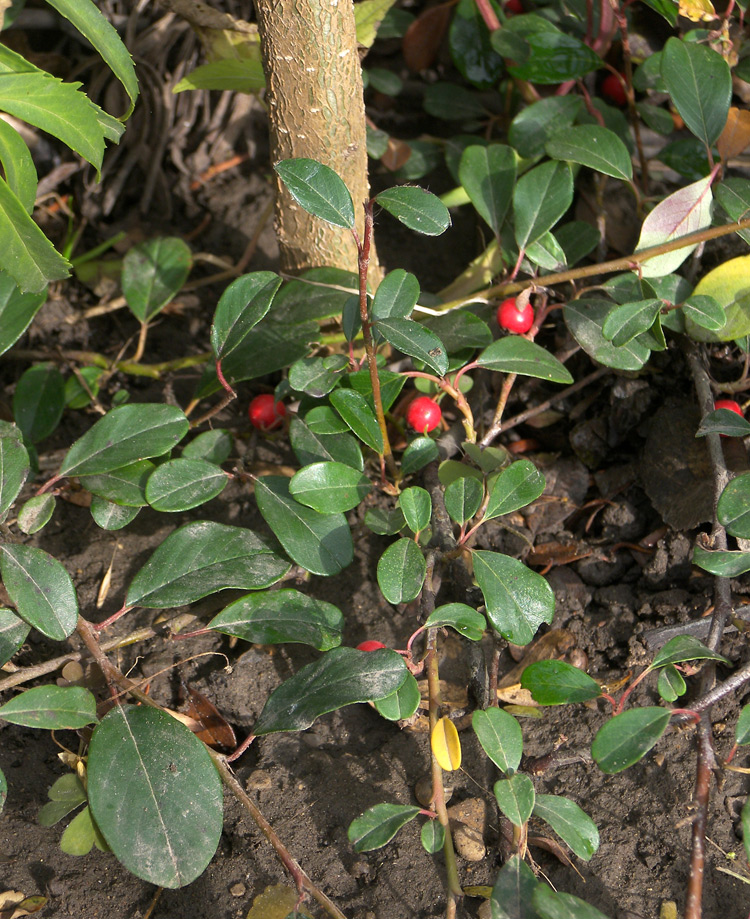
It is an evergreen groundcover shrub 10-15 cm in height and up to 70 cm in width. The crown is dense, the shoots numerous, lying on the ground and rooting. Young shoots are dark gray-brown to grayish-black, terete, at first yellowish and appressed-hairy, later becoming glabrous.
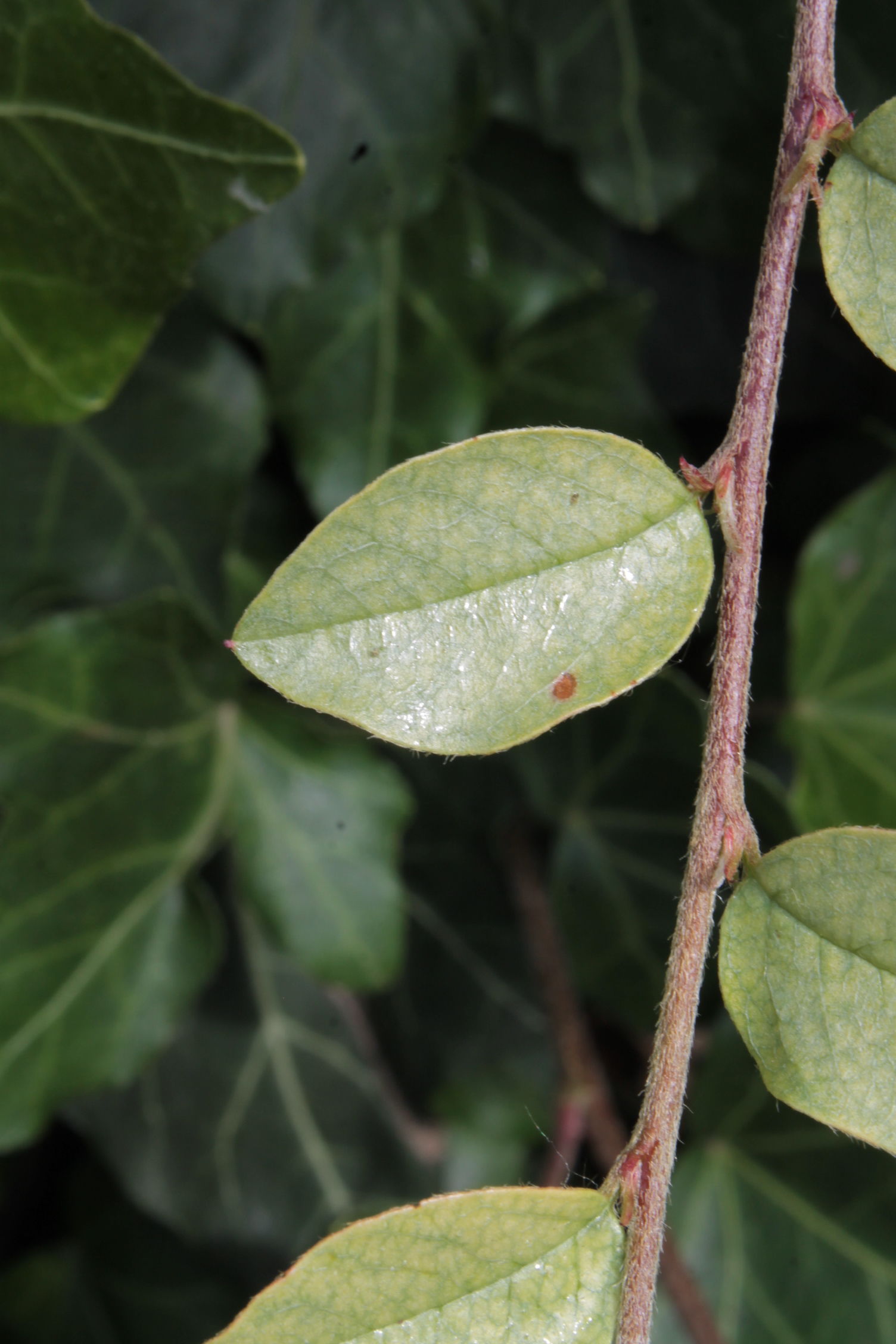
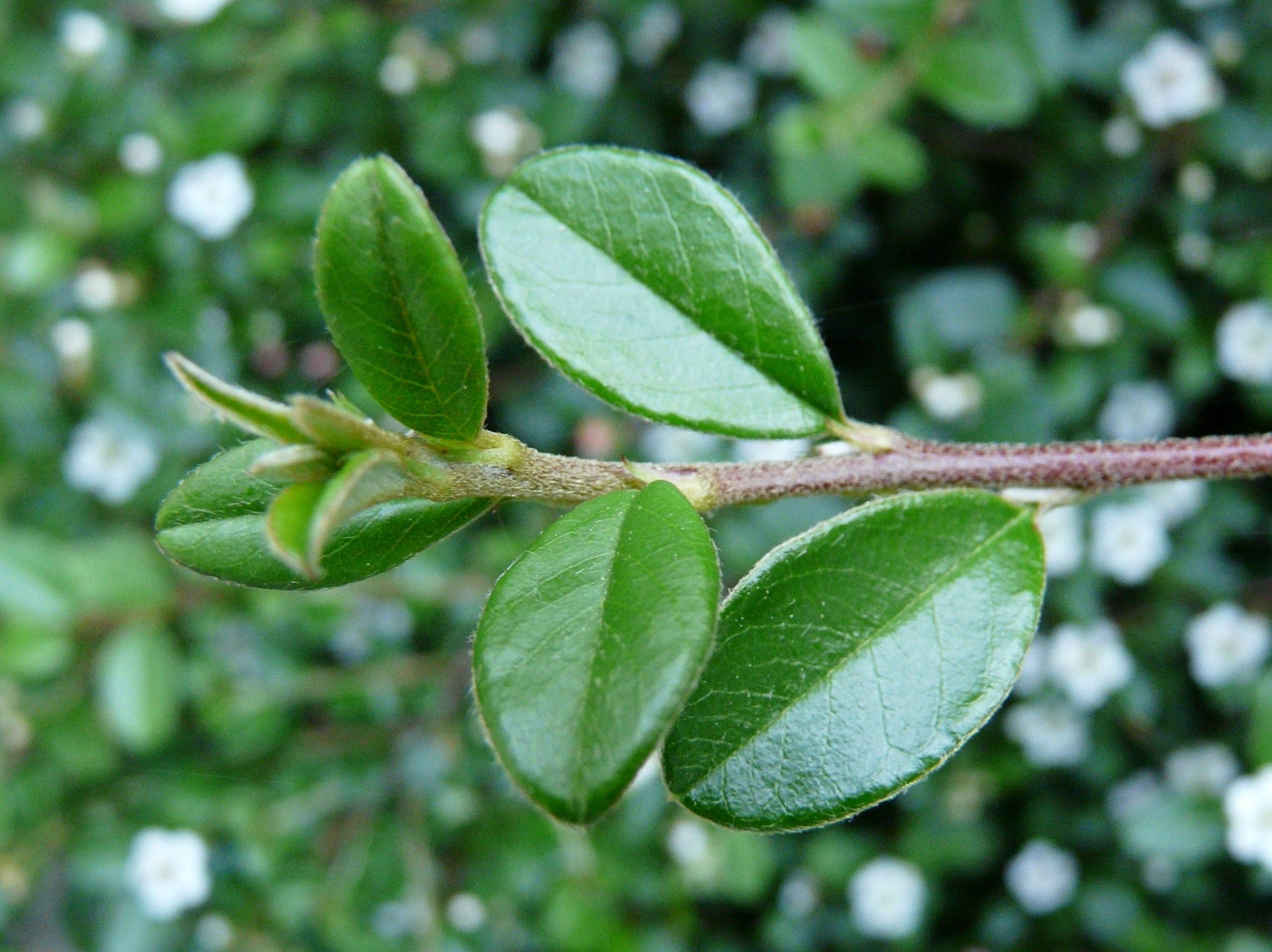
Leaves alternate, elliptic or obovate in shape, 1-2 (3) cm long and 0.7-2.2 cm wide, base broadly cuneate to nearly rounded, apex blunt, emarginate. The blade is leathery, glossy above, dark green, lighter beneath. Lateral veins 4-6 pairs. Petioles 2-3 (10) mm long, yellowish-hairy, later glabrous. Stipules mostly deciduous, linear-lanceolate, 2-4 mm long, sparsely hairy. In autumn the leaves acquire reddish tones.
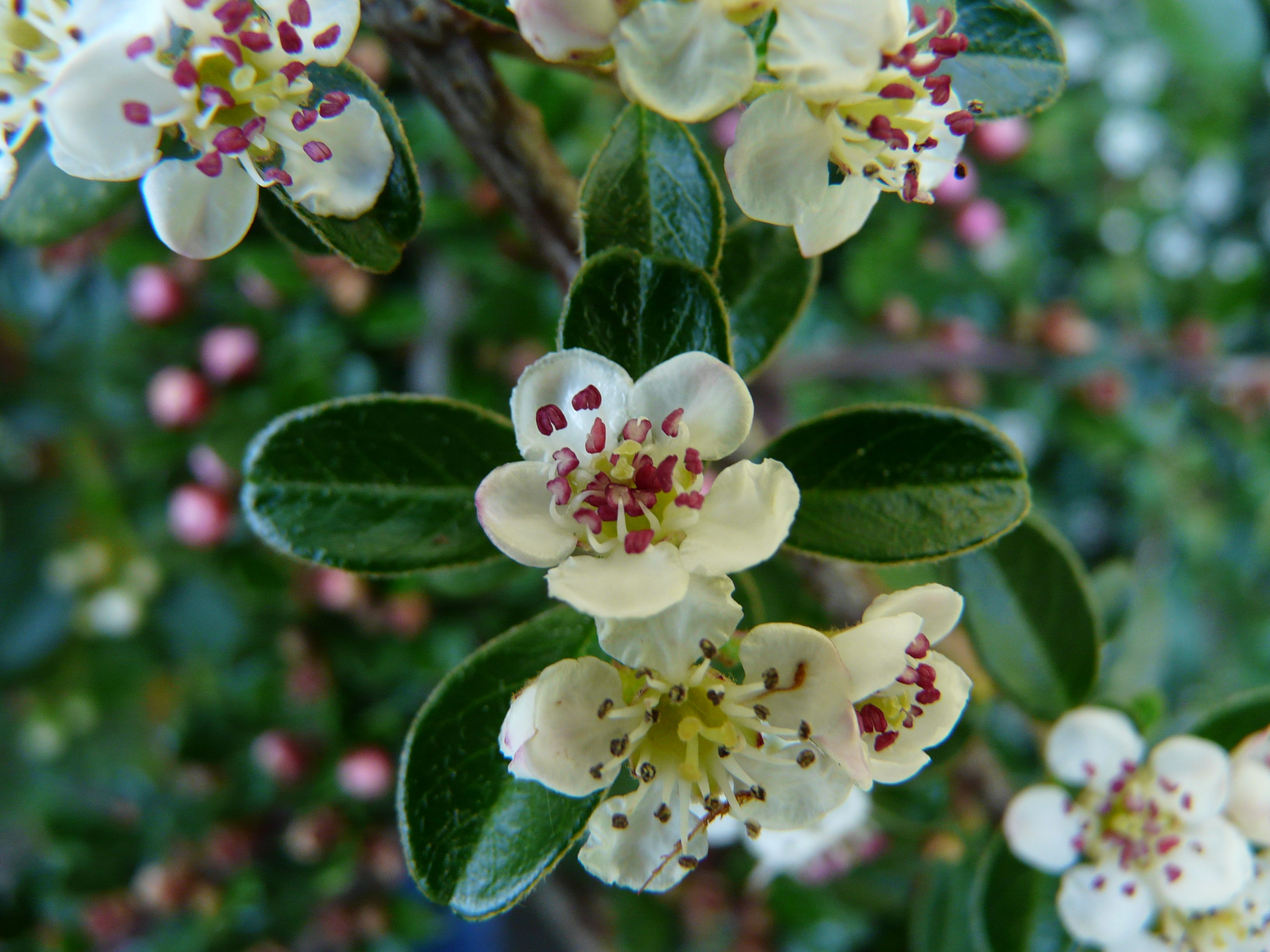
Inflorescences up to 1 cm in diameter, usually single-flowered, more rarely in clusters of 2-3 flowers. Pedicel 4-6 mm, rarely up to 1.5 cm long, hairy. Hypanthium campanulate. Sepals triangular, 1.5-2 mm long and almost as wide, with an acute apex. Petals white, rounded or broadly ovate, 4-5 mm in diameter, clawed at the base and with a blunt apex. Stamens 20, unequal in length; anthers purple. Ovary hairy at the apex. Stamens 3, 4 or 5, they are free, almost the same length as the stamens. Flowers bloom in May-June.
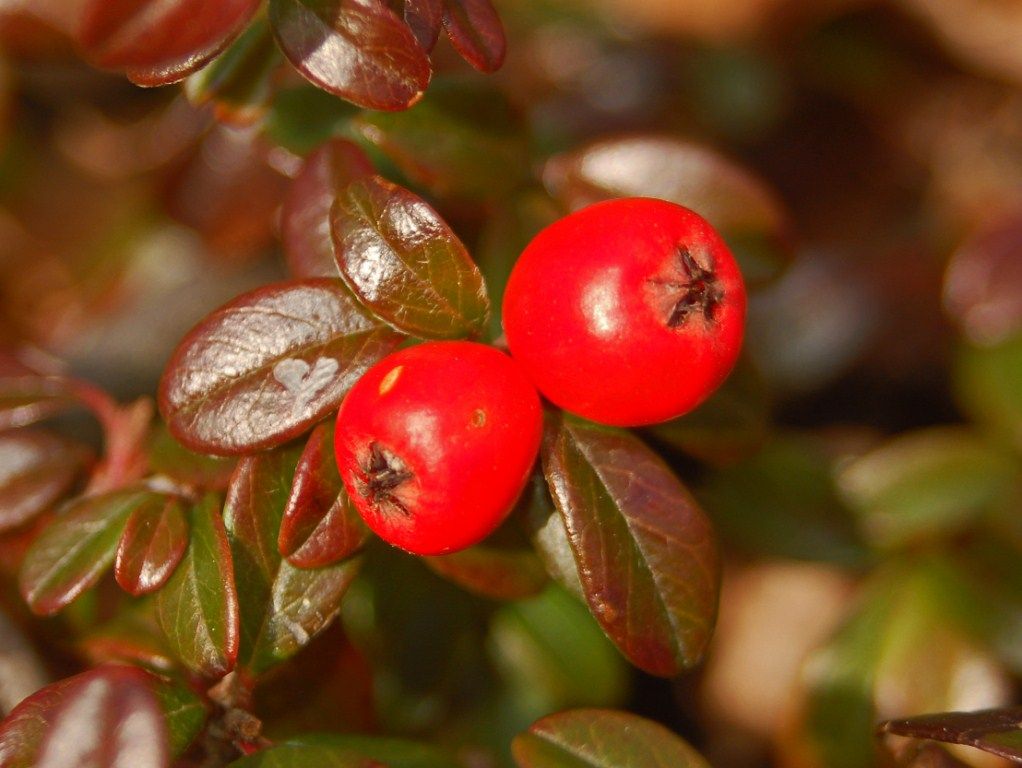
Fruits bright red, nearly spherical, 6-7 mm in diameter, glabrous, with 3, 4 or 5 seeds. Fruits ripen in September-October.
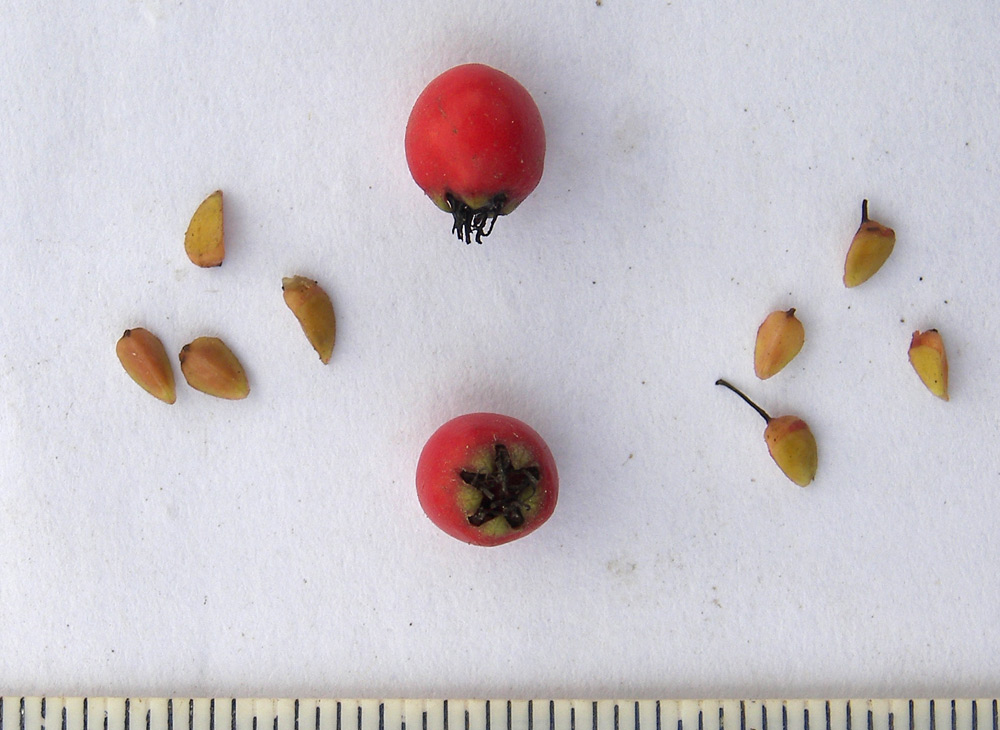
Chromosome number: 2n = 34
Cultivars: Eichholz
Hardiness zone: zone 5a to 7b (-23°C).
Exposure: prefers sunny sites but can grow in shade. Grows even in the most environmentally unfavorable places. Tolerates urban conditions well.
Propagation: Propagated by seeds and softwood cuttings. Seed viability – 80%. Rooting of cuttings – weak.
Soil: an undemanding plant. Can grow on any garden soil from slightly acidic to alkaline. Drought-tolerant, but flowers and fruits abundantly on moderately moist soil.
Planting: planting mix – compost consisting of topsoil, peat and sand in proportions 2:1:2.
Care: in hot and dry summers, to maintain decorative appearance it is recommended to water the plant 1-2 times a month at a rate of 1-2 buckets per plant.
Pruning: tolerates trimming and pruning well. After pruning it regrows well while maintaining its growth form. When shaped it forms dense hedges and sculptural groups. Recommended pruning – up to 1/3 of the annual shoot length, in places where a dense and compact habit is required.
Diseases: Fusarium (remove and burn affected parts)
Pests: apple aphid, plum sawfly, cotoneaster mite.
Uses: one of the most popular groundcover plants.