
Fruit trees
Turkish Hazel
Corylus colurna L.
Synonyms: bear's tree, bear's nut, Turkish Hazel
Tree hazel – a species of deciduous trees from the genus Corylus of the birch family (Betulaceae). In the wild it occurs in Azerbaijan, Armenia, Georgia, Russia, northern Iran, on the Balkan Peninsula, in the Near East and Asia Minor. It grows in mixed broad-leaved forests from sea level up to 1700 m above sea level, but mainly in the mid-mountain belt. In nature it grows together with ash, maple, beech, linden, elm and hornbeam. Cultivated since ancient times.
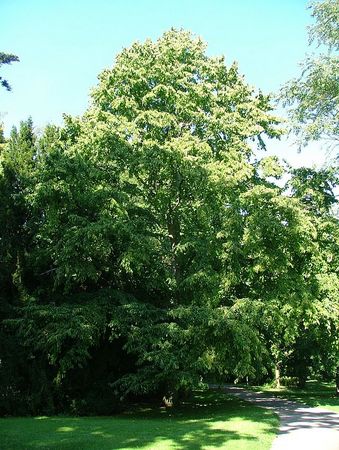
It is a tree 20-30 m in height, with a trunk diameter up to 30 cm. Crown dense, broad-pyramidal. Medium-growing, the most intensive growth is observed at ages 20-40 years. Lives up to 200 years.
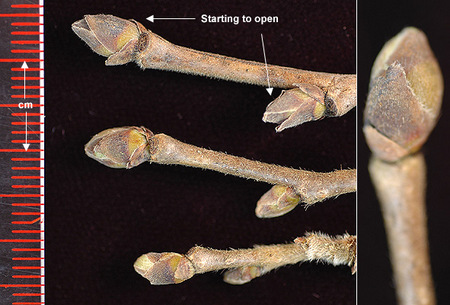
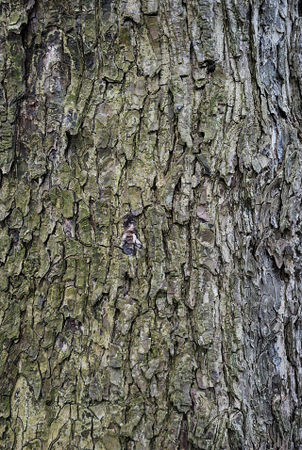
One-year shoots are yellowish-gray, with hairy-bristly pubescence. Trunk slender, straight, covered with whitish-gray bark with deep fissures, peeling in plates. Buds are oblong-ovoid in shape, scales pubescent, reddish-brown.
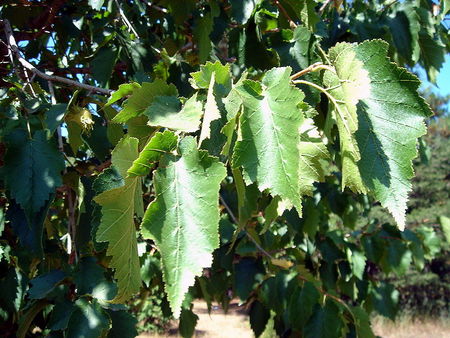
Leaves rounded, broadly ovate or oval, dark green, 7-12 cm long and 5-9 cm wide, with lanceolate, pointed stipules; they open early. The leaf blade base is cordate, shortly acuminate, narrowing toward the apex, with a doubly serrate margin. Young leaves are pubescent above, hairy along the veins beneath, later becoming glabrous. Petioles glandular-pubescent, 1.5-4.5 cm long. In autumn the leaves turn greenish-yellow or golden-yellow.
Root system taproot, deep, does not produce root suckers.
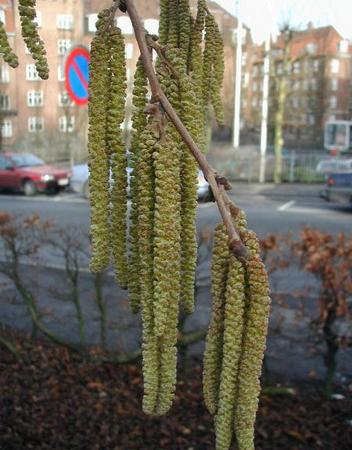
Flowers in March-April. Male flowers are gathered in cylindrical catkins, 6-10 cm long and up to 6 mm wide. Female flowers are located in small buds and during flowering only the stigmas are visible from under the scales of these buds.
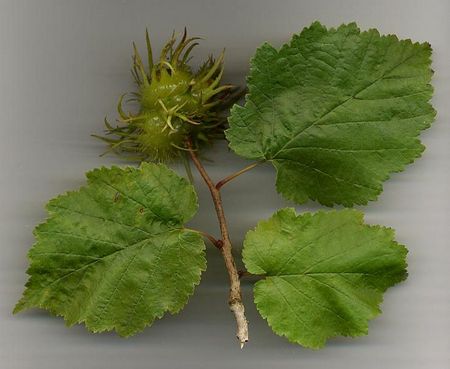
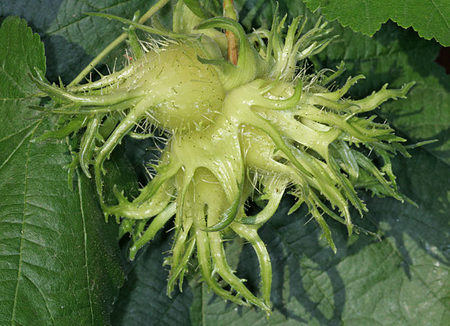
Fruits – small edible single-seeded, laterally compressed nuts, collected in groups of 3-8 per involucre. The involucre (the nut's husk) is widely open, velvety; the bracts are much longer than the nut itself and are multiply divided into sharp segments of linear-lanceolate sickle-shaped curved form. Weight of one nut 0.8-2.7 g. Shell thick, strong, reaching 0.6-2.5 mm in thickness. Yield is irregular; a high crop occurs once every 2-3 years. Fruits ripen in August-September.
Forms: f. Atropurpurea (dark purple leaves and red involucre of the nuts).
Hardiness zone: 4-8 (-30°C).
Location: prefers humus-rich, fresh, calcareous soils with adequate moisture (pH 5-7.3). Shade-tolerant, drought-resistant. Does not tolerate salinization or waterlogging.
Planting: Optimal seedling age is 2 years. Planting is best done in autumn. Planting hole size 50x60 cm. Into the hole add 10-15 kg of humus, 200 g superphosphate, 50 g potash salt and mix with the top layer of fertile soil. Before planting, seedlings should be pruned to 20-25 cm, and the roots dipped in a slurry of clay and manure. Distance between plants 4-5 m from each other, slightly closer in a hedge.
Care: care consists of shallow cultivation of the trunk circle, mulching (for example with mown grass). Watering is recommended during dry periods.
Pruning: should be carried out in early spring before sap flow begins. Only sanitary pruning is required.
Propagation: propagated by seed, grafting, layering, and cuttings. Rooting of cuttings 26% when treated with a rooting hormone for 16 hours. Seeds require winter stratification at +1 to +5°C for 2-6 months. Sowing is done in spring. For seed collection take intact infructescences at the milk-wax stage of ripeness. Grafting uses classic winter grafting and approach grafting cambium-to-cambium onto a rootstock with an active root system.
Pests: hazel leaf beetle, nut weevil, hazel leafroller, bud mite, rodents.
Diseases: anthracnose, gray rot and fruit rot.
Conservation status: in Russia it is under protective status
Uses: used for street and avenue plantings. Also looks effective as a specimen and in group plantings. The nuts, despite the thick hard shell, are consumed fresh and dried and have high taste qualities. The wood has a beautiful pinkish grain, is hard and durable, used for the production of furniture and carpentry items. Can be used in breeding.