
Deciduous shrubs
Common hazel «Fuscorubra»
Corylus avellana fuscorubra
Synonyms: Corylus avellana Atropurpurea, Corylus avellana 'Rotblättrige Zellernuss', Corylus avellana Fuscorubra, Corylus avellana L. forma fuscorubra Dippel., С. а. f. atropurpurea Winkler, common hazel atropurpurea
Common hazel «Fuscorubra» – a cultivar of common hazel. It was obtained before 1861 in Europe.
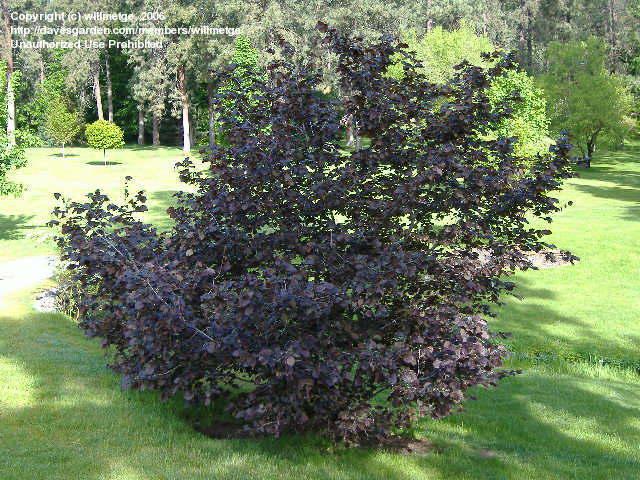
It is an upright shrub with numerous stems. Reaches 4-6 m in height and width. Annual increase 50-60 cm in height and width. In the temperate zone at 25 years it reaches 4 m with a crown diameter of 1.6 m. Lifespan 100-150 years.
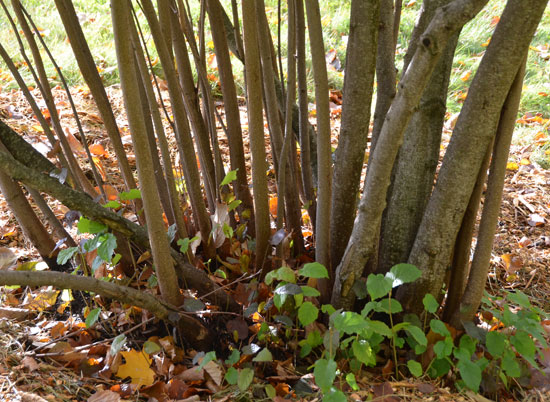
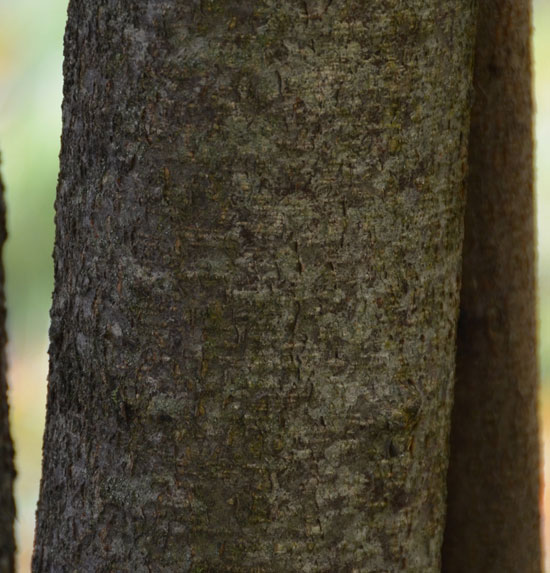
Crown dense, rounded, vase-shaped, becoming umbrella-like with age. Bark brownish-gray, fissured.
Root system shallow, widely spreading, with numerous fine roots. Sensitive to soil compaction.
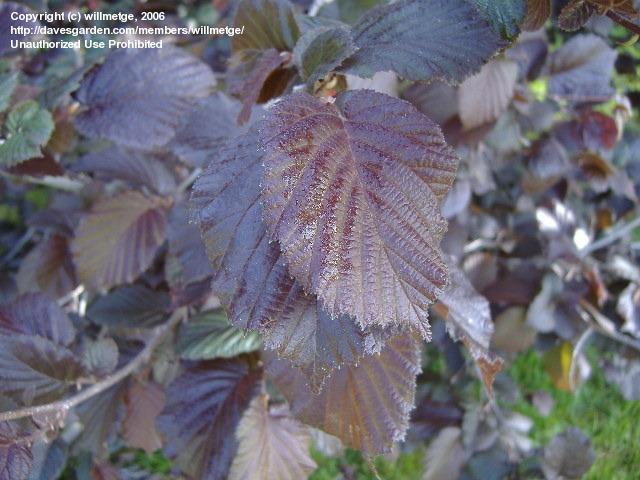
Leaves alternate, broadly rounded, 6-10 cm long, with doubly serrated margins and hairs along the veins. When emerging they are blood-red, turning green by mid-summer, and becoming brownish-green by autumn.
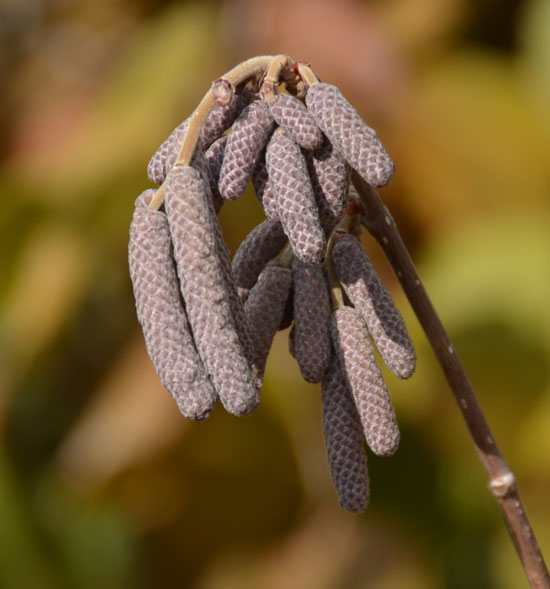
Flowers in early spring before leafing (March - early April). The plant is monoecious with unisexual flowers. Male catkins numerous, pendulous, burgundy. Pollen is wind-dispersed. Female flowers are grouped in pairs, growing on the terminal buds of branches. Fused female bracts form a dark burgundy involucre.
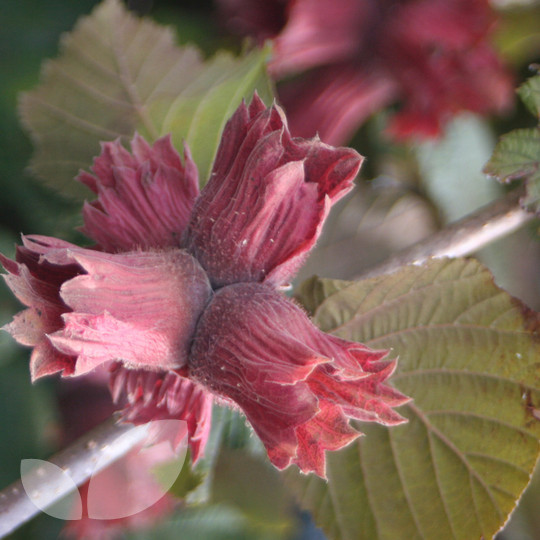
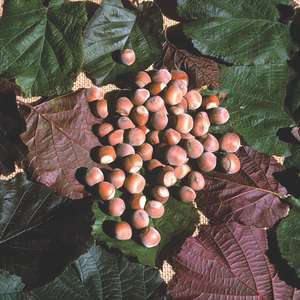
Fruits rounded edible nuts of reddish-brown color, enclosed in red, later brown, husk-cups. Ripen in September-October. In the conditions of Ukraine it produces fruit.
Hardiness zone: 4-9. In severe winters the shoot tips may suffer frost damage.
Location: Grows on all soils, from slightly acidic to alkaline, from dry to moist. Prefers fertile soils. Performs poorly on strongly acidic and waterlogged soils. Light-loving, but tolerates partial shade. In shade it almost does not flower and loses the burgundy leaf coloration. Does not tolerate drought.
Planting: Optimal seedling age – 2 years. Planting is best carried out in autumn. Planting hole size 50x60 cm. Into the hole add 10-15 kg of humus, 200 g superphosphate, 50 g potassium salt and mix with the top layer of fertile soil. Before planting, cut seedlings back to 20-25 cm, and dip the roots into a clay-manure slurry. Distance between plants 4-5 m from each other, slightly closer in a living hedge. For good pollination it needs several pollinator cultivars.
Care: care consists of loosening the root circles, but not deeply, mulching (for example, with mown grass). Watering is recommended during dry periods.
Pruning: should be carried out in early spring before sap flow begins. Only sanitary pruning is necessary.
Propagation: cuttings root poorly. Seeds require stratification. For this they are first soaked in warm water for 48 hours, then kept in warmth for 2 weeks, after that subjected to 3-4 months of cold stratification. Germinates after 1-6 months at a temperature of 20 ° C.
Pests: hazel leaf beetle, hazelnut weevil, hazel leaf-roller, bud mite, rodents.
Diseases: anthracnose, gray mold and fruit rot.
Uses: planted for obtaining valuable nuts. Used in solitary and group plantings, for creating freely growing hedges. Also planted on forest edges, for slope stabilization and in woody-shrub contrast groups.