
Climbing plants
Clematis integrifolia (entire-leaved clematis)
Clematis integrifolia L.
Synonyms: Ломонос цельнолистный, Княжик цельнолистный, Clematis integrifolia var. normalis Kuntze., синий ломинос, лопанец, порушная трава, бородавник, жигун, жигунец, Ranunculaceae Coriflora integrifolia (L.) W.A.Weber Phytologia
Clematis цельнолистный (Clematis integrifolia L.) – a species of perennial herbaceous plants of the genus Clematis (Clematis) of the family Ranunculaceae. The species was first described by the great Swedish naturalist and physician Carl Linnaeus in 1753. It was introduced into cultivation in the same year.
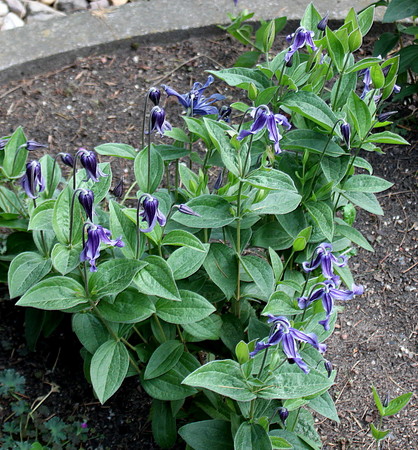
In nature it occurs in Western Asia (Turkey), in the Caucasus (Ciscaucasia, Dagestan), in Siberia (mountain Altai), Central Asia (Kazakhstan, Kyrgyzstan), China (Xinjiang), Central Europe (Austria, Czech Republic, Hungary, Poland), Eastern Europe (Ukraine, European part of Russia), Southeastern Europe (Albania, Bosnia and Herzegovina, Bulgaria, Croatia, Italy, Montenegro, Romania, Serbia, Slovenia). It grows on grassy slopes, in shrub thickets, on riverbanks. In the mountains it rises to 1200-2000 m above sea level.
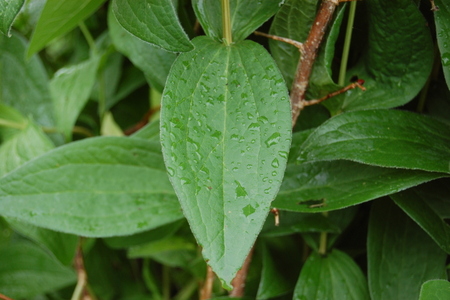
It is a perennial subshrub with herbaceous, erect, simple or weakly branched, reddish and woody-at-base stems, densely pubescent in the lower part and sparsely pubescent in the upper part. When mature they become light brown. In the wild it reaches 30-60 cm in height, in cultivation – 1-1.5 m. Shoots do not cling.
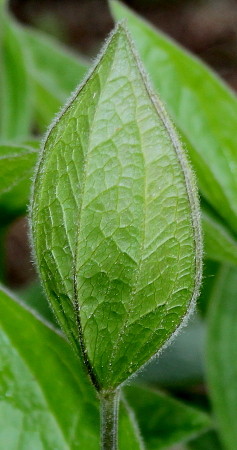
Leaves sessile, oblong-ovate or narrowly lanceolate, 5-7 (12) cm long, leathery, pointed at the tip, with entire or ciliate margin, dark green, glabrous above, slightly pubescent along the veins beneath. Veins are noticeable, well impressed.
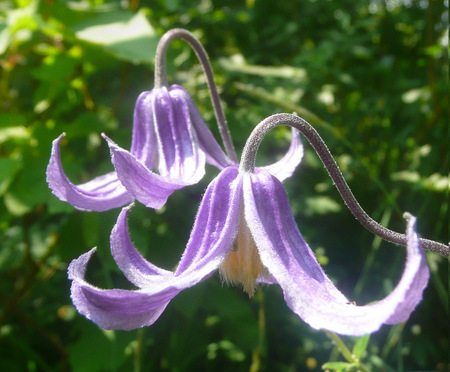
Flowers solitary, borne at the tips of the stem or branches, 6-8 cm in diameter, dark blue or dark violet, more rarely white, on nodding pedicels up to 4 cm long. There are 4 sepals, lanceolate or narrowly lanceolate, acute, densely pubescent on the outer surface along the margin. The perianth is star-bell-shaped. Perianth segments 4-6 in number, widely spreading, up to 6 cm long, bent outward at the tips, slightly wavy to twisted, obovate or lanceolate in shape, acuminate or slightly obtuse, crenate at the margin, pubescent on the outer edge. Filaments are yellow, broadened, about half again as long as the sepals. Blooms in June-July.
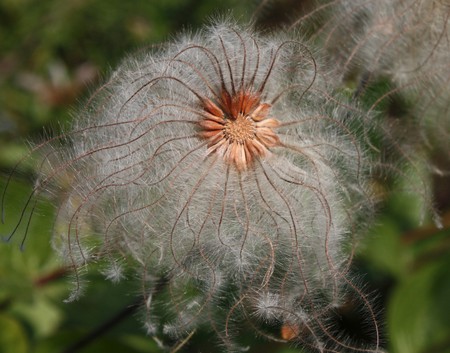
Achenes borne on a short stalk, obovoid in shape, leathery, up to 5 mm long and up to 4 mm wide, flattened laterally. The rim is thickened, the beak up to 5 cm long, feather-pubescent. Seeds are brownish-yellow or brown. Hairs are white or yellowish. 1 kg of seed contains 125 thousand seeds. Fruiting occurs in August-September.
Hybrids:
Clematis integrifolia × Clematis viticella = Clematis × diversifolia 'Hendersonii'
Cultivars: Cultivars of the Integrifolia group were obtained by crossing Clematis integrifolia with other species and cultivars. Among them - Alba, Baby Boy, Baby Rose, Baby White, Blue Fizz, Bluish Violet, Budapest, Finnis, Floris V, Hakuree, Hanajima, Harlekin, Mongolian Bells, Orchid Blue, Ozawa, Ozawa's Blue, Pangbourne Pink, Pastel Blue, Pastel Pink, Saphir
Hardiness zone: 4a (-40°C).
Position / Exposure: prefers warmth and light, needs protection from strong and cold winds. Insufficient light results in weaker flowering. Prefers nutrient-rich and moist soil. Prefers light soil or loam, but can grow on any garden soil.
Planting: Planting hole dimensions - 60x60x60 cm. Soil mixture – mix the topsoil with 2-3 buckets of compost or humus, 1 bucket of peat, 1 bucket of sand, 100-150 g of superphosphate, 200 g of complete mineral fertilizer, preferably 100 g of bone meal, 150-200 g of lime or chalk, 200 g of ash. When planting in light soils it is recommended to add more peat. If the soil is wet, clayey or compact, a 10-15 cm layer of crushed stone should be added for drainage. In southern regions planting is carried out at the end of September – early October, in the middle zone – in September, in northern regions – in spring (late April or early May) or early autumn. In containers planting can be done throughout the growing season. For group plantings the distance between plants should be at least 1 m. For autumn planting the planting material should have developed vegetative buds; for spring planting - at least one shoot. Seedlings should have at least 3 roots longer than 10 cm.
Care: In early spring clematis can be watered with lime milk (200 g of lime per 10 l of water per sq.m). During dry hot periods water the plant not frequently but abundantly, avoiding directing the stream into the center of the bush. Feed clematis at least four times per season after watering with a complete mineral fertilizer with microelements at a rate of 20-40 g per 10 l of water or with diluted fermented cow manure (1:10). Alternate mineral and organic fertilization. In summer, once a month, plants are watered with a weak solution of boric acid (1-2 g) and potassium permanganate (2-3 g per 10 l of water), and bushes are also sprayed with urea (0.5 tbsp per 10 l of water). In spring after feeding and watering it is recommended to mulch the soil with peat or humus (northern regions) and sawdust (southern regions).
Pruning: since it blooms on the shoots of the current year, shoots are cut back for the winter.
Propagation: propagated by seeds, cuttings, layering. Seeds are sown in the open ground in May. Seed germination – 8%. With treatment by rooting stimulants the rooting rate of cuttings is 100%.
Diseases: gray rot, powdery mildew, rust, wilt.
Pests: nematodes, spider mite, beet aphid, scale insects, bugs, slugs and snails, rodents (field mouse, brown rat).
Conservation status: is listed in the Red Book in Vinnytsia, Dnipropetrovsk, Zhytomyr, Zaporizhzhia, Ivano-Frankivsk, Kyiv, Kirovohrad, Lviv, Mykolaiv, Odesa, Poltava, Sumy, Ternopil, Kharkiv, Kherson, Chernivtsi regions.
Uses: used in group plantings, in mixed borders, for slope stabilization, in solitary and group plantings on lawns, on the banks of water bodies and glades. Decorative due to the dark leaf coloration and large purple or white flowers.