
Flowers for the garden
Clarkia
Clarkia
Кларкия (лат. Clarkia) — род травянистых растений семейства Кипрейных (Onagraceae), очень близкий к роду Годеция (Godetia) и часто объединяемый с ним. Род насчитывает около 40 видов распространенных на западе Северной Америки.
Растение названо в честь американского капитана В. Кларка (William Clark).
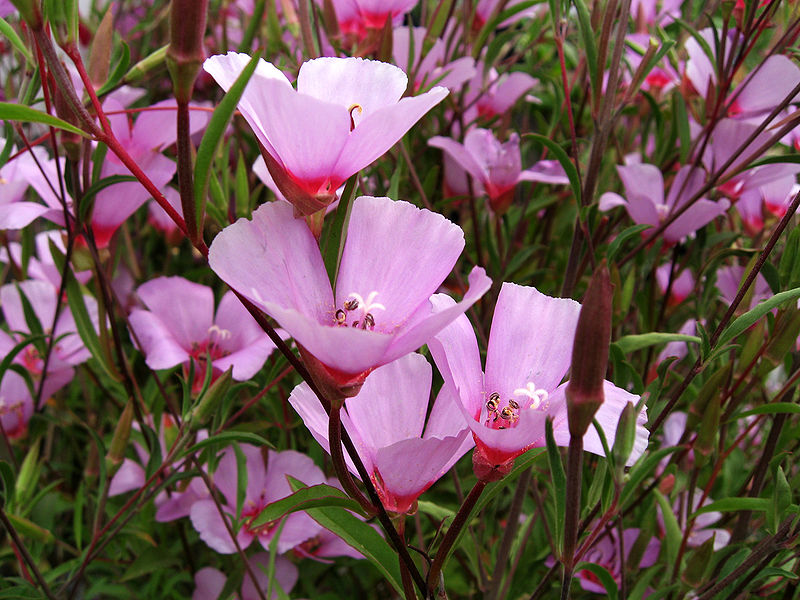
Annual herbaceous plants. Stems erect, branched, in most cases shortly pubescent, up to 60 cm tall. Leaves elongate-oval, alternate. Flowers regular, single or double, of various colors, gathered in racemose or spike-like terminal inflorescences. Rarely the flowers are solitary, axillary. Fruit — an elongated, many-seeded capsule.
In cultivation:
Кларкия ноготковая — Clarkia unguiculata Lindl.
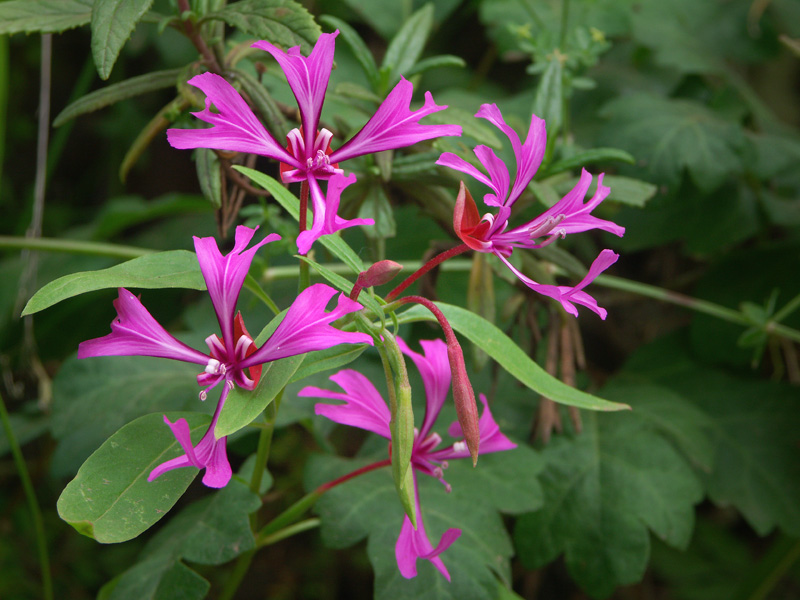
An annual herb. Plants densely branched, oval or spreading. Stems thin, sturdy, up to 90 cm tall, becoming woody at the base by the end of flowering. Leaves ovate, glaucous-green with red veins, sparsely toothed at the margin.
Flowers single or double, regular, white, blue, pink, red or purple, up to 3-4 cm in diameter, borne singly in the leaf axils. Blooms profusely from July to September. Sets fruit. Fruit — an elongated, four-angled capsule. Seeds small, ovoid, rough, brown. In cultivation since 1832.
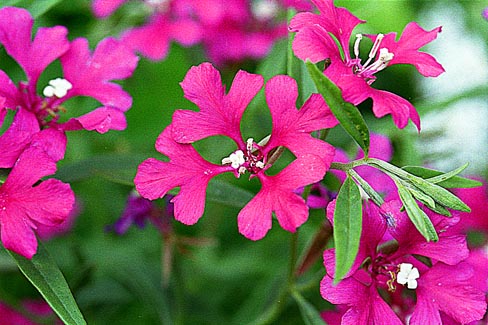
Most valuable cultivars:
'Альбатрос' — Plants up to 75 cm tall, densely branched. Flowers double, white.
'Бриллиант' ('Brilliant') — Plants up to 80 cm tall, broadly oval. Flowers double, bright pink, large.
'Пурпуркёниг' ('Purpurkenig') — Plants 80-90 cm tall, oval, densely branched. Flowers double, large, 3.5-4 cm in diameter.
'Салмон Перфекшен' ('Salmon Perfection') — Plants up to 90 cm tall, broadly oval, loose. Flowers double, salmon-pink, 3.5 cm in diameter.
'Фойергарбе' ('Feuergarbe') — Plants 70-85 cm tall, oval, compact, densely branched. Flowers double, orange-scarlet, 3.5-4 cm in diameter.
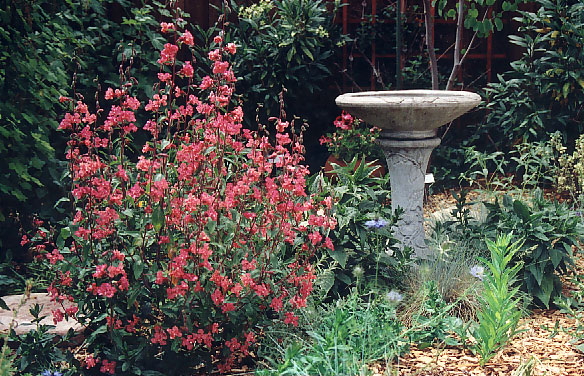
Location: require open sunny sites.
Soil: prefer dry, loose, fertile soils.
Care: young plants are pinched to obtain a more compact form; during severe drought they need watering. Fertilizer applications are necessary. Removing flowers and fruit significantly prolongs flowering.
Propagation: by seeds, which are sown in April in open ground or in a half-warm frame.
Zone: 8-10