
Indoor plants
Chlorophytum
Chlorophytum
Chlorophytum (Chlorophytum)
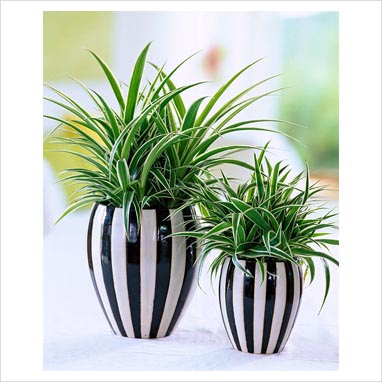
Family Liliaceae. Native - South America. Chlorophytum is one of the most common houseplants. It's not surprising: it grows quickly, has beautiful arching leaves, and in spring and summer small white flowers first appear on thin stems, followed by tiny rosettes of leaves. They can be separated and rooted.
Another reason for the popularity of Chlorophytum is its hardiness. Chlorophytum is a light-loving plant. Chlorophytum comosus has been cultivated in many countries as a houseplant for more than two hundred years. The arching leaves form a beautiful broad rosette. Daughter leaf rosettes grow on long flower stalks. Chlorophytum can be grown in halls or on stair landings, as well as in bathrooms, if there is a window.
Temperature: Moderate. In winter not below 18°C. Of course, the undemanding Chlorophytum will not die at unfavorable temperatures, but this will certainly affect its appearance. Cold drafts or keeping it near an uninsulated window harm the plant.
Watering: Abundant from spring to autumn. The soil should remain moist at all times. Moderate in winter.
Fertilizer: Apply fertilizing waterings once every 2 weeks from March to August with a complete fertilizer for ornamental foliage plants.
Humidity: In summer it is useful to mist the leaves from time to time and give a warm shower. Misting is essential if the plant is kept near a heating system.
Repotting: Annually in February - March. Large plants or older specimens are repotted every two years, but fertilized annually. Soil - 2 parts turf (garden loam), 1 part humus soil, 1 part leaf mould and 1 part sand. Chlorophytum has large thick roots; if they become overgrown, pots may crack near the bottom. Therefore give Chlorophytum a roomy container.
Propagation: By rooting daughter rosettes, and also by division when repotting.
Repotting: Annually in February - March. Large plants or older specimens are repotted every two years, but fertilized annually. Soil - 2 parts turf (garden loam), 1 part humus soil, 1 part leaf mould and 1 part sand. Chlorophytum has large thick roots; if they become overgrown, pots may crack near the bottom. Therefore give Chlorophytum a roomy container.
Propagation: By rooting daughter rosettes, and also by division when repotting.