
Flowering shrubs
Chimonant or Chimonanthus
Chimonanthus
Chimonant, or Chimonanthus (lat. Chimonanthus) — a genus of flowering plants in the family Calycanthaceae (Calycanthaceae).
In nature the species' range covers central and eastern regions of China.
An evergreen shrub, deciduous under Ukrainian conditions, 2—3 m tall, with erect branches. Young shoots pubescent; one-year-old shoots almost bare, gray-green or brown, slightly ridged.
Leaves from elliptic-ovate to ovate-lanceolate, acute at the apex, 7—20 cm long, up to 7 cm wide, pubescent beneath when young, later glabrous, shiny light green on both sides.
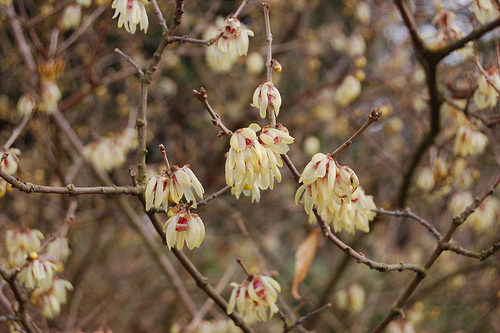
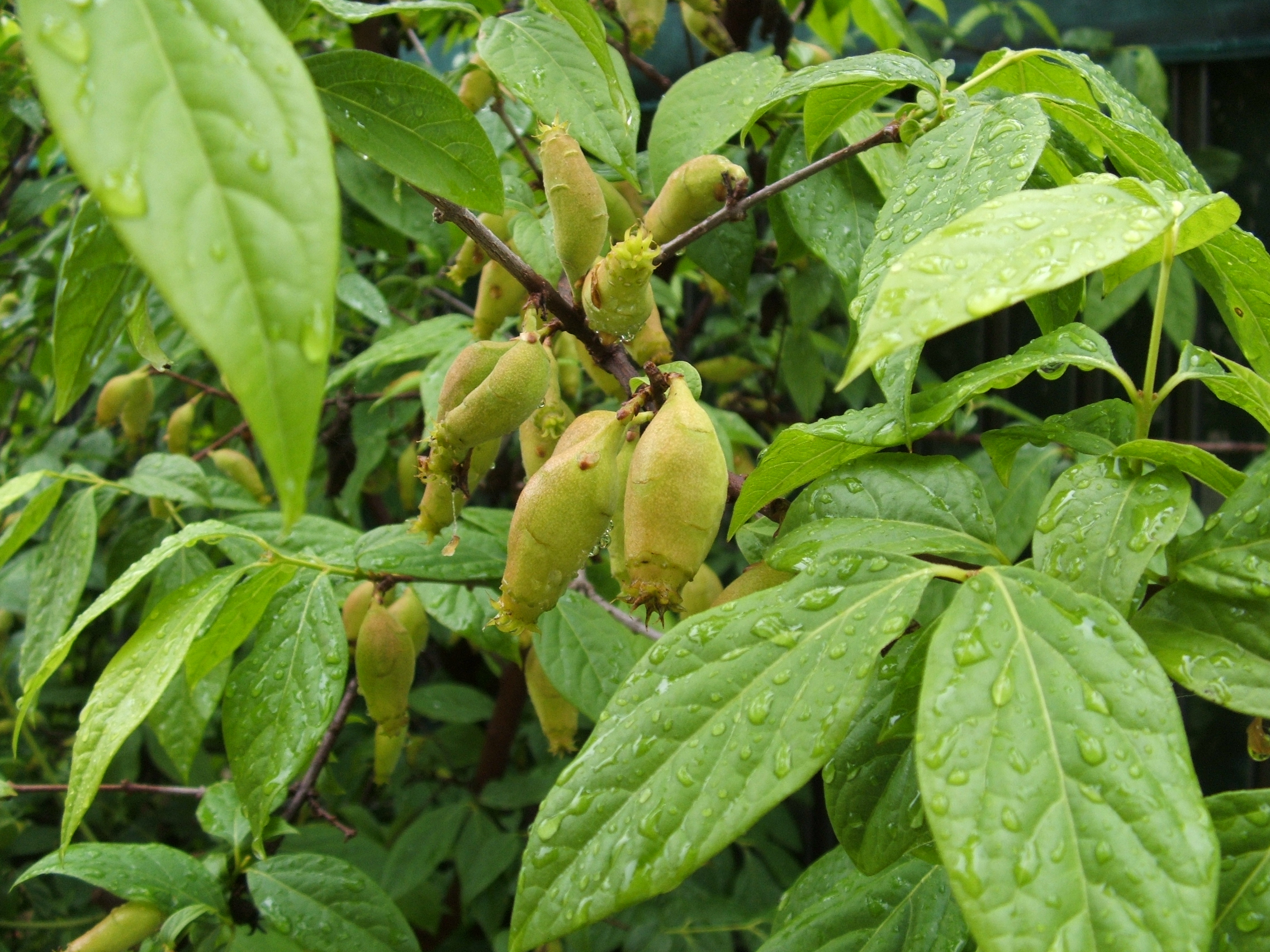
Flowers form on last year's wood, on short scaly pedicels, with numerous outer yellow and inner purple tepals, with a strong pleasant fragrance. Fruits about 4 cm long, pubescent, narrowed. Flowers from the second half of December to May, before leafing. Seeds ripen in August. Used in landscaping and floristry.
Location: Prefers partial shade, grows well under the canopies of large trees. Prefers a south-facing aspect. Should be planted near the house or paths so the scent of the flowering plant can be better enjoyed.
Soil: not demanding, grows well on any garden soils, but grows better and flowers more abundantly in fertile soils.
Care: Fertilize during the spring-summer period. The plant requires summer pruning; otherwise, winter flowering will be very weak.
Propagation: by seeds and layering; poorly propagated by cuttings.
Zone: 6-9