
Flowers for the garden
Celandine
Chelidónium
Celandine, or wartweed (lat. Chelidónium) — a monotypic genus of perennial herbaceous plants of the poppy family ( Papaveraceae). According to current understanding, the only species of the genus is greater celandine (Chelidónium május).
The Latin name of the genus comes from Greek χηλιδων — «swallow»: the ancient Greeks noticed that the plant blooms with the arrival of swallows and withers with their departure. The Russian names of the plant, «chistotel» and «borodavnik», are associated with the use of the sap for removing warts and other skin growths. Because of its tendency to grow near a fence (a paling, palisade), in Russian dialects the plant is also called «podtynnik».
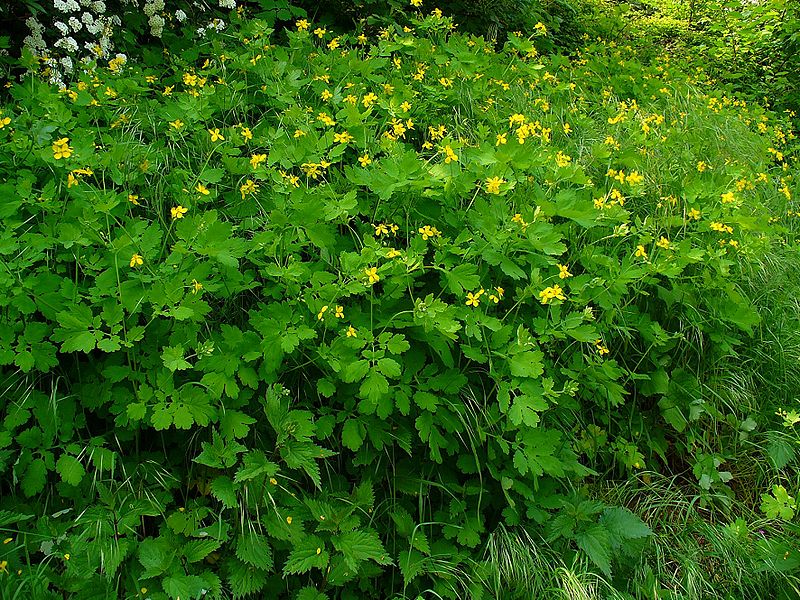
In the wild it grows in Europe and the Mediterranean, and is also widespread in America, where it was introduced by colonists in 1672 as a remedy for skin diseases such as warts. It has become naturalized throughout the temperate zone worldwide. A weed.
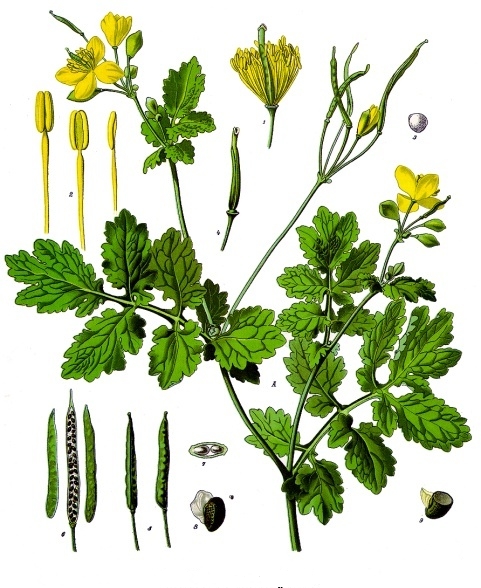
The plant has an erect, branched stem 50 to 100 cm high, which exudes drops of thick milky sap when broken; the sap turns orange-red on exposure to air.
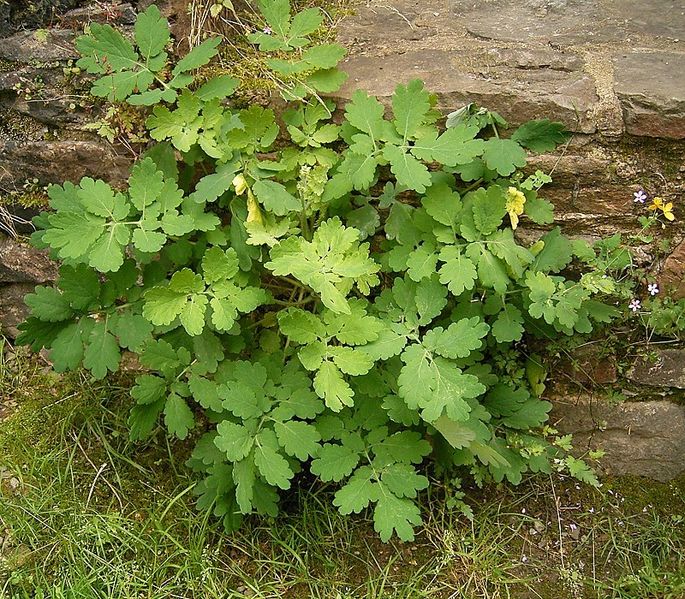
Leaves are petiolate, deeply pinnately lobed, with 3—5 pairs of rounded or ovate lobes. The terminal lobe is larger, usually three-lobed; leaves green above, glaucous beneath. Petioles are covered with hairs.
Flowers are regular, golden-yellow, arranged in a simple umbel; each flower consists of four petals about 1 cm long. Celandine has no nectaries, but attracts insects with an abundance of pollen. It flowers from May to August. The fruit is a many-seeded pod-like capsule. Seeds are small, black, shiny with a white crest-like appendage, resembling elaiosomes, which attracts ants that disperse these seeds (myrmecochory).
The plant is poisonous; it contains alkaloids: homochelidonin, cheleritrine, sanguinarine, protopine and others (more than 20 alkaloids). On pastures celandine is not eaten by livestock: it causes poisoning, severe inflammation of the stomach and intestines.
Celandine sap is used in folk medicine for removing warts, dry corns, papillomas and some other skin growths. Medicinal preparations with the same properties are made from the sap. A cytotoxic preparation called «Ukrain» is produced from a mixture of celandine alkaloids and is used in the treatment of malignant diseases in the CIS countries.