
Conifers
Himalayan Cedar 'Prostrate Beauty'
Cedrus deodara Prostrate Beauty
Himalayan cedar 'Prostrate Beauty' – one of the most striking forms of Himalayan cedar. It was obtained at the Iseli nursery (USA) in 1979. Lives for more than 50 years.
It is a creeping, semi-dwarf shrub reaching 1.8-4.5 m in height. Annual growth 6-12 cm. In youth the crown is almost flat, but with age a leading shoot develops.
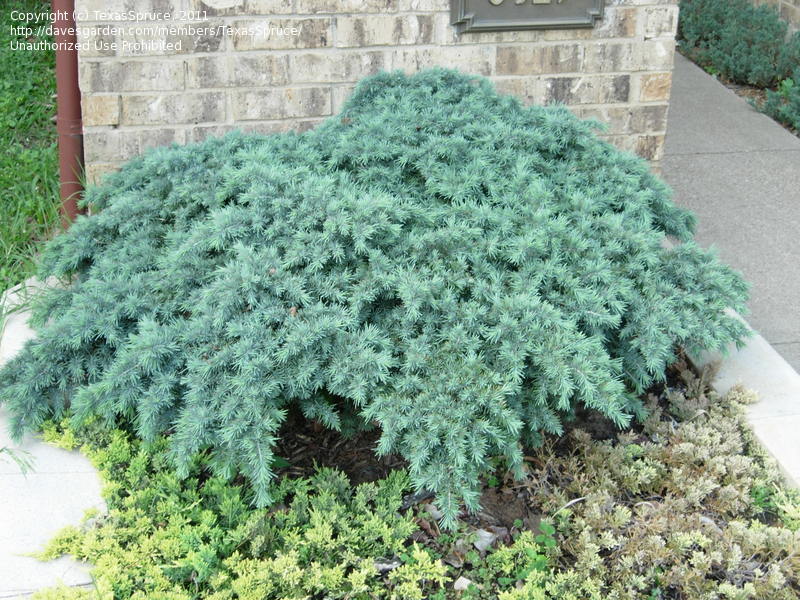
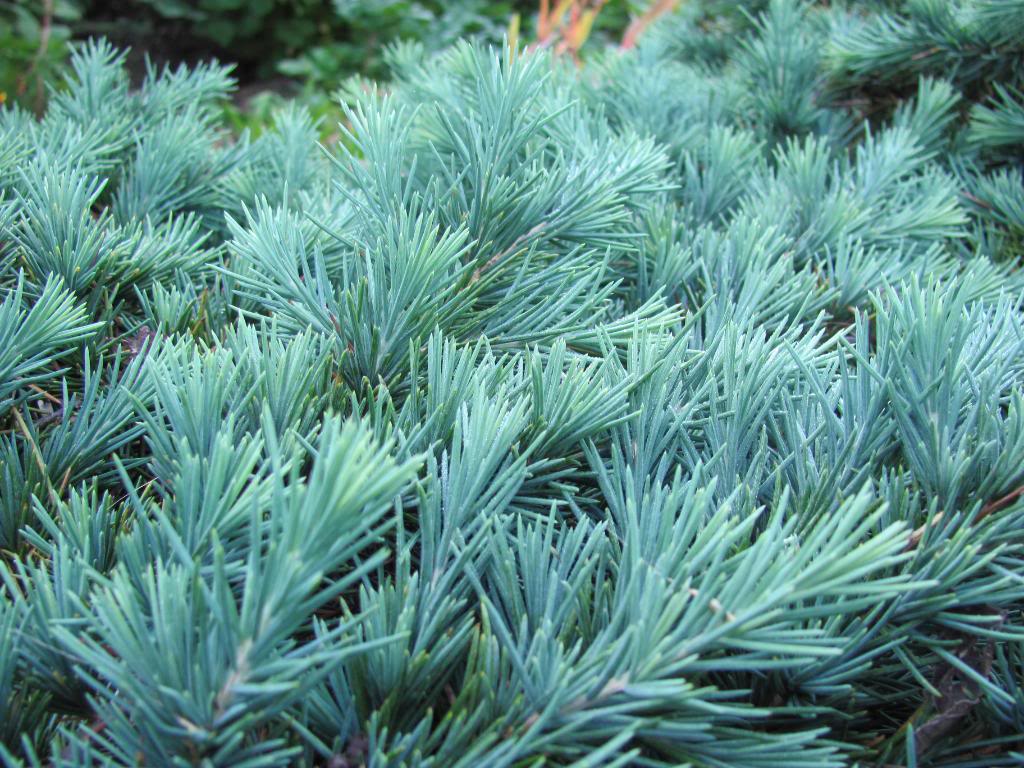
Foliage needle-like, soft, long; color ranges from blue to gray-green or almost silvery. Needles do not change color in winter.
Cones conical, 3-4 cm long, reddish-brown when mature.
Hardiness zone: 7 (-25°C). Needles that are frost-damaged in winter regrow in spring.
Site: Prefers high air and soil humidity. Favors well-drained, deep, slightly calcareous soils, as well as locations with humid air and adequate warmth. Tolerance to urban conditions is low. Does not tolerate waterlogging.
Planting: Recommended spacing between plants – 4-8 m. When planting in clay soil it is recommended to add sand to the planting hole. Size of planting hole – 50-70х70 cm. Fill the hole with a mixture of turf soil and well-rotted manure in a 3:1 ratio, and also one cup of wood ash or a complex mineral fertilizer 200-250 g. After planting it is recommended to stake the plant for several years, as the root system is poorly developed.
Care: young plants need winter protection.
Pruning: to maintain the prostrate crown pruning of the leading shoot is necessary.
Diseases: variegated-red trunk rot, seed mold, rust fungi, pitch moth, brown central and prismatic rot, Schweinitz's polypore, white root rot, chlorosis.
Pests: adelgid, flower beetles, small black chafer, cone gall midge, conifer geometrids (loopers), spruce seed moth, moths, Siberian silk moth, gypsy moth, monk moth, conifer tortrix (leafroller), cedar leafroller, conifer geometrid (repeated), black-and-yellow and red pine sawflies, six-toothed bark beetle, large black spruce longhorn beetle, Siberian engraver, Siberian spruce longhorn beetle, cedar bark beetle.
Propagation: by seed, cuttings, grafting. Seeds require stratification.
Conservation status: not under protection.
Uses: widely used as a groundcover plant.