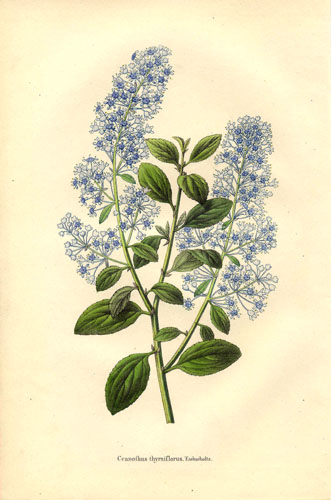
Flowering shrubs
Ceanothus or Red Root
Ceanothus
Ceanothus or Red Root (lat. Ceanothus) — a genus of plants of the buckthorn family (Rhamnaceae). The genus comprises about 60 species distributed in North America, namely in California, the eastern USA and southeastern Canada. Species readily hybridize with each other and produce fertile hybrids.
The name derives from the Latin 'cyaneus' — "blue". The shrub is also called red root (Red Roof), because its roots contain a red dye.
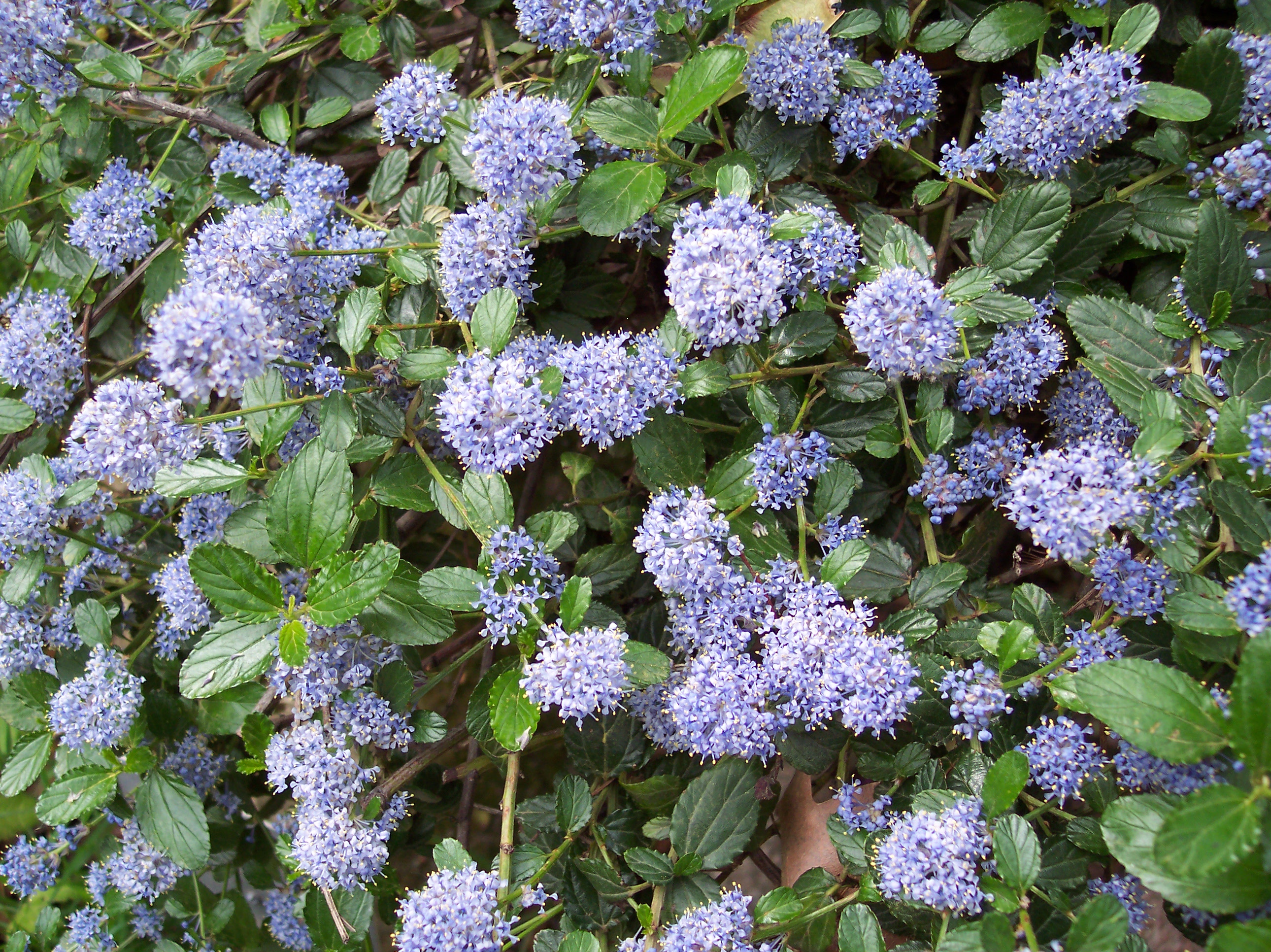
Deciduous or evergreen shrubs or small trees. Stems twig-like, non-spiny, less often spiny. Leaves alternate or opposite, 1—5 cm long, mostly petiolate.
Flowers bisexual, arranged in compact paniculate inflorescences, white, greenish-white, blue, light violet or pink. The calyx is saucer-shaped. Petals longer than the sepals, cup-shaped. Mature fruits — globose, covered with a thin pericarp, splitting into three lobes, with one seed in each.
In cultivation:
Ceanothus americanus - Ceanothus americanus L.
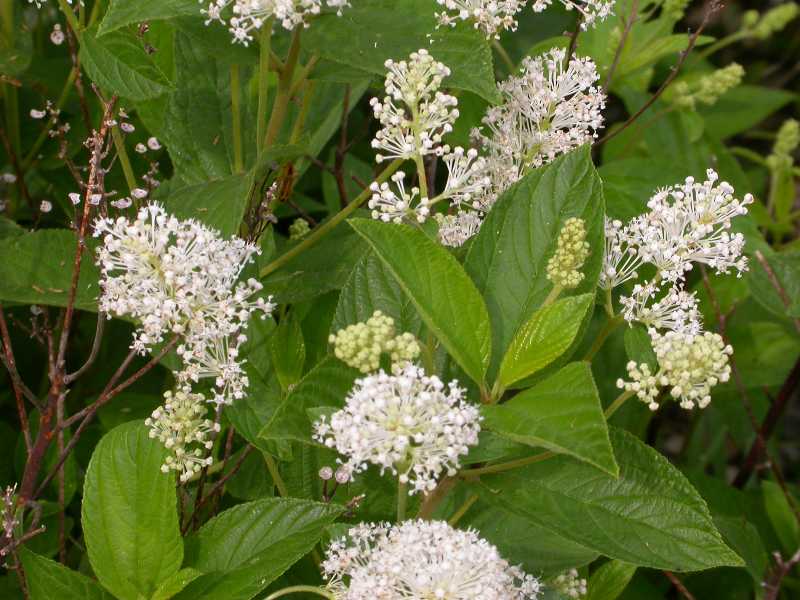
The most winter-hardy species naturally occurs in the eastern part of North America, inhabiting dry mountain forests and steep banks.
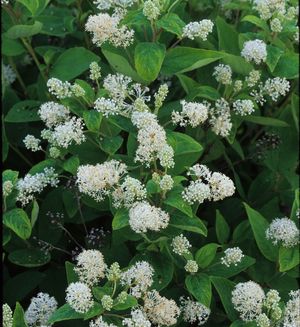
A small (up to 50 cm) densely branched shrub with thin reddish-brown shoots and ovate leaves up to 7 cm long is called New Jersey tea (New Jersey Tea). Indigenous peoples of America used the dried leaves as an excellent substitute for tea. They prepared an infusion of the leaves and flowers to treat throat, eye and skin ailments. Head-like inflorescences about 10 cm long consist of small white flowers, tightly set on white pedicels. Flowering is prolonged, from July to early September. Small brown capsule-fruits split into three parts during ripening, from which black shiny seeds about 2 mm long spill out.
Location: provide the warmest, sunniest position protected from cold winds.
Soil: Requires fairly fertile soil with good drainage.
Care: almost always suffers frost back to the level of the snow cover, but this does not affect flowering, since the inflorescences are formed on the current year’s shoots. Winter protection is required, especially secure around the root-collar area. Sanitary pruning is carried out annually.
Propagation: by seeds, layering, cuttings and division of the bush.
Zone: 6-10