
Deciduous trees
Catalpa
Catalpa Scop.
Synonyms: Catalpium Raf., Macrocatalpa (Griseb.) Britton
Catalpa (Catalpa Scop.) – a genus of plants in the family Bignoniaceae. The genus name was given by North American Indians of the Muscogee tribe because the leaves, in their opinion, resembled winged heads. The genus was first described in 1777 by the Italian naturalist Giovanni Antonio Scopoli in his «Introductio ad historiam naturalem, sistens genera lapidum, plantarum et animalium hactenus detecta, caracteribus essentialibus donata, in tribus divisa, subinde ad leges naturae. 170. Prague.». In cultivation since the early 18th century.
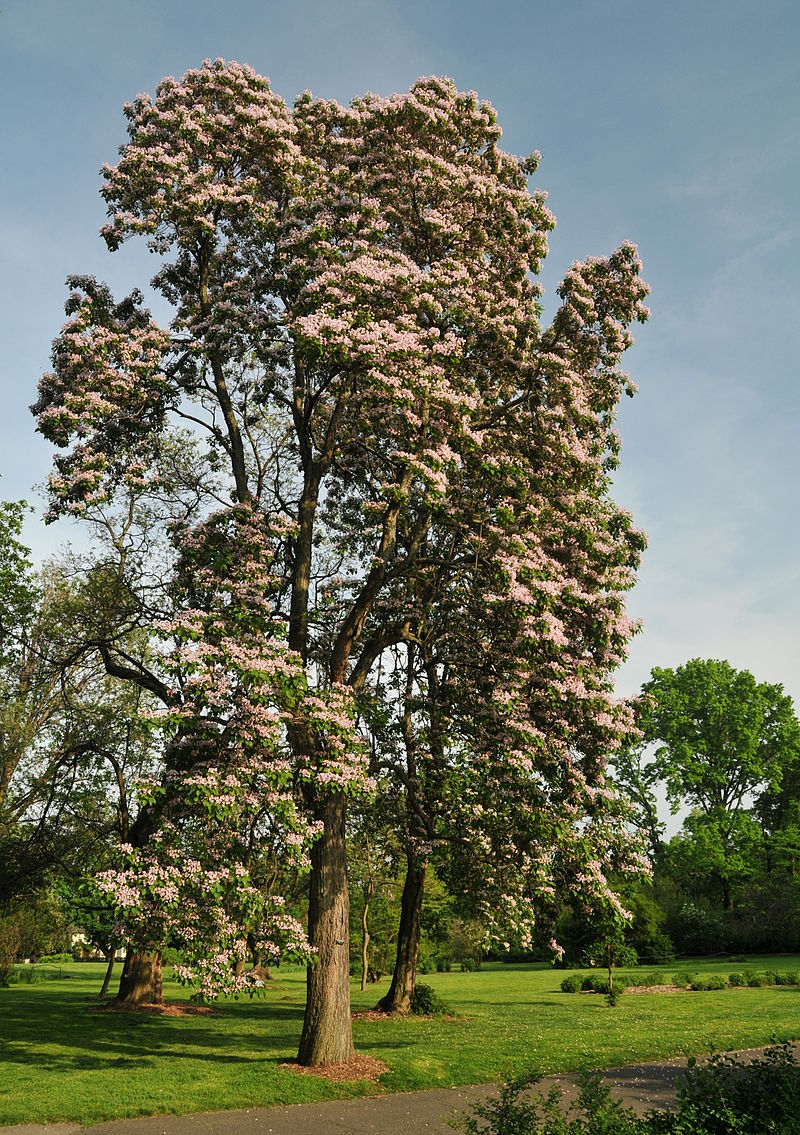
Catalpa bungei
Natively found in North America, Cuba, southwestern China, Tibet.
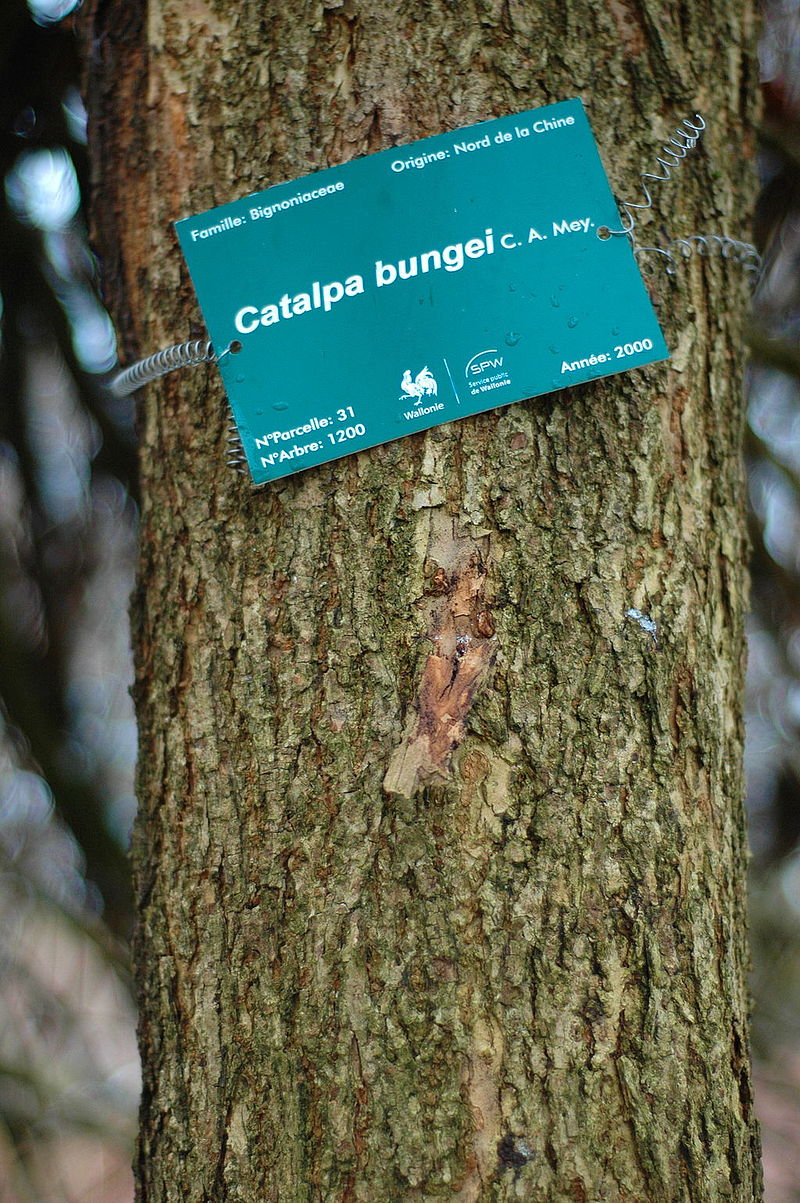
They are deciduous, less often evergreen trees with a low, airy, broadly rounded, very spreading, less often pyramidal crown. Branches in the upper part of the crown are ascending, in the lower tier more spreading, from ascending to horizontally extended. Bark light brown or gray-brown, smooth, later peeling, flaking off in small scales. Shoots thick, sturdy, with a distinct pith, not forming an apical bud, fork-branching, at first green or purple in color, sometimes with a glaucous bloom, then grayish-brown.
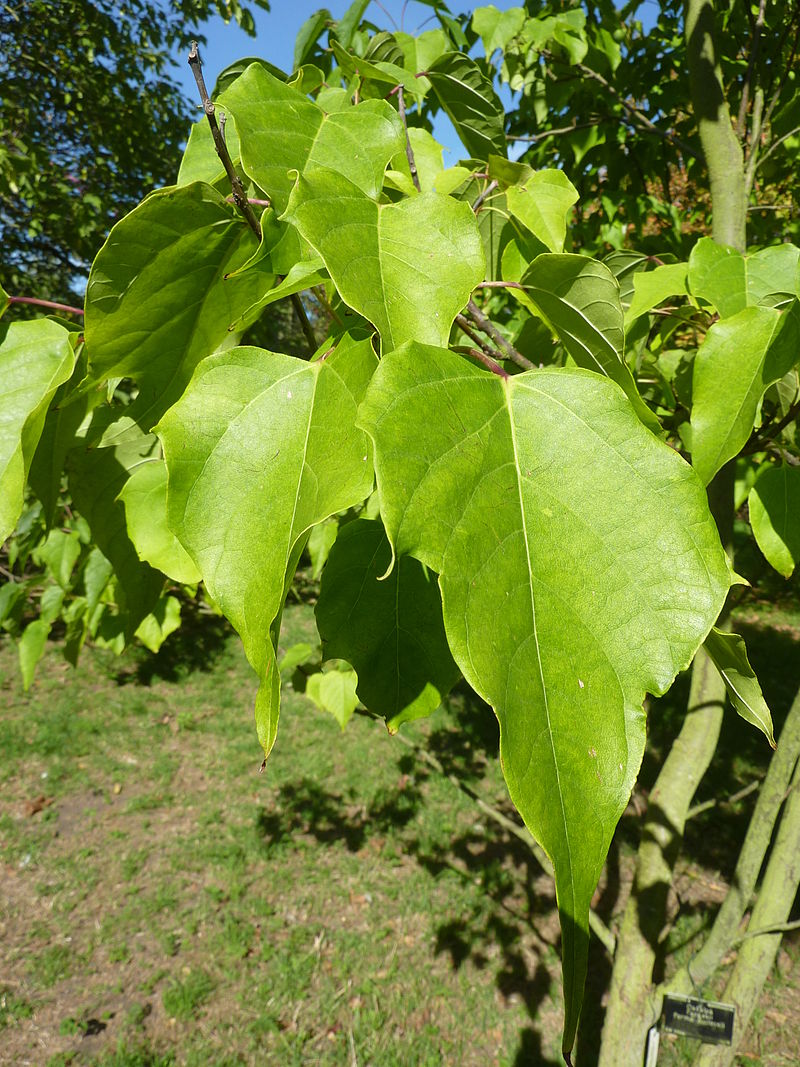
Catalpa fargesii Dode f. duclouxii
Leaves arranged oppositely, less often in whorls of three, large, entire or slightly lobed, on long petioles.
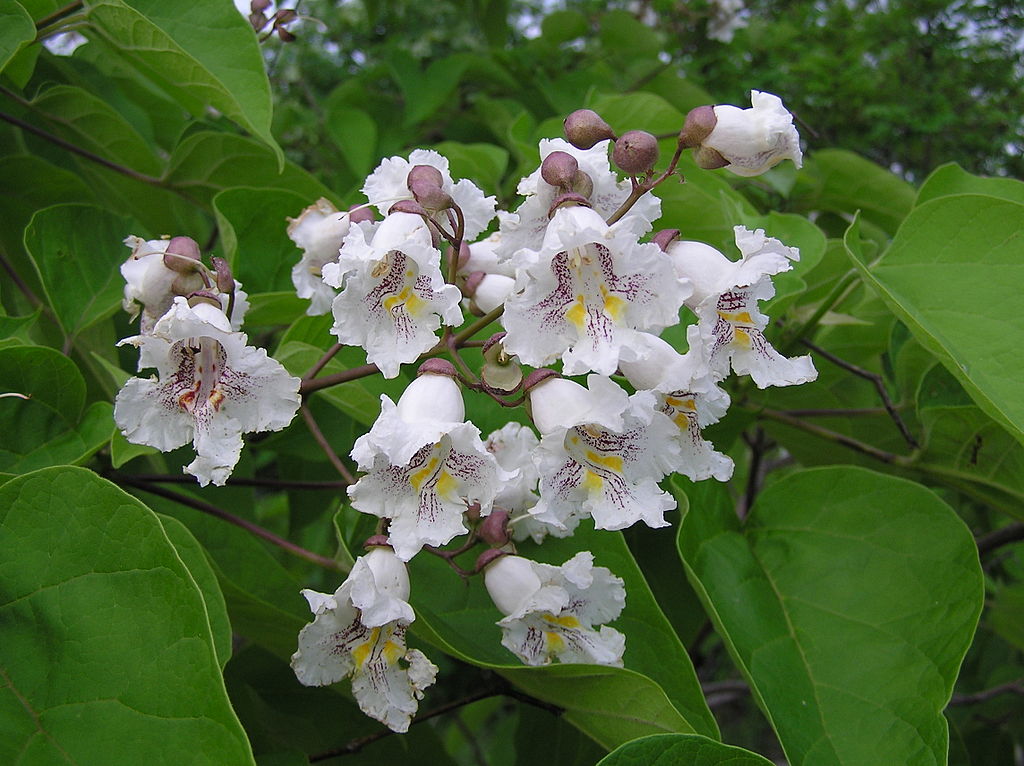
Catalpa bignonioidesv
Flowers gathered in large erect panicles or terminal racemes, located at the tips of leafy shoots of the current year. Calyx irregularly notched, two-lipped or two-toothed, thin. Corolla with darker spots and streaks in the throat, bell- to funnel-shaped or campanulate, with a two-lipped limb consisting of 5 fringed-wavy lobes. The upper lip is divided into 2 narrow lobes, the lower lip is three-lobed. Stamens number 5, of which 2 are fertile. Blooms in summer for 20-25 days.
Catalpa bignonioides
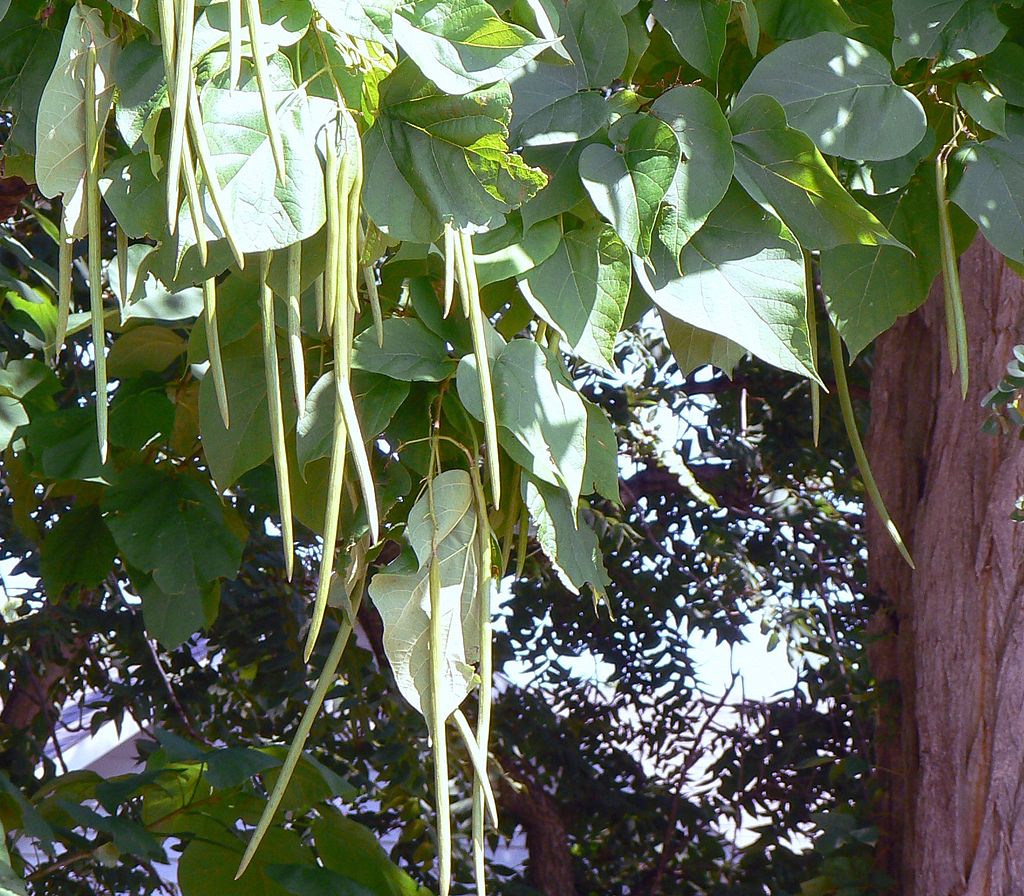
Fruits are long, pendulous, slender capsules, externally resembling legume pods. Fruits remain hanging on the tree throughout the winter. Seeds flat, thin, with sharp wings, at the ends with a fringe of long white hairs.
Species: the genus includes 11 species, 10 of which are used in ornamental horticulture (2 of which are hybrids). The most widespread species is Catalpa bignonioides.
- Catalpa bignonioides Walter - Bignonioid catalpa or lilac-leaved
- Catalpa brevipes Urb.
- Catalpa bungei C.A.Mey.
- Catalpa duclouxii Dode
- Catalpa fargesii Bureau
- Catalpa longissima (Jacq.) Dum.Cours. – long-leaved catalpa
- Catalpa macrocarpa (A.Rich.) Ekman ex Urb. – large-leaved catalpa
- Catalpa ovata G.Don – ovate catalpa or Henry Kaempfer
- Catalpa purpurea Griseb.
- Catalpa speciosa (Warder ex Barney) Warder ex Engelm. – showy catalpa or heart-shaped
- Catalpa tibetica Forrest – Tibetan catalpa
Hardiness zone: 5-8 (-25°C).

Position: sun-loving, recommended to plant in sunny, sheltered from strong winds sites. Requires fertile soil. Most ornamental on rich, moisture-retentive, slightly alkaline soils. Relatively tolerant of urban conditions.
Planting: Optimal soil mix: compost of 3 parts humus, 2 parts leaf mould, 1 part peat and 2 parts sand.
Watering: Moisture-loving, requires soil moisture rather than air humidity, tolerates waterlogging and stagnant water well. Drainage is not necessary. In hot, dry summers weekly watering is necessary at a rate of 15-20 liters of water per plant.
Care: responds well to fertilization.
Pruning: needs only sanitary pruning. Ability to produce shoots is high.
Pests and diseases: rarely affected.
Propagation: mainly by seeds or cuttings, which are rooted at the end of summer, as well as by layering.
Uses: ideal for solitary plantings, small groups, alleys in sheltered locations of the garden.