
Deciduous trees
Rare-flowered hornbeam
Carpinus laxiflora
Synonym: Distegocarpus laxiflora Siebold & Zucc
Rare-flowered hornbeam (Carpinus laxiflora) – a species of deciduous trees of the genus Carpinus in the birch family (Betulaceae). In cultivation since 1914. First described by Ohwi, J. 1965. Flora of Japan. 1067 pp. Smithsonian Institution, Washington, D.C.
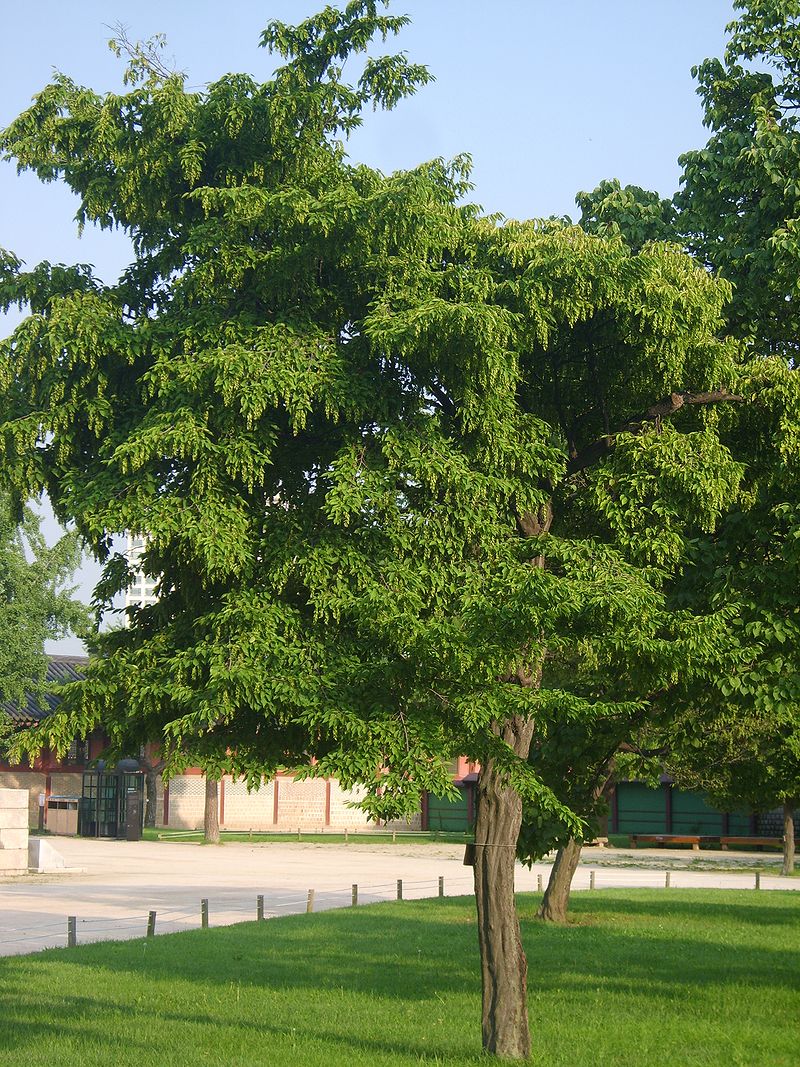
Occurs naturally in Japan and on the Korean Peninsula. Grows together with Japanese hornbeam in mountain deciduous forests, but in warmer locations. The upper limit of its range in the south lies at about 1000 m above sea level; to the north it descends to the coastal strip.
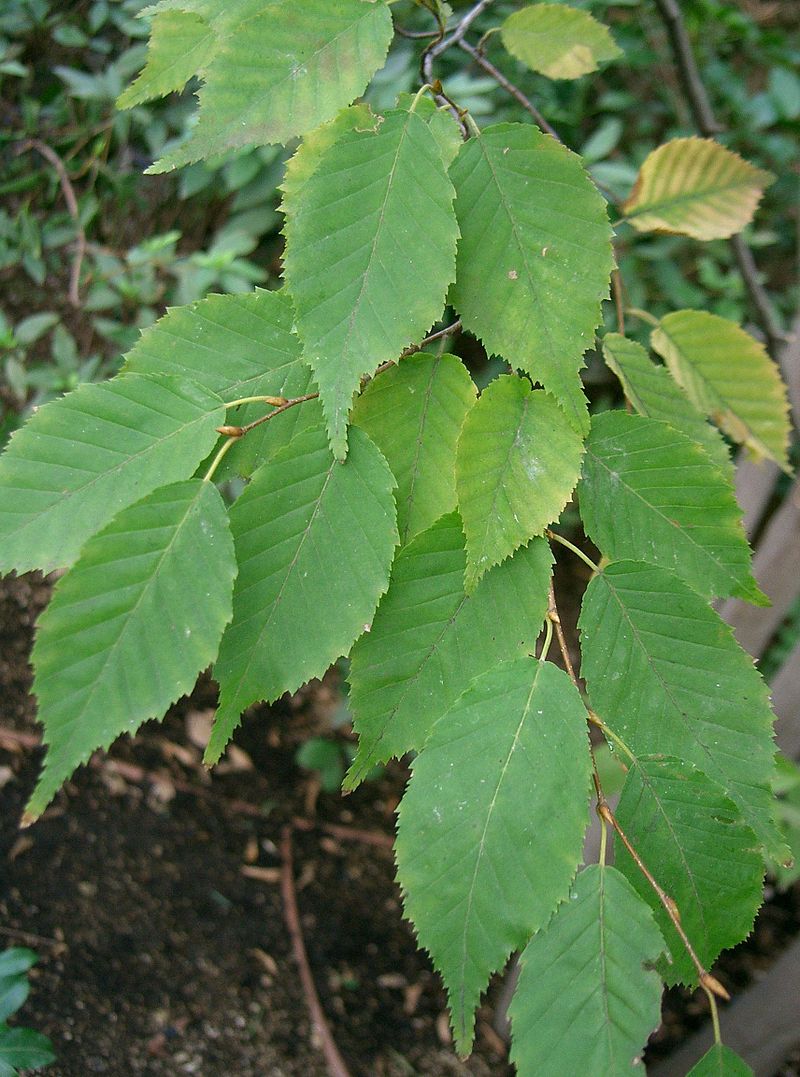
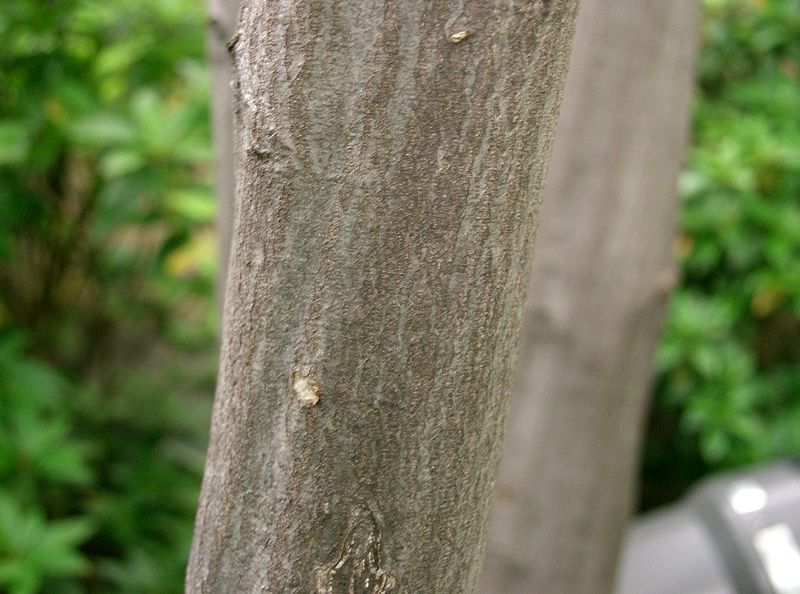
A deciduous tree up to 15 m tall. Trunk thin, graceful, covered with smooth, light-gray, sometimes almost white bark. Buds about 1 cm long, reddish-brown, shiny. Leaves ovate or ovate-elliptic, 4—7 cm long, 2—4 cm wide, sharply tapering to a long point, base unevenly rounded, glabrous, on petioles 6—18 mm long.
Pistillate catkins pendulous, loose, 5—7 cm long, on long stalks. Bract scales weakly three-lobed, with a sharp lanceolate central lobe at the base, serrated on one side.
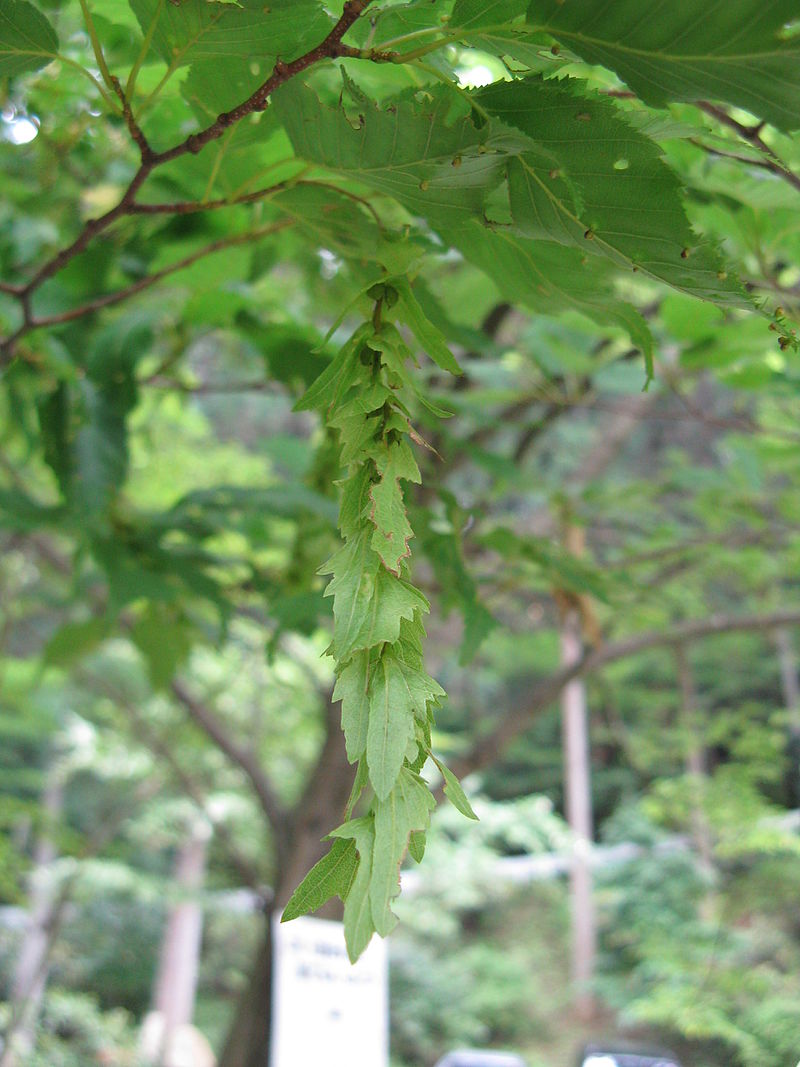
Fruits are glandular-punctate nuts.
Hardiness zone: 6 (-25°C).

Location: shade-tolerant, but can also grow in bright locations. Wind-resistant. Not demanding regarding soil fertility and moisture.
Pruning: tolerates cutting and pruning well. Used for creating hedges and clipped ornamental forms.
Care: practically requires no maintenance. Young plants need winter protection.
Propagation: in cultivation propagated by seeds, which must be stratified in 2 stages: for 15-60 days at 20°C and for 90-120 days at 1-10°C. Seed germination 40%. Cutting rooting rate 55%. In autumn seeds are sown immediately after collection. Store seeds in tightly sealed containers, cellophane or paper bags in the refrigerator or in a dry unheated room with humidity 9 - 19% at 3°C. In this way seeds retain viability for 2 - 3 years. Laboratory germination 69.6%. Sowing depth 2 - 3 cm.
Diseases and pests: practically not affected
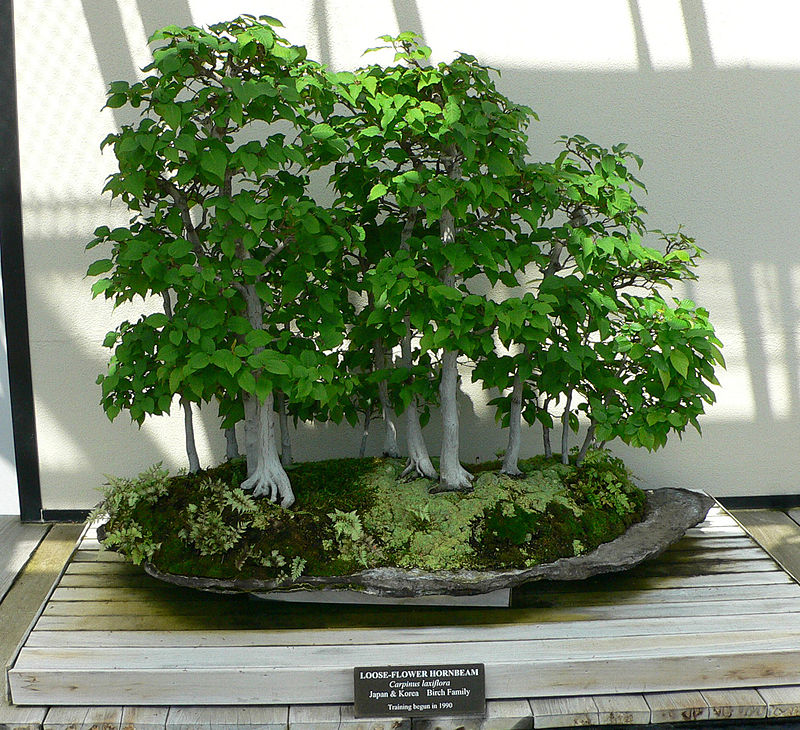
Uses: used for decorating gardens, parks, squares, forest parks, in solitary and group plantings, for creating dense hedges. Very effective at reducing urban noise. An excellent humus former. Can be grown in bonsai style.