Flowers for the garden
Canna
Canna
Canna (lat. Canna) — the sole genus of the monotypic family Cannaceae (lat. Cannaceae), belonging to the order Zingiberales. The genus comprises about 50 species, mainly distributed in Central and South America. Members of the genus grow in open sunny locations, in moist, humus-rich soils, along river and stream banks, on coastal plains and in mountain gorges.
The name derives from the Greek word 'kanna' — reed, due to a certain similarity in stem structure.
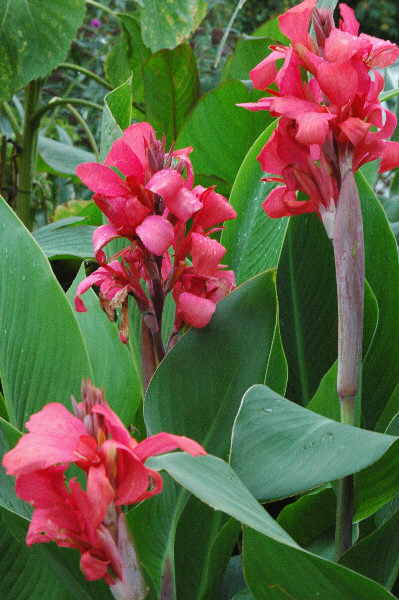
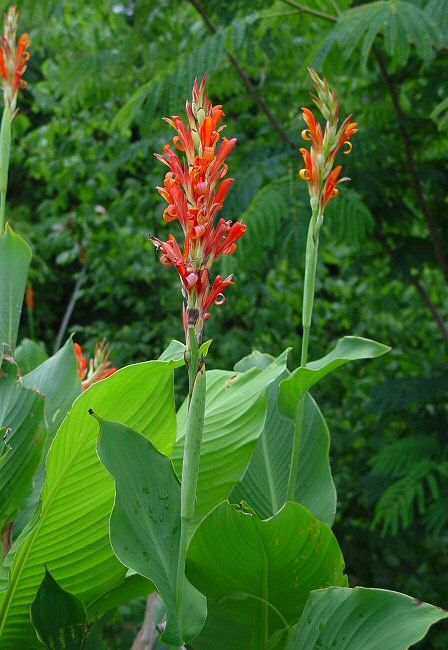
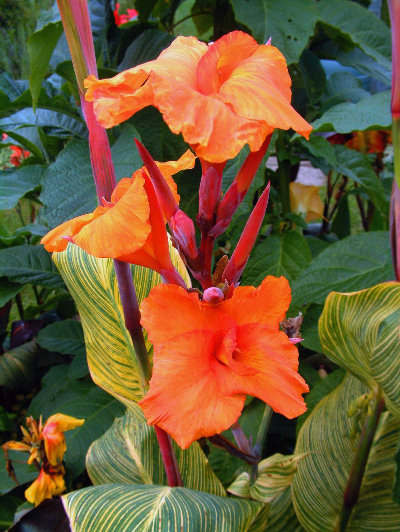
Perennial herbaceous plants with branching rhizomes and large leaves arranged in two ranks on shortened stems. Flowers are strongly asymmetric, large, 4–8 cm in diameter, bright yellow, orange, or red. Only a few species have white flowers. Flowers bisexual, trimerous, with an oval or lanceolate bract. Fruits are three-celled capsules, ovoid or cylindrical in shape. Seeds are black, 6–10 mm in diameter.
In cultivation:
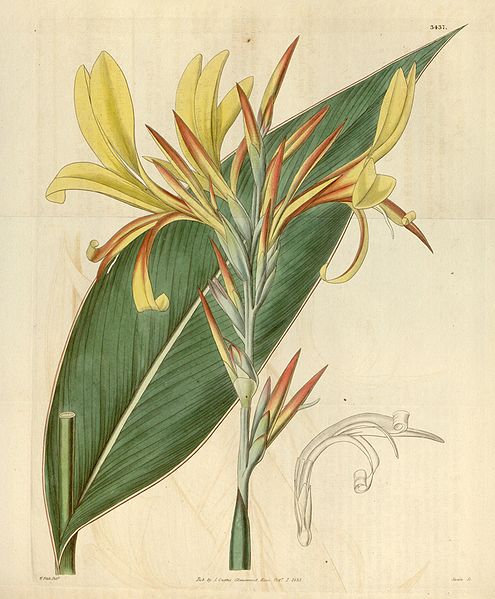
Canna flaccida — Canna flaccida
Perennial evergreen plants 1.2—2 m tall. Rhizome almost vertical. Leaves oblong-lanceolate, narrowed at the tip, 20—60 cm long, 10—13 cm wide. Inflorescence a sparsely-flowered raceme. Flowers 6—8 cm long, attractive, tawny-yellow, somewhat reminiscent of the flowers of Iris pseudocorus. In cultivation since the late 18th century, used mainly for indoor pools and for warm outdoor pools. The principal progenitor of the group of hybrid Italian, or orchid-flowered cultivars.
Garden canna — Canna х generalis Bailey
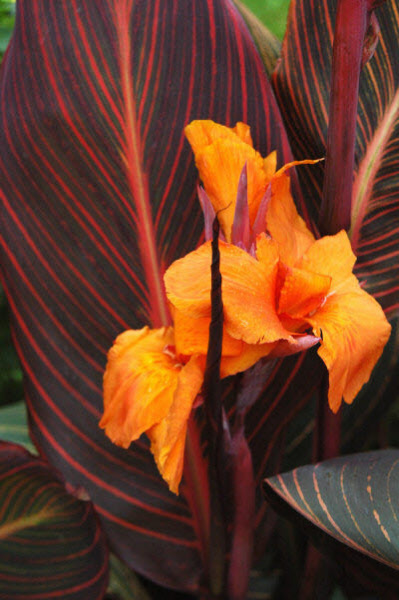
A collective name for garden hybrids of complex hybrid origin. At present about 1,000 cultivars are described, differing in height, leaf and flower color, size and flowering time. Widely used in landscaping practice. These include, first of all, glaucous-leaved cultivars of the 'Crozy' group, large-flowered so-called "orchid-flowered" cultivars, and 'Humboldt'-type cultivars with orange flowers and brownish-red leaves. Very rarely, mainly in botanical gardens, one can see "true" species of canna.
Examples of cultivars:
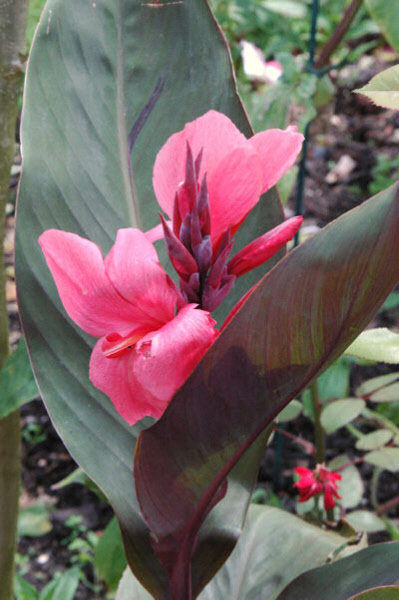
'America' ('Amerika') — Plant 120–140 cm tall. Flowers vermilion-red up to 12 cm in diameter. Inflorescence 30–35 cm long. Leaves dark purple. Flowers from July. Sometimes sets fruit.
'Andenken an Pfitzer' ('Andenken an Pfitzer') — Plant 110–140 cm tall. Flowers bright orange, at the base with reddish streaks. Inflorescence up to 30 cm long. Leaves brown-purple. Flowers from July. Does not set fruit.
'K.A.Timiryazev' — Plant 80–90 cm tall. Flowers raspberry-red with a bright yellow margin. Inflorescence 20–25 cm long. Leaves purple-green. Flowers from July. Sets fruit.
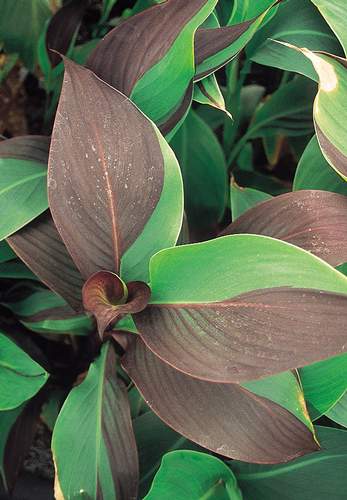
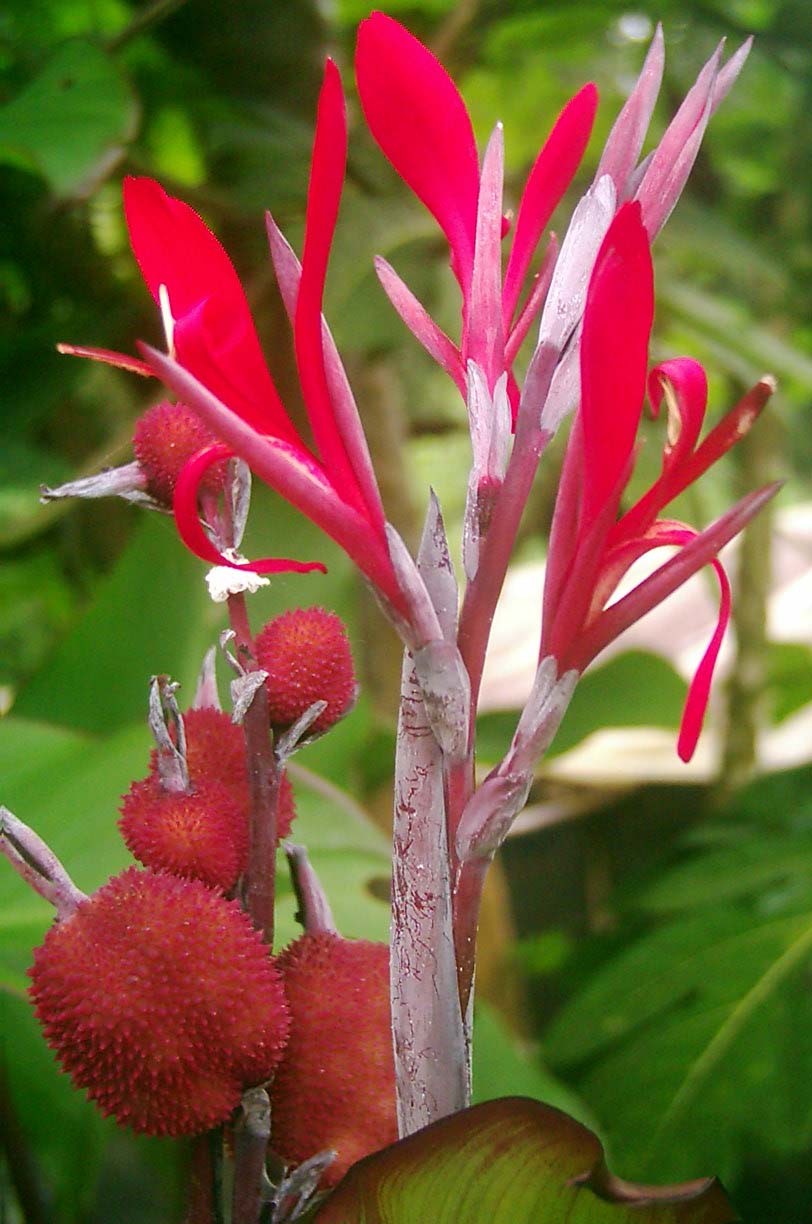
'Klara Buisson' ('Klara Buisson') — Plant 110–120 cm tall. Flowers orange-red, inner petals slightly speckled. Inflorescence 23–27 cm long. Leaves purple. Flowers from July. Produces abundant fruit.
'Livadia' — Plant up to 100 cm tall. Flowers raspberry-red. Inflorescence 25–30 cm long. Leaves purple. Flowers from July. Sets fruit.
'President' ('President') — Plant up to 100 cm tall. Flowers bright red. Inflorescence about 30 cm long. Leaves green. Flowers from July. Does not set fruit.
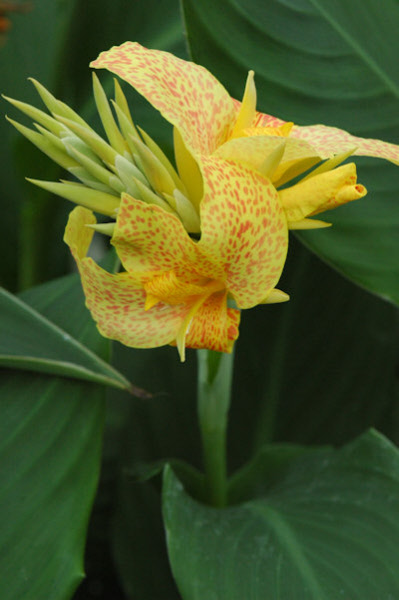
'R. Wallace' ('R. Wallace') — Plant up to 100 cm tall. Flowers light yellow with reddish-pink spots. Inflorescence 20–23 cm long. Leaves green. Flowers from July. Does not set fruit.
'Sunny Beauty' — Plant up to 100 cm tall. Flowers creamy-yellow, arranged in an inflorescence 25–27 cm long. Leaves green. Flowers from July. Sets fruit.
Location: require a sunny, wind-sheltered position.
Soil: require loose, fertile soil and abundant watering. To ensure more luxuriant growth for cannas, a hot bed of manure is made. For this purpose, in a hole 70 cm deep fresh horse manure (layer at least 20 cm) is placed to three quarters and then covered with a layer of soil 20—25 cm thick. The heat generated by the fermentation of the manure promotes luxuriant flowering of cannas.
Care: consists of watering and fertilizing. In winter the rhizomes of cannas are lifted with a ball of earth. Canna rhizomes for winter storage are kept in dry cellars, in partitions or in cold greenhouses, carefully arranged and lightly interlayered with soil or sand. The temperature during autumn-winter storage of canna rhizomes is maintained at about 7—8 °C and from time to time the rhizomes should be inspected and any rotting specimens removed.
Propagation: by division of rhizomes and by seed.
Zone: 7-8