
Indoor plants
Lemon bottlebrush
Callistemon citrinus (Curtis) Skeels
Synonyms: Metrosideros citrina Curtis, Callistemon lanceolatus (Sm.) Sweet, Callistemon citrinus (Curtis) Skeels, lemon bottlebrush
Callistemon citrinus (Callistemon citrinus (Curtis) Skeels) – a species of evergreen trees or shrubs in the genus Callistemon of the myrtle family (Myrtaceae). The plant was first discovered by the English botanist Joseph Banks in 1789 at the Royal Botanic Gardens, Kew. It occurs in the coastal areas of New South Wales, including the Blue Mountains, and extends westwards to the Central Western Slopes. It also grows in areas of the east coast of Victoria and in swamps, along streams and rivers.
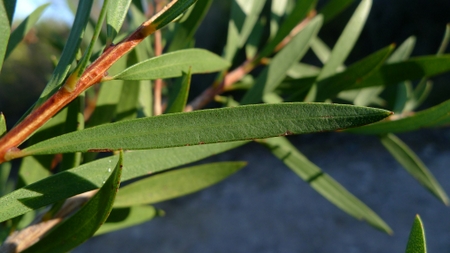
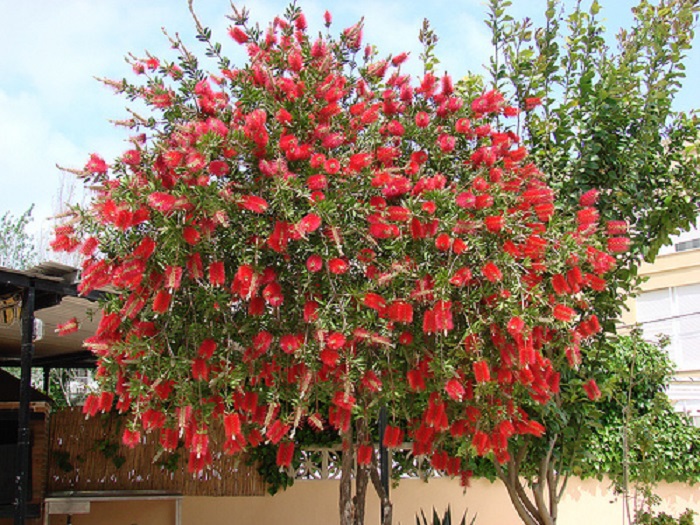
A small evergreen tree or shrub 2-
Leaves narrow, round or lanceolate, leathery, spear-shaped, emitting a citrus scent when crushed; at first tender, later stiff.
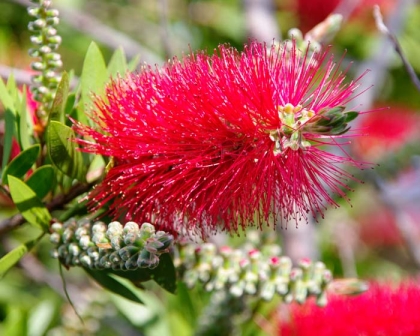
Flowers are gathered at the ends of branches in dense cylindrical inflorescences resembling a bottle brush, 5-
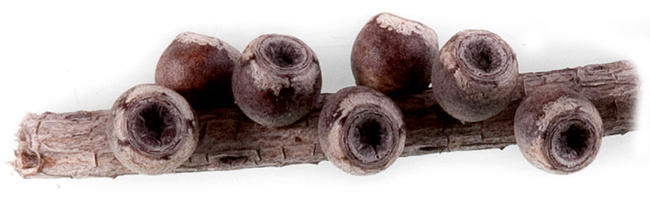
Fruits — woody, many-seeded capsules, globose or ovoid, .4–7 mm in length and up to
Hardiness zone: 8a (-12°C).

Location: From mid-May it is best kept outdoors in a sunny position. In winter place in a bright, cool room. The plant tolerates dry air. Does not tolerate calcareous (lime-rich) soil.
Light: bright light. In poor light the plant does not flower.
Temperature: in summer it is best to move outdoors, as Callistemon greatly appreciates fresh air. In winter it is preferable to keep at 10–12°C.
Watering: in summer the soil should be kept constantly slightly moist. Water only with soft water. In winter water very little.
Air humidity: on hot days it is recommended to mist the plant with settled (standing) water.
Feeding: feed during the period of active growth (use a fertilizer for flowering plants) every two weeks. Do not fertilize in autumn and winter.
Pruning: branching begins when the plant reaches 20-
Care: when grown in pots it is recommended to prune regularly in spring so that the plant does not become too tall and forms a good bush.
Propagation: in summer by apical cuttings, with the exception of C. citrinus. Its seedlings grow slowly and for a long time before flowering. Cuttings root in sand when covered from above with a glass jar, as they require high air humidity.
Repotting: in spring if necessary. Soil mix of equal parts leaf soil, turf soil, humus-rich soil, peat and sand.
Pests: spider mite, aphids, whitefly.
Uses: in the conditions of Ukraine it is grown only as a houseplant.