Indoor plants
Biophytum
Biophytum
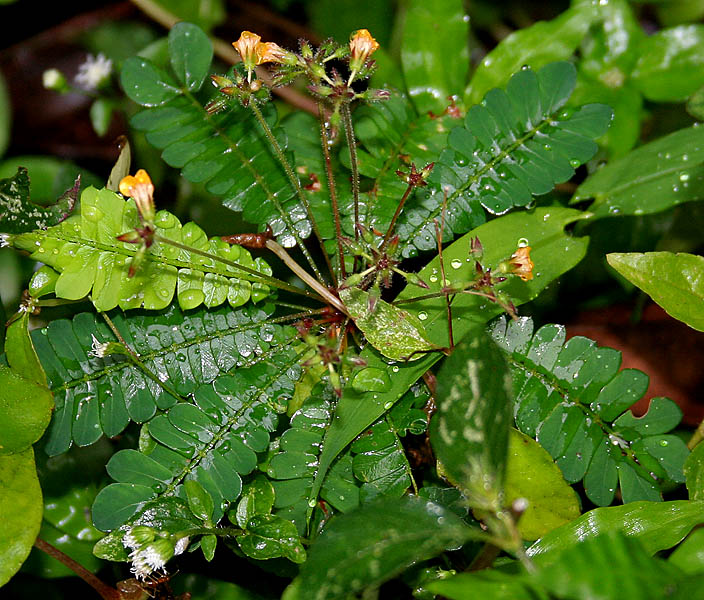
The genus Biophytum (Biophytum) includes about 50 species of perennial and annual plants of the wood-sorrel family (Oxalidaceae), widespread in the tropics.
The genus name comes from the Greek «bios» – life and «phyton» – plant. The plant is characterized by a reaction to sudden external stimuli – it folds its leaves. Leaf movement occurs as a result of changes in turgor pressure in the cells of the pulvini at the leaf joints. Flowers are orange, yellow, white, or pink. A single stem with a cluster of leaves at the top gives the plant the appearance of a small «palm». In indoor horticulture, mainly Biophytum sensitivum is used.

Extracts of Biophytum leaves are used in medicine for the treatment of diabetes. biophytum petersianum is a traditional medicinal plant for wound healing in Mali and other African countries.
In indoor culture Biophytum suffers from dry air, so it is optimal to grow it in terrariums.
Biophytum sensitivum (Biophytum sensitivum Temperature: prefers moderate air temperatures, 18–25°C in the spring-summer period; in autumn-winter a temperature of 16–18°C is desirable, not lower. Light: prefers bright diffuse light, suitable for growing on west- and east-facing windows. The plant should be shaded from direct sunlight. In autumn and winter it is recommended to supplement lighting with daylight lamps. Watering: in spring and summer requires abundant watering; in autumn and winter watering is reduced to avoid soil acidification/overwetting. Water only with soft water at room temperature. Do not allow substrate over-wetting. Fertilizer: during the growing season feed Biophytum once every 2–3 weeks with fertilizers, alternating mineral and organic dressings. Air humidity: the plant is demanding of humidity, does well in terrariums and greenhouses; in indoor conditions it is necessary to mist with soft water twice a day. To increase humidity, the pot can be placed on a tray with moist expanded clay or moss. Repotting: as needed, once every 2–3 years. Propagation: by seeds in spring. Seeds are sown in spring; before planting they are soaked for 10 minutes in a weak pink solution of potassium permanganate and sown into sand or sand + peat, then moistened. Maintain a temperature of 21–22°C, mist constantly and ventilate regularly. Using a mini-greenhouse accelerates rooting. After the seedlings develop two or three leaves, they are pricked out into pots of appropriate size. Dormancy period: in indoor conditions it is forced (from October to February) due to reduced light and air humidity; temperature 16–18°C, not lower.