
Deciduous trees
Common hornbeam
С. betulus L.
Synonyms: граб европейский, граб кавказский, Carpinus carpinizza Kil., Carpinus caucasica Grossh., Carpinus compressus Gilib., Carpinus intermedia Wierzb., Carpinus nervata Dulac, Carpinus quercifolia Desf. ex Steud., Carpinus sepium Lam., Carpinus ulmifolia St.-Lag., Carpinus ulmifolia Salisb, Carpinus ulmoides Gray, Carpinus vulgaris Mill.
Common hornbeam (L.) – a species of plants of the genus Carpinus in the family Betulaceae. It was first described by Carl Linnaeus in 1753 Sp. Pl. Tomus II: 998.
The range covers the entire continental part of Europe; it is also distributed in Asia Minor, the Caucasus, Transcaucasia, and the Iranian Plateau. Grows in mixed broad-leaved forests, less often forming pure stands. Rises up to 2000 m above sea level in the Eastern Caucasus. In natural conditions it grows in the second layer of mixed forests.
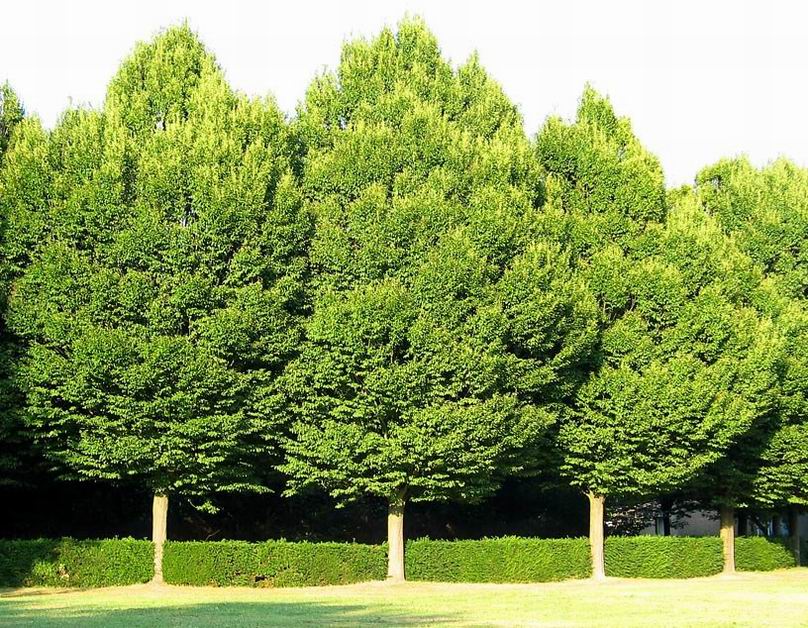
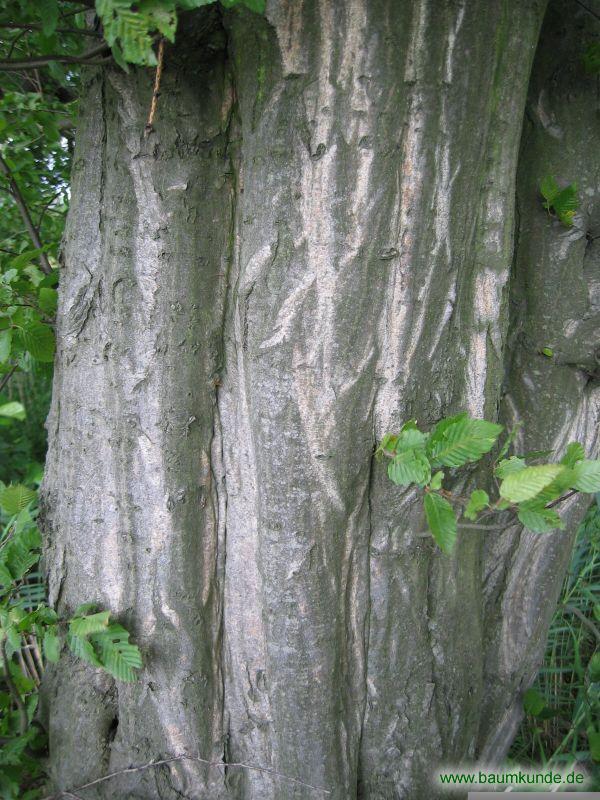
It is a deciduous tree 7–12 m tall, rarely up to 25 m tall, with a trunk diameter up to 40 cm. Lives up to 150 years. Up to 5 years it grows very slowly, later growth accelerates up to 35 cm in height and 25–35 cm in width, by 30–40 years it slows down again. Crown dense, cylindrical in shape, rounded at the top. Trunk ribbed, sometimes slightly twisted. Bark on young trees silvery-gray, smooth; on more mature trees with deep longitudinal cracks. Branches long, thin, margins drooping in spring, erect in summer; young shoots brown, with lenticels, glabrous or sparsely pubescent. Buds narrow, acute, 5–8 mm long.
Root system superficial, strongly branched, with lateral anchor roots going deep into the soil, slow-growing.
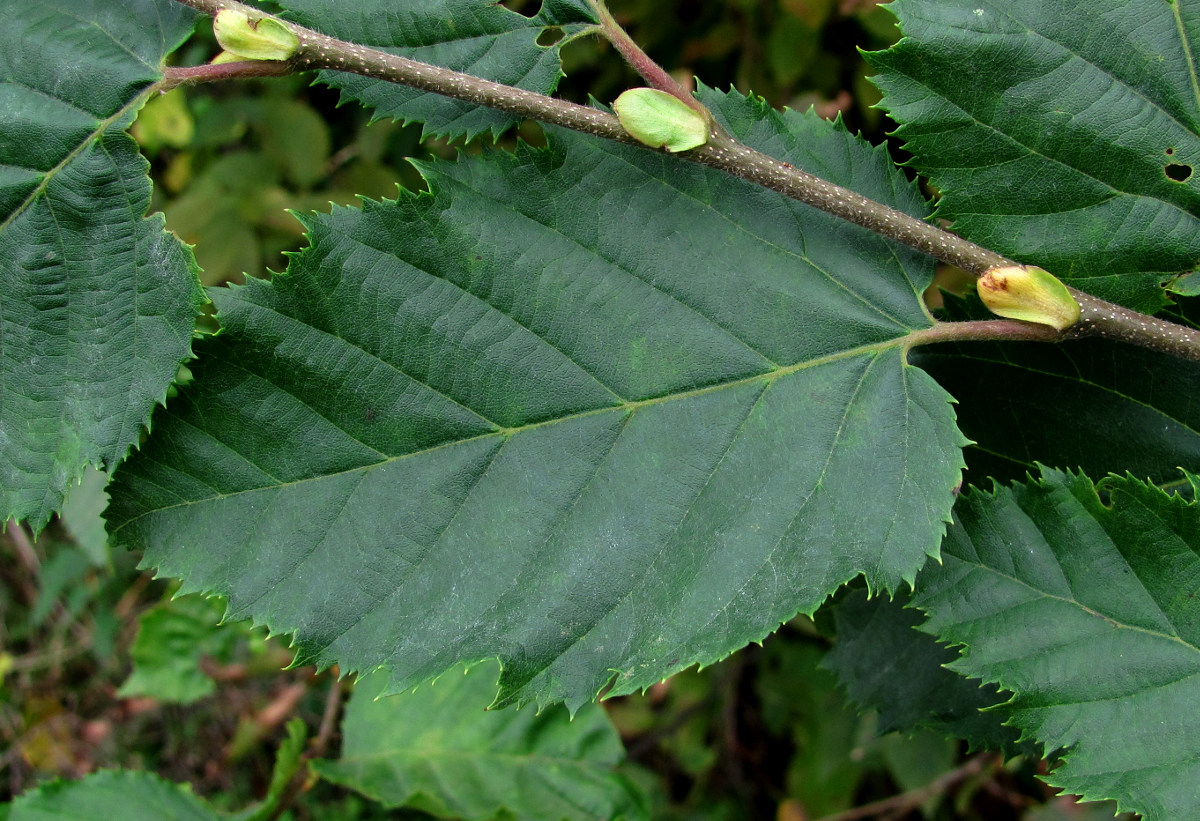
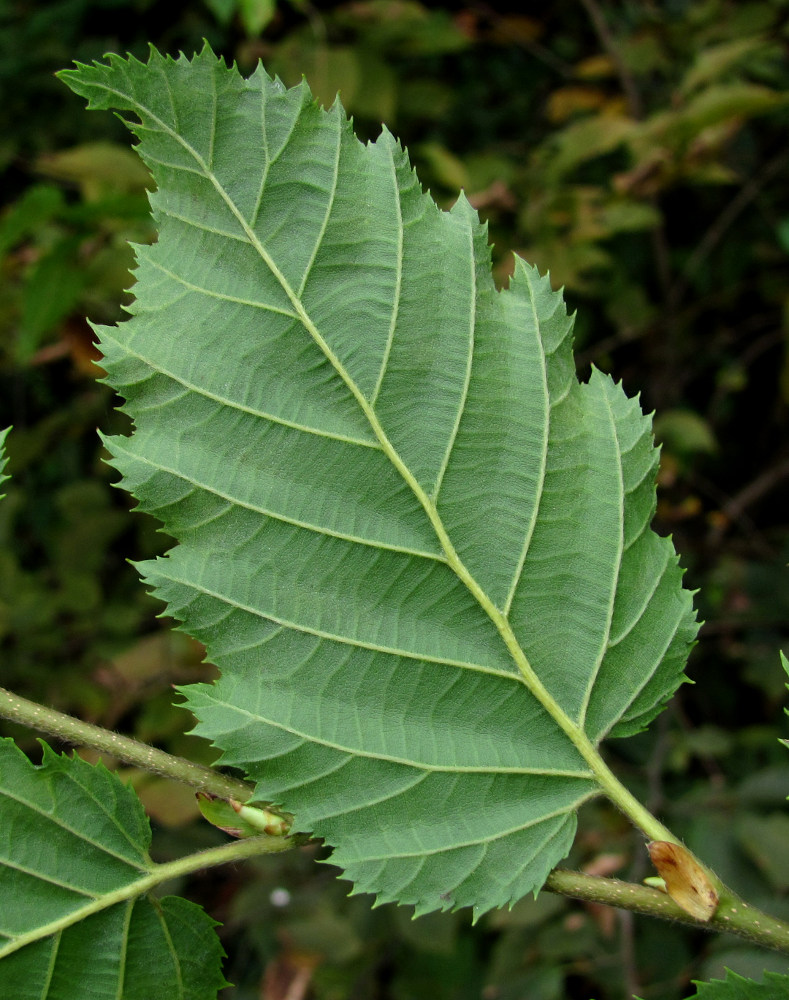
Photo G. Okatov
Leaves oval or ovate-lanceolate in shape, pointed, rounded at the base or slightly obliquely cordate, up to 15 cm long and up to 5 cm wide, dark green above, lighter below, almost glabrous, leathery. Petioles up to 15 mm long. In autumn the leaves turn yellow and lemon-yellow tones.
 |  |
| Photo S. Mayorov | Photo T. Vinokurova |
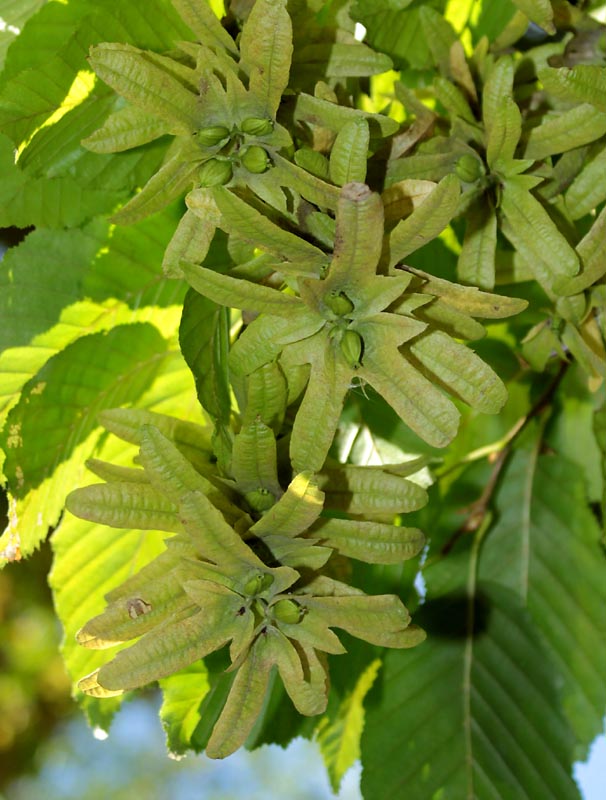
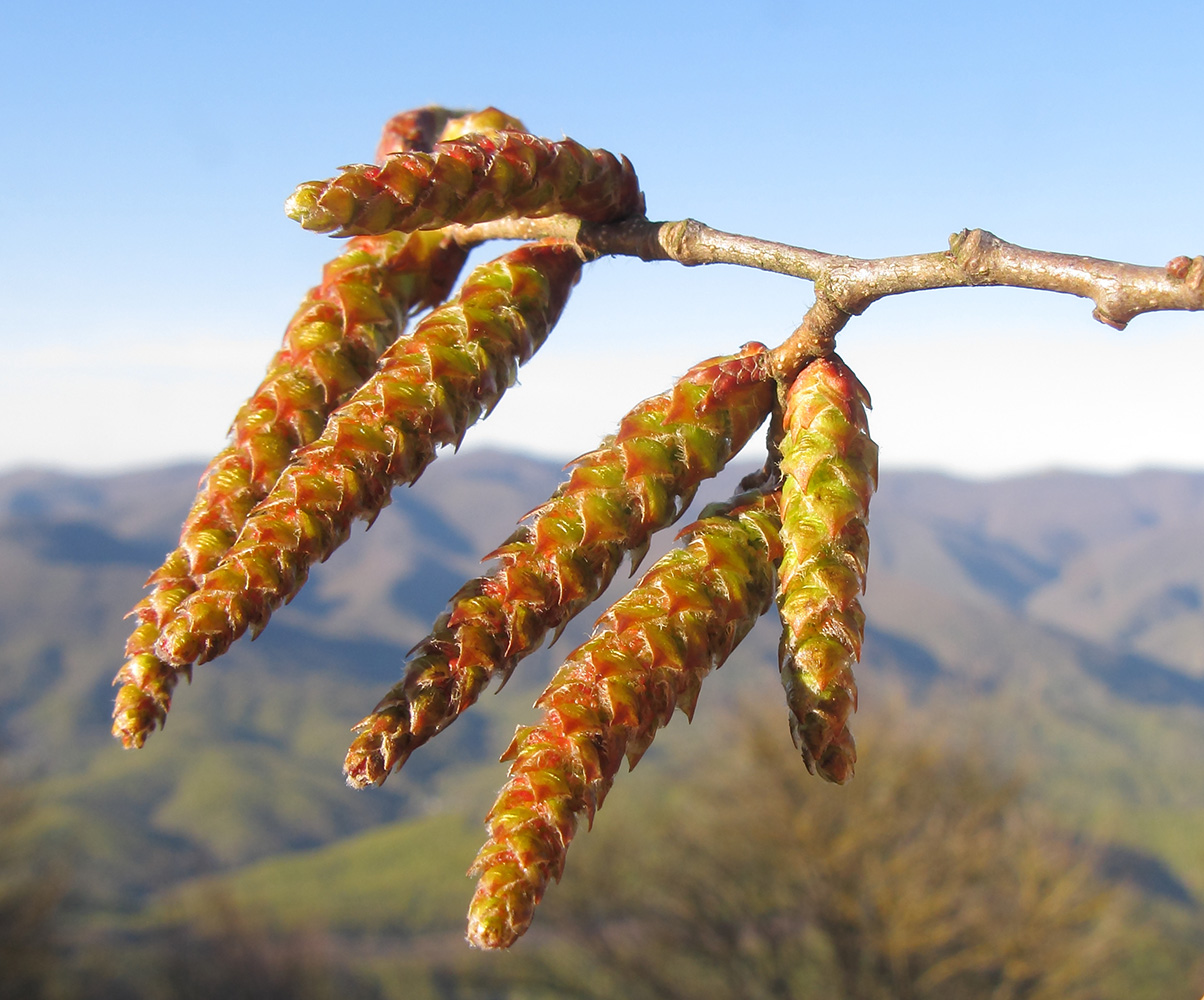
The plant is monoecious. Staminate catkins loose, up to 6 cm long and up to 1 cm wide. Bract scales ciliate, yellowish with reddish-brown edges, acute, with 5–7 stamens at the base, anthers pubescent above. Pistillate catkins up to 15 cm long and up to 6 cm in diameter. Bracts at the fruits leathery, 3–6 cm long, three-lobed, serrate or entire. Flowers in April – May.
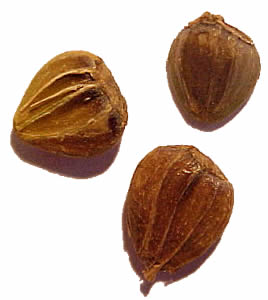
Fruits – small, oval, slightly flattened on the sides, shiny, brown nutlets, 3–6 mm long with 7–11 ribs, borne in a covering leaf. Usually 10–30 nutlets develop in each catkin. In 1 kg there are 30–35 thousand unwinged nutlets. Fruiting occurs in September – October, from 15–20 years of age.
Forms: pyramidal (f. fastigiata), columnar (f. columnaris), weeping (f. pendula), cut-leaved (f. incisa), oak-leaved (f. quercifolia), purple (f. purpurea), variegated (f. variegata).
Hardiness zone: 4a (-34.4°C).
Location: shade-tolerant, but can also grow in sunny sites. Wind-resistant. Not demanding regarding soil fertility and moisture.
Pruning: tolerates clipping and pruning well. Used for creating hedges and clipped ornamental forms.
Care: practically does not require care. In youth requires winter protection.
Propagation: in cultivation propagated by seeds, which must be stratified in 2 stages: for 15–60 days at 20°C and for 90–120 days at 1–10°C. Seed germination 40%. Cutting strike rate 55%. Seeds are sown in autumn immediately after collection. Store seeds in tightly closed containers, cellophane or paper bags in a refrigerator or a dry unheated room with humidity 9–19% at 3°C. Under these conditions seeds retain viability for 2–3 years. Laboratory germination 69.6%. Sowing depth 2–3 cm.
Diseases and pests: practically not affected.
Uses: used to decorate gardens, parks, squares, forest parks, in solitary and group plantings, for creating dense hedges. Very effective at reducing urban noise. Excellent humus-former. Can be grown in bonsai style.