
Deciduous shrubs
Ottawa barberry 'Auricoma'
Berberis × ottawensis Auricoma
Ottawa barberry Auricoma – a cultivar of Ottawa barberry.
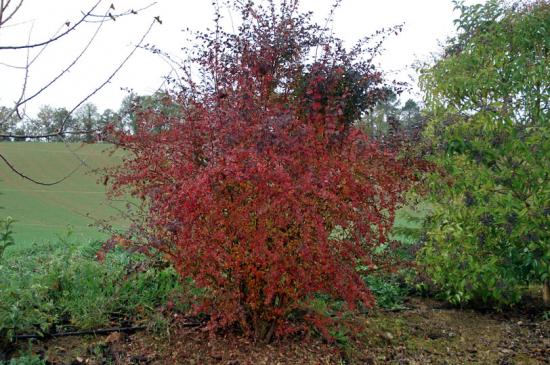
It is a deciduous shrub up to 2-3 m in height and 22.5 m in width. Annual growth reaches 20 cm. The crown is upright when young, later spreading. Main shoots grow vertically, lateral ones hang in an arch. Bark reddish-brown on young shoots, on branches – light green. Thorns three-part, grow on long shoots, up to 1.5 cm long.
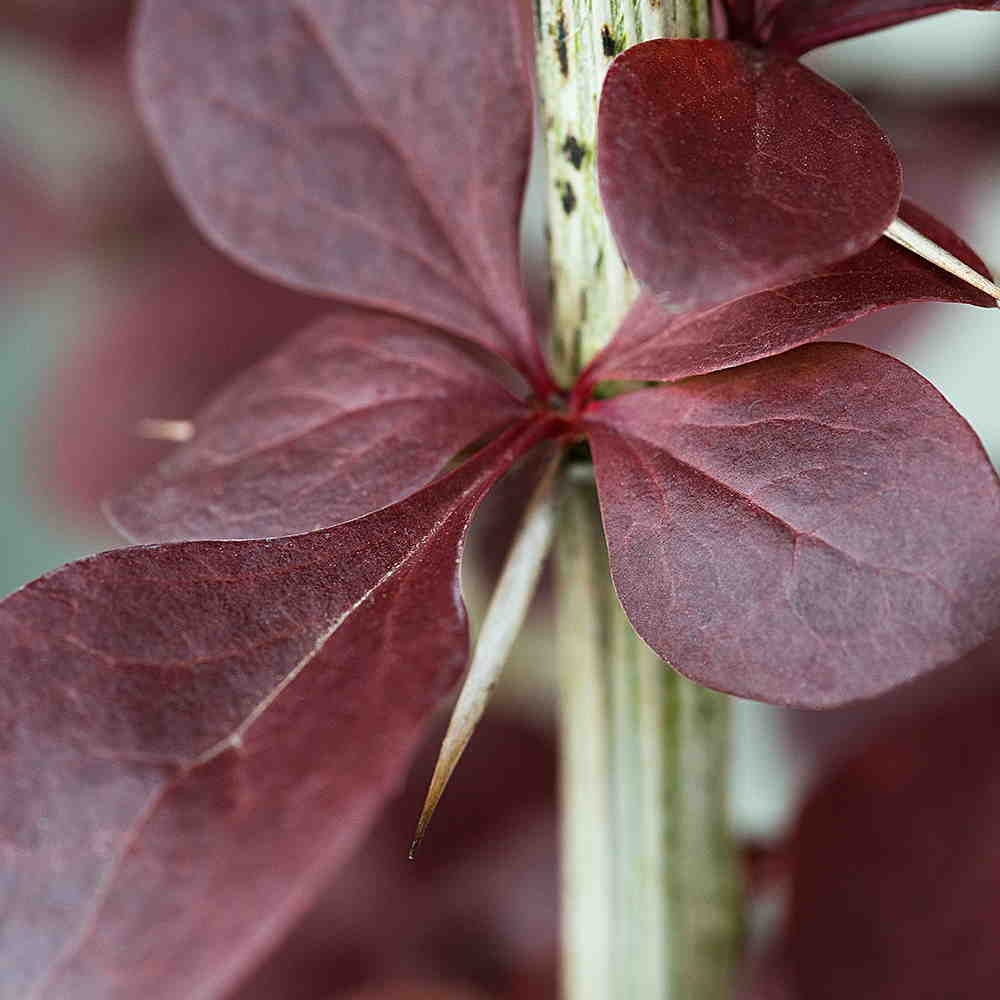
Leaves alternate, very large, up to 5 cm long, rounded in shape. When unfolding the leaves are a deep dark red, coated with a bluish bloom; on young shoots they are purple-red, on branches greenish-red, in autumn becoming light red or orange.
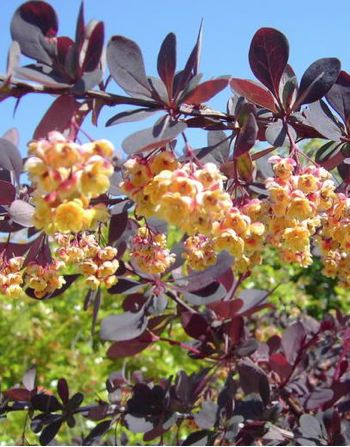
Flowers in May-June. Flowers small, up to 1 cm in diameter, gathered in clusters or inflorescences on the peduncle, yellow-red, fragrant.
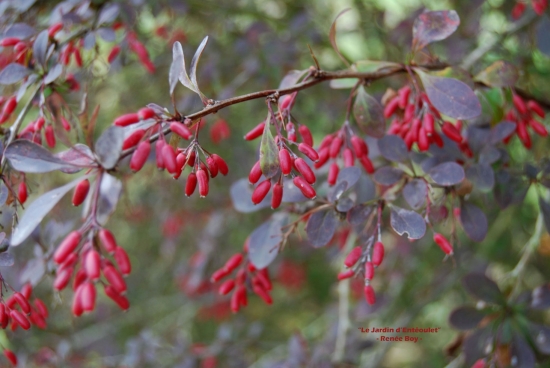
Fruits elongated-ovoid, light red, edible, very decorative, adorn the shrub until December. They appear in late August – early September.
Hardiness zone: 6 (-15 °C).
Location: sun-loving, but tolerates partial shade. Heat-tolerant, winter-hardy, drought- and wind-resistant, relatively smoke-tolerant. Does not tolerate prolonged waterlogging. Prefers fertile, moderately moist soil. Tolerates urban conditions well.
Planting: planting is best done in spring or autumn. If acidity is above pH 7, it is recommended to lime the soil. Planting mix: peat, topsoil, humus, 400 g slaked lime (if pH>7) and 200 g wood ash. Planting hole dimensions: 40x40 cm. For single plantings, spacing between plants should be 1.5-2 m. To create a living hedge prepare a trench and place shrubs at a rate of 2 shrubs per linear meter.
Care: care consists of shallow loosening of the root circles and mulching. Watering is recommended at least once a week with 2-3 buckets per plant. In spring, one year after planting, nitrogen-containing fertilizers can be applied. Further nitrogen feeding is not carried out earlier than after 3-4 years. In the first 2-3 years it needs to be covered with conifer boughs.
Pruning: tolerates trimming well.
Propagation: for spring sowing stratification is required at 1 - 5 °C for 3 - 4 months. Seed sowing depth 2 - 3 cm. Seed germination 5-12%, viability 60%. Rooting of summer cuttings 50%.
Diseases: bacterial canker, powdery mildew, leaf spot, rust fungus Puccinia graminis; the cultivar is susceptible to powdery mildew.
Pests: barberry aphid, barberry sawfly, barberry fruit moth, leaf-eating insects.
Uses: looks spectacular in living hedges, as solitary plantings in gardens, in groups as espaliers and in borders.