Flowers for the garden
Daisy
Bellis
Daisy (lat. Bellis) — a genus of herbaceous perennial flowering plants in the family Asteraceae (Asteraceae). The genus includes seven species. Natural range — Europe, Mediterranean countries.
The genus name originated from the Greek word 'bellus' — beautiful.
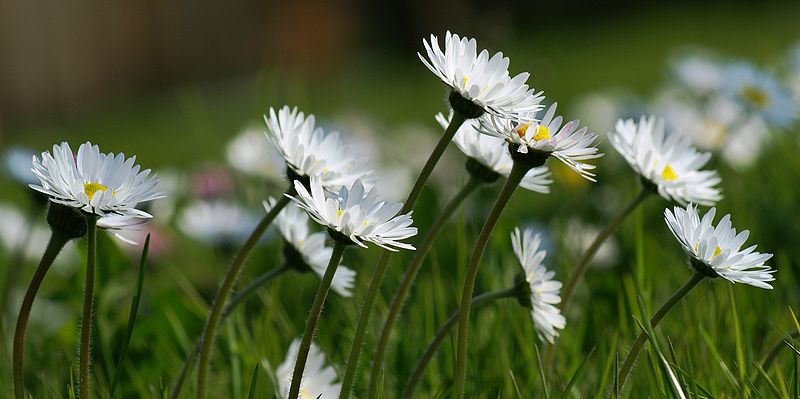
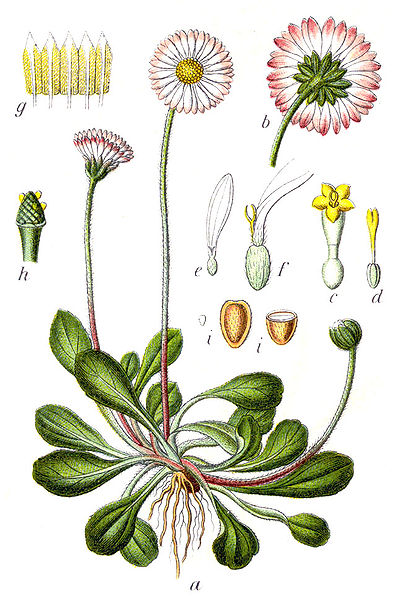
Small herbaceous plants with a short rhizome. Leaves spatulate, blunt, toothed, basal; aerial stem leafless, producing a single head. On the naked, conical receptacle develop the marginal female ligulate (ray) flowers, white or pink, and the central tubular bisexual flowers, yellow; fruit - a flattened achene.
In cultivation: Perennial daisy (lat. Bellis perennis)
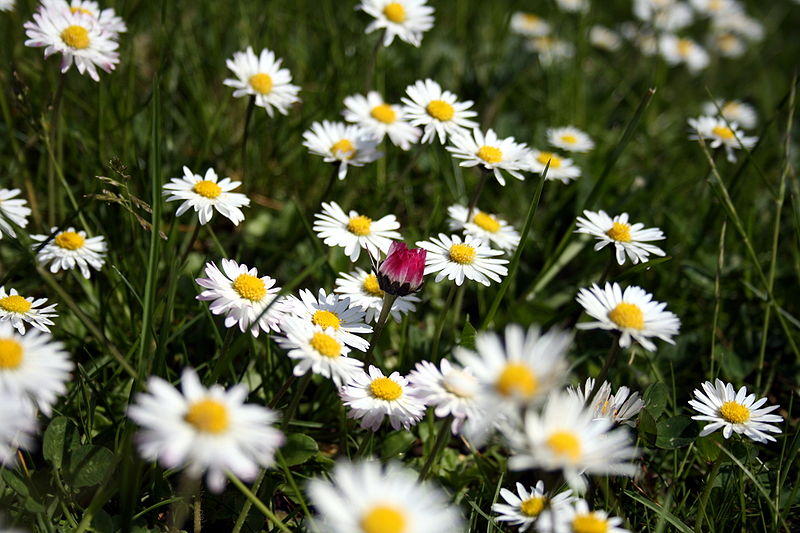
Natural range — North Africa, Western and Central Asia, Transcaucasia, Northern, Western, Eastern and Southern Europe.
A perennial herb, cultivated as a biennial, it reaches 10—30 cm in height. Rhizome short.
Leaves — oblong-ovate or ovate-spatulate, toothed at the margins, pubescent; forming a basal rosette. Stem leafless.
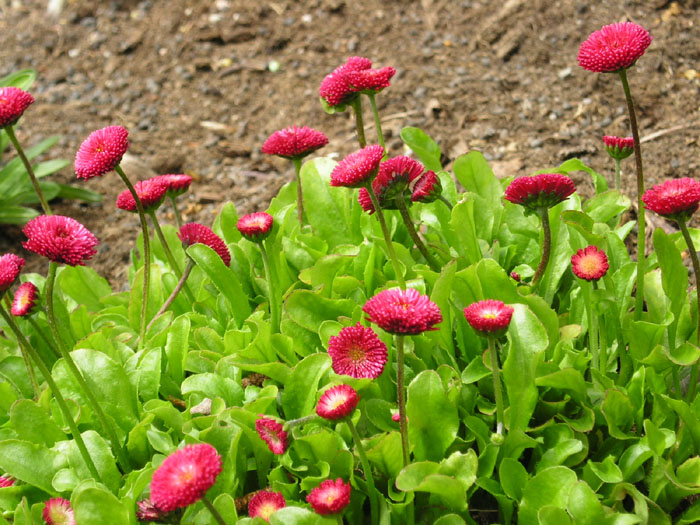
Inflorescences — solitary heads (capitula) with large pseudo-ligulate or tubular flowers at the margins of the inflorescence and small bisexual tubular yellow flowers in the center. Marginal flowers are white, pink or red. Inflorescences are borne on numerous scapes and reach 3—8 cm in diameter. Blooms in spring, early summer and sometimes throughout summer and autumn. Fruit — achene. Seeds ripen in June.
In ornamental gardening, the wild species and hybrids differing in color, size and degree of doubleness are used.
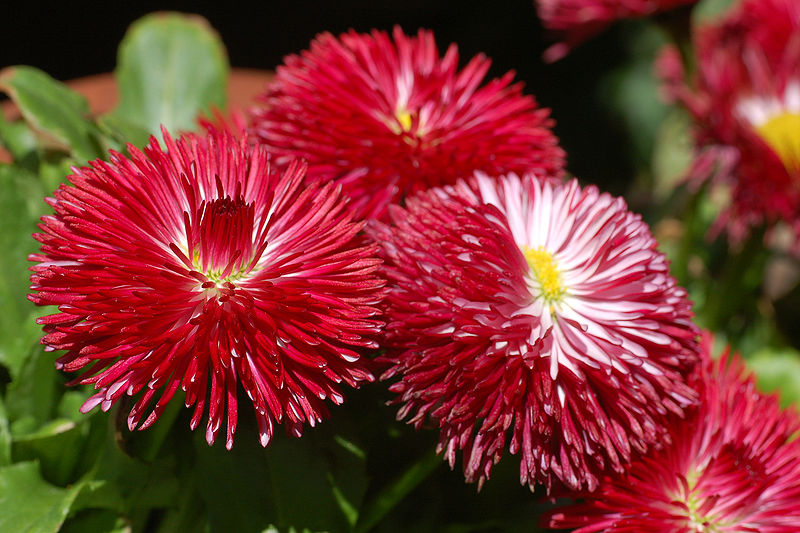
Location: prefer open sunny sites, but can grow in partial shade, especially during hot periods. Highly winter-hardy.
Soil: undemanding, grow on any well-drained soil, but flower more abundantly on light loams rich in humus.
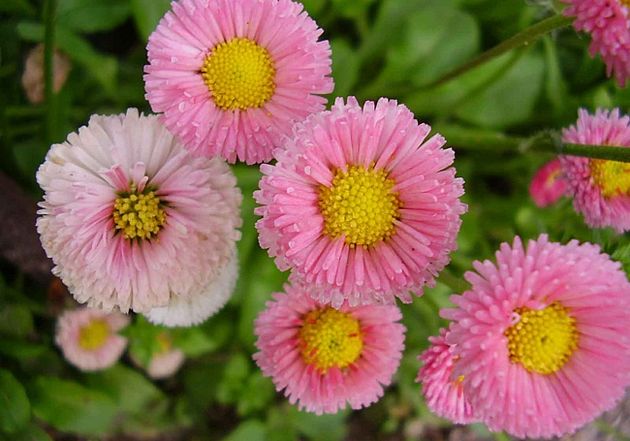
Care: require regular watering; with insufficient moisture inflorescences become smaller and lose doubleness. The plants respond well to early spring applications of liquid fertilizers. To limit self-seeding and extend flowering, it is essential to pinch off spent heads.
Propagation: by seed, division of the clump and by cuttings.
Zone: 4-8