
Herbs
Tall oatgrass, or French oatgrass
Arrhenatherum elatius
Tall oatgrass, or French oatgrass (lat. Arrhenatherum elatius) — a small genus of perennial herbaceous plants of the grass family (Poaceae).
The name comes from the Greek words «arren» (male) and «ater» (awn); in species of this genus the lower staminate (male) flower always has an awn.
Native range – Europe, North America, Africa, Asia.
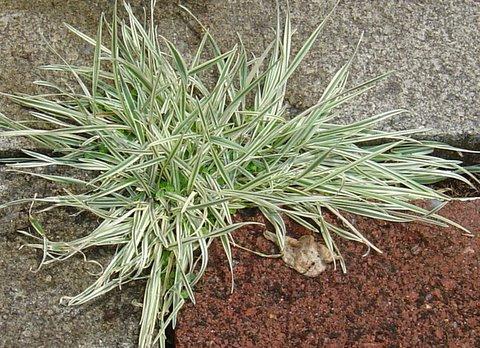
A perennial growing in dense tufts and producing tall (up to 1 m) smooth stems, with flat, linear-edged, sharply roughened leaves rolled in the bud; the ligule short and ciliate. The stem ends in a long panicle, contracted after flowering, with slightly scabrous branches.
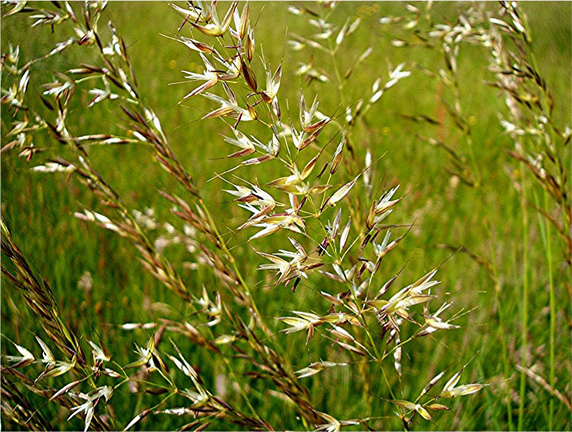
The spikelets are small, slightly compressed, two-flowered; the lower flower is male, the upper bisexual. The glumes are equal to the lemmas, the lower with one and the upper with three veins; the lower lemma has 5—7 veins and in the bisexual flower bears a long, geniculate, twisted-below awn (awn — the bristly appendage on the lemma of each grain of grasses), arising from the base of the lemma; in the male flower the awn is short, straight, and emerges below the tip of the lemma. The caryopsis is elongated, without a groove. French oatgrass grows wild in some places and is cultivated as a fodder grass.

Sometimes another grass — fescue (Festuca elatior) — is known by the name French oatgrass.
Location: grows on any garden soil, drought-tolerant, prefers sunny sites.
Care: in hot, humid conditions it may be affected by rust. In areas where night temperatures are relatively high, leaves often wither in mid-summer, becoming unsightly or dying back completely. Partial shade helps minimize summer stress but slightly reduces variegation. If withered leaves are cut in summer, new ones will regrow in autumn and the plant will recover; leaves can grow up to 30 cm and persist into winter.
Clumps of variegated oatgrass need periodic division every two to three years. At the same time, dead parts of the plant should be removed.
Propagation: in autumn and spring it is easily propagated by division of the clump and by tubers. Sowing seeds is usually not practiced.
