
Flowers for the garden
Arctotis
Arctotis L.
Synonyms: African daisy, Gousblom, Antrospermum Sch.Bip., Anemonospermos Boerh. ex Boehm., Cleitria Schrad., Stegonotus Cass., Anemonospermos Möhring ex Adans., Venidium Less., Odontoptera Cass., Anemonospermos Möhring ex Kuntze.
Arctotis (Arctotis L.) – a genus of herbaceous annual, biennial and perennial plants, less often subshrubs, in the Aster family (Asteraceae). The Latin name is translated from Greek as "bear's ear." It was first described by Carl Linnaeus in 1753 in his work Sp. Pl. 2: 922. In cultivation since the mid-18th century.
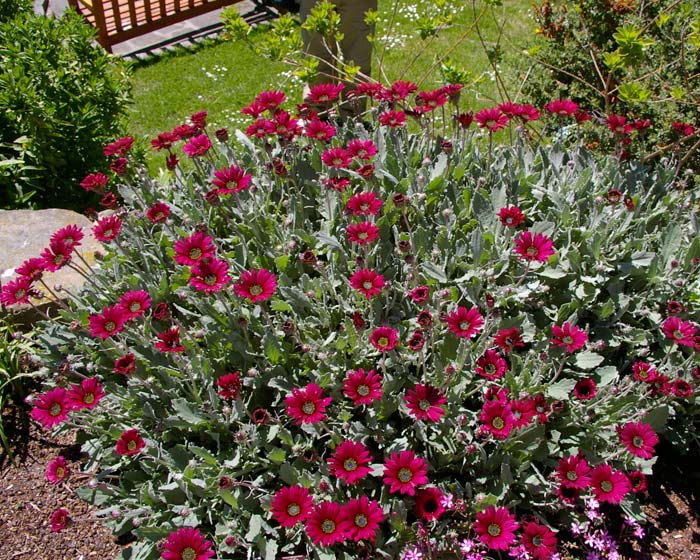
Arctotis Hybrid Burgundy
In nature it grows in the northern part of Africa (south of Angola and Zimbabwe). It is found on moist, rocky slopes.
They are annual, biennial or perennial herbaceous plants or subshrubs with erect, less often creeping stems covered with white hairs, forming a compact dense bush. Some species are stemless.
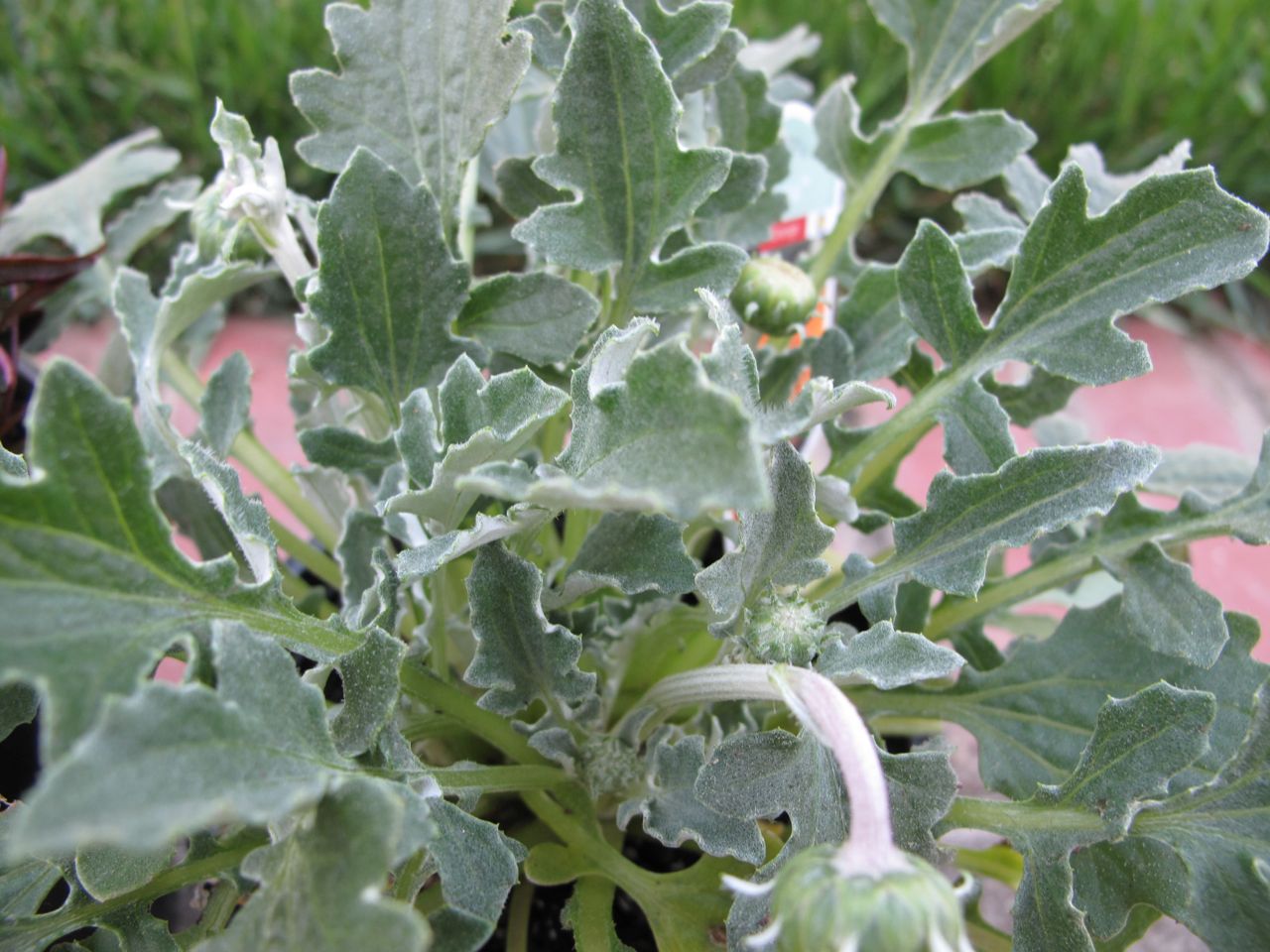
Arctotis Hybrid Orange
Leaves basal, gathered in rosettes, and cauline, usually alternate, sometimes opposite, repeatedly cut or pinnately divided, less often entire, woolly or felted white-pubescent. Petioles winged.
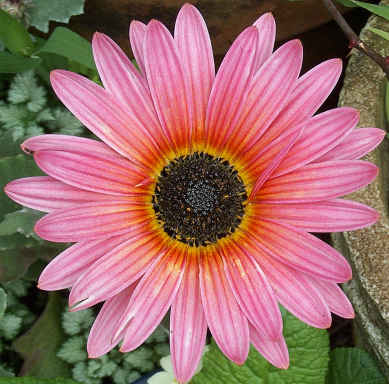
Arctotis Hybrid Flamingo
Flowers are large capitula up to 10 cm in diameter, saucer-shaped, heterogamous, solitary, terminal. Peduncles fairly long, stout, branching; in stemless species simple and leafless. Ray florets ligulate, female, decorative, glossy and very brightly and variably colored, above ranging from pale blue and pearly white to bright orange and fiery red, beneath uniform or colored purple or copper. Disc florets small, numerous, tubular, bisexual, five-toothed, brown, dark purple or purplish-black. Flowers open only in bright sunny weather. Receptacle slightly convex, with large cells. Involucre multi-rowed. Involucral bracts numerous, imbricate, obtuse. Outer bracts small, oblong, leaf-like; inner bracts membranous, longer, obtuse, elliptic. Blooms very abundantly throughout the summer.
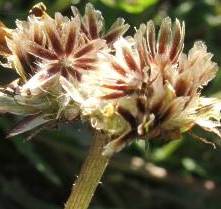
Arctotis acaulis
Seeds pyramidally triangular, pubescent, with 3–5 ribs and 2 pits on the back. Pappus of 2 rows of broad, colorless, laciniate membranes. Up to 450—500 seeds per gram
Hybrids: A. × hybrida hort. 'Flame'
Species: according to The Plant List database the genus includes about 70 species. Some ornamental species:
- Stemless, arrow-bearing arctotis – Arctotis acaulis L.
- Rough arctotis – Arctotis aspera L.
- Short-stemmed, attractive arctotis – Arctotis breviscapa Thunb.
- Showy, large-headed, large-flowered arctotis – Arctotis fastuosa Jacq.
- Hybrid arctotis – Arctotis x hybrida hort.
- Stoechadifolia arctotis, graceful, African daisy – Arctotis stoechadifolia Berg.
Hardiness zone: 10b (-3°C)

Location: sun-loving. Blooms abundantly only in hot, dry climates or in temperate zones during hot, dry summers; additionally, in shade and cloudy weather the flowers close. Preferably planted in open sunny sites sheltered from cold winds. Heat-loving. In Ukraine it is grown as an annual plant or as a perennial with wintering in a greenhouse.
Soil: drought-tolerant. Needs good drainage. Prefers calcareous, fertile but light and loose loams amended with leaf mold and a sufficient amount of sand.
Diseases and pests: practically not affected.
Propagation: readily propagated by seed, which retain their germination for up to 2 years. Seeds are sown in early April for seedlings; planted out in late May – early June when the risk of late frosts has passed. Seedlings appear after about 2 weeks. In the south it self-seeds. In perennial cultivation it is easily propagated at any time of year by division and cuttings.
Uses: a beautiful annual plant forming decorative carpet-like tufts, densely covered with long-flowering, large, brightly colored heads. It looks spectacular on summer flower beds, in mixed borders, borders, rock gardens, group plantings on lawns and other sunny spots in the garden, in wide pots and baskets. Cut flowers do not last long.