
Indoor plants
Aphelandra
Aphelandra R.Br.
Aphelandra (Aphelandra R.Br.) – a genus of houseplants in the Acanthaceae family (Acanthaceae). The genus was first described in 1810 by the Scottish botanist Robert Brown.
The genus name comes from the Greek words: «aphelis» (simple) and «andros» (man). The plant has simple one-celled anthers.
In nature they are found in the tropical regions of Central and South America, and occur in subtropics.
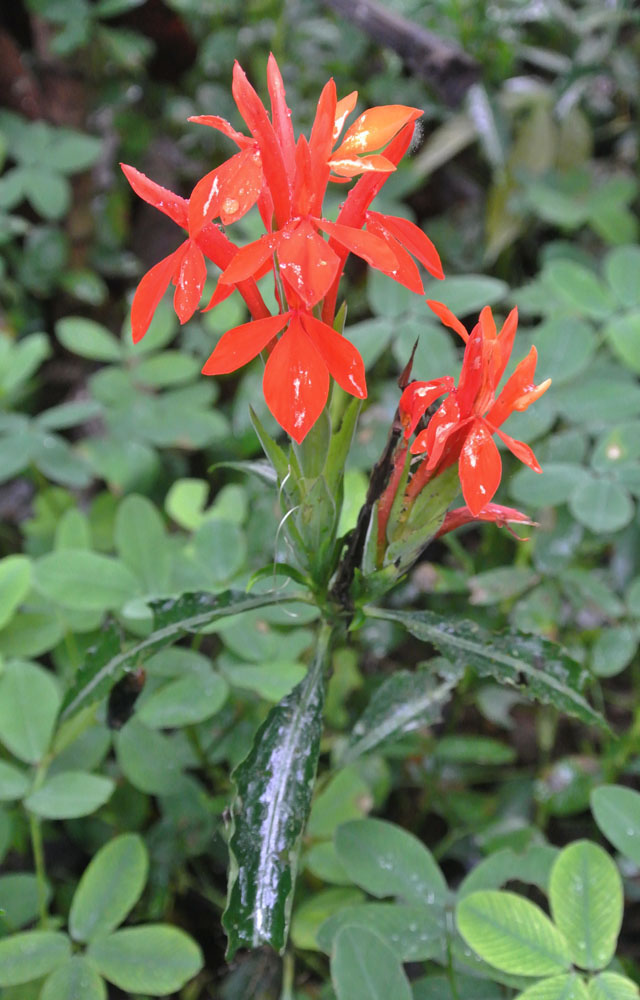
Aphelandra aurantiaca
They are evergreen low-growing shrubs 1-2 m in height, less commonly subshrubs or herbs. Stem erect, slightly pubescent, reddish in color. Grows quickly.
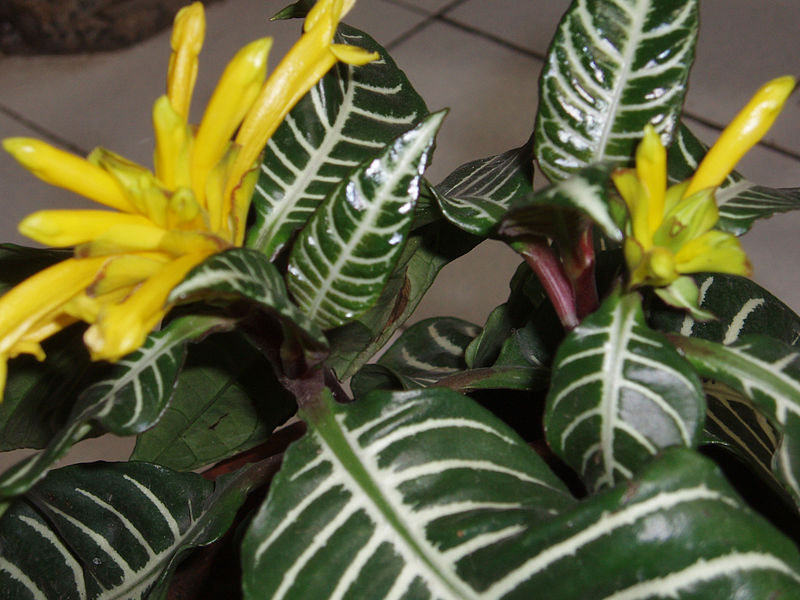
Aphelandra squarrosa
Leaves are ovate with pointed tips, large and long (up to 25 cm in length), glossy, smooth or spiny, the midrib is clearly pronounced, white or silver in color.
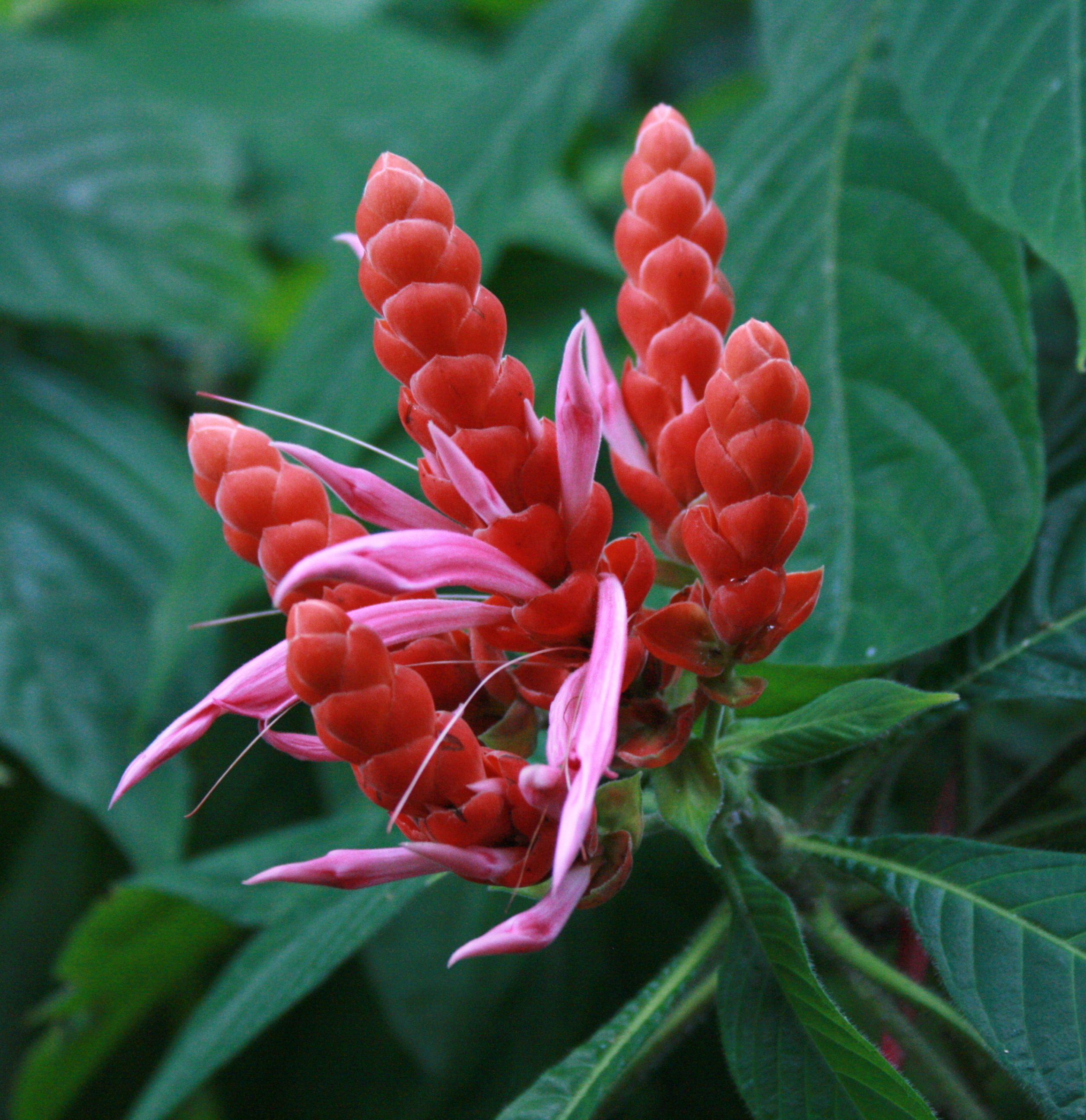
Aphelandra sinclairiana Cairns
Flowers are gathered into terminal spike-like or cone-shaped inflorescences. Bracts are large and brightly colored. The corolla is two-lipped, yellow, orange, red, lilac; the upper lip is two-toothed, the lower — three-lobed.
Species: the genus includes about 196 species. In indoor conditions mainly 2 species are grown:
Aphelandra aurantiaca (Aphelandra aurantiaca)
Aphelandra squarrosa (Aphelandra squarrosa)
Hardiness zone: 11-12 (15°C).
Temperature: the plant is thermophilic; it is recommended to maintain the temperature at 22-23°C, in winter not lower than +15°C.
Light: in winter it needs bright illumination; from spring to autumn it should be shaded from direct sunlight.
Watering: From spring to autumn water abundantly, in winter somewhat less. The soil should be kept moist at all times, but water should not stagnate in the pot. Use only soft (rain, melt, or boiled) and warm water.
Fertilizer: Since Aphelandra quickly uses up nutrients, it is regularly fed every two weeks. Use fertilizer formulated for flowering houseplants. Feedings are carried out throughout the year.
Humidity: Aphelandra likes very humid air, so it is misted several times a day or placed on a tray with water.
Repotting: The soil should be very loose, air- and water-permeable. Soil - 4 parts leaf mold, 1 part sod (garden) soil, 1 part peat soil and 1 part sand. Repot every spring in April.
Propagation: By seeds, which are sown in February or March. Aphelandra also propagates from a whole leaf at a temperature of 23-24°C and by terminal cuttings.