Flowers for the garden
Snapdragon or Antirrhinum
Antirrhinum
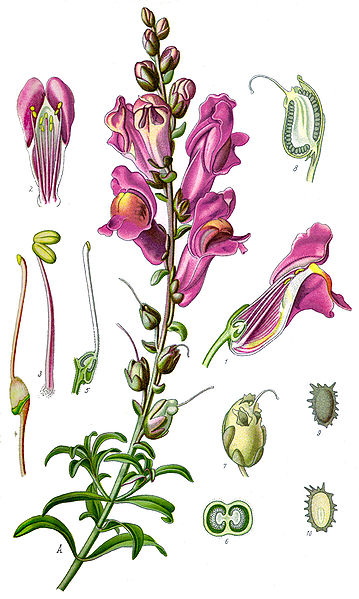
Snapdragon or Antirrhinum (lat. Antirrhinum) — one of the best-known genera of annual herbaceous plants of the Plantaginaceae family (Plantaginaceae), previously placed in the Scrophulariaceae family. The genus Antirrhinum includes about 50 perennial species, among which there are climbing species found in regions with warm climates.
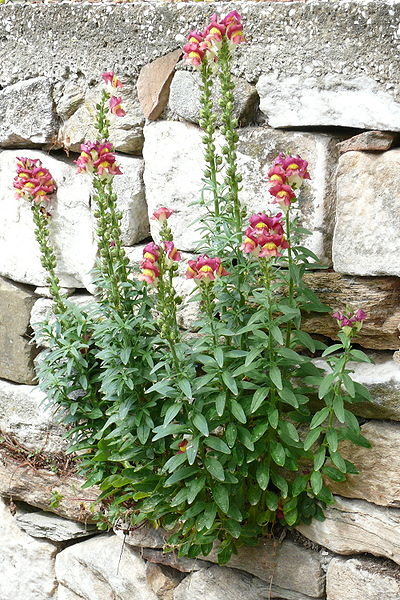
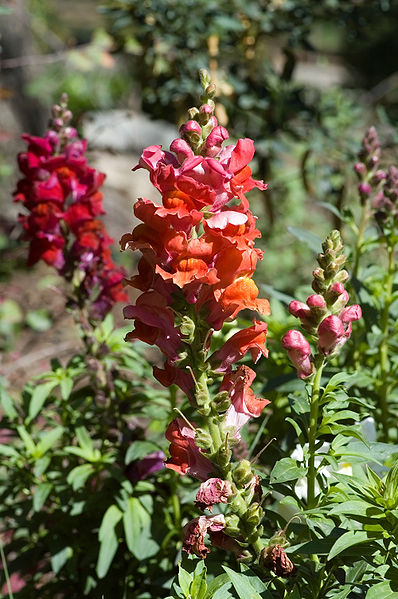
Perennial herbaceous or subshrub plants with large, slender green stems. In cultivation the large Antirrhinum or snapdragon (Antirrhinum majus) is used.
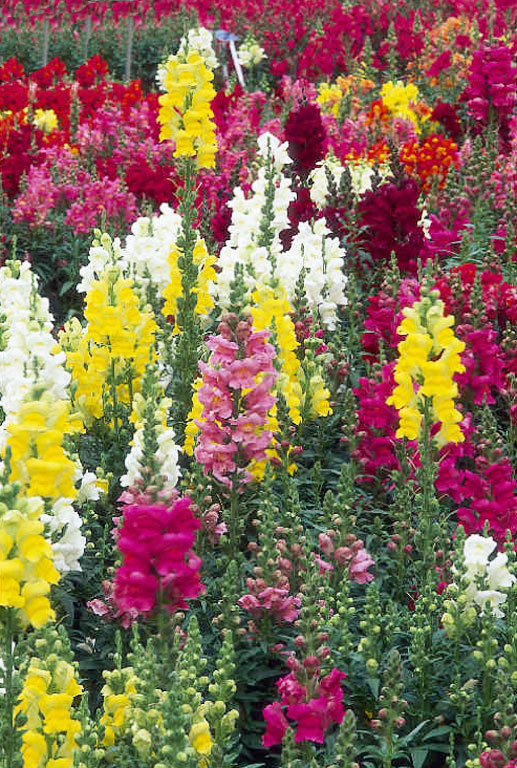
This is a perennial plant grown as an annual. Stems are erect, branched, from 15 to 100 cm tall, forming pyramidal bushes. Lower leaves opposite, upper alternate, from lanceolate to elongate-oval. Flowers large, irregular, two-lipped, single or double, arranged in racemose inflorescences. Flower colors white, pink, yellow and bicolored. Blooms from June until the frosts.
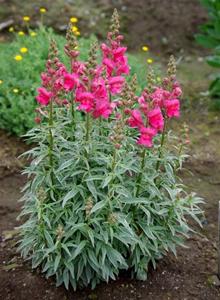
Location: blooms abundantly in open sunny spots, but can also grow in partial shade. Requires sites protected from wind.
Soil: not demanding to soil, but grows best in well-fertilized, moist, loamy soil.
Care: Does not require special care, responds well to timely watering and fertilization. In excessive moisture it becomes diseased and dies. To extend the period of peak decorative appearance, it is necessary to regularly remove faded inflorescences. This practice stimulates branching of the bushes, resulting in increased flowering. Resistant to frost.
Propagation: by seeds and cuttings. Cuttings root easily in sand; in this case the mother plants are kept indoors during winter. This method is used very rarely, only when propagating some double forms.