
Flowers for the garden
Ammobium
Ammobium
Ammobium (lat. Ammobium) — a genus of perennial flowering plants of the Aster family (Asteraceae). The genus comprises about 5 species mostly distributed in Australia.
In cultivation: Ammobium alatum - Ammobium alatum R. Br.
Perennial plant grown as an annual. Stems erect, strongly branched in the upper part, white-downy, winged, 45–60 cm high. Basal leaves elongated-oval; stem leaves small, fused at the base of the stem.
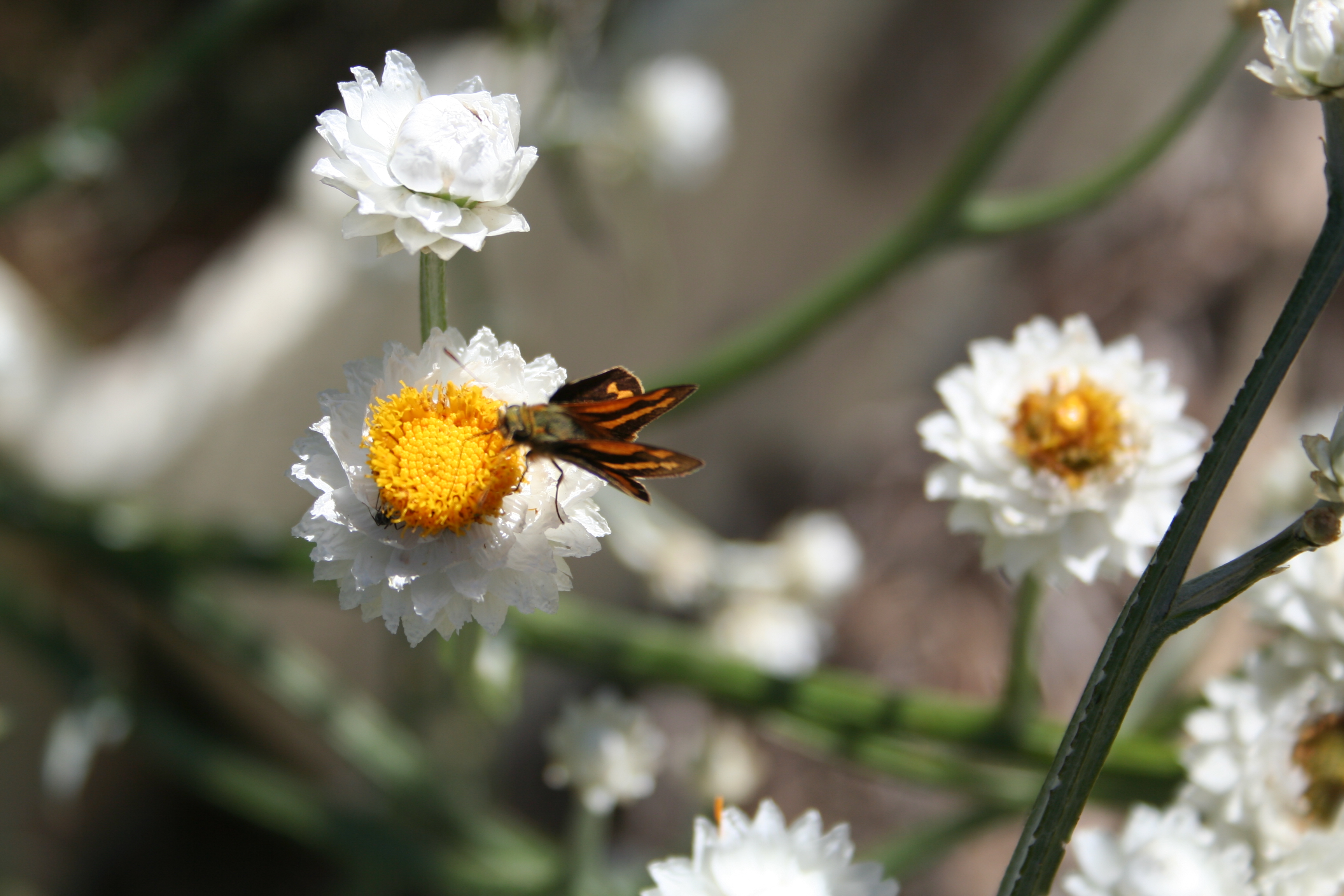
Inflorescence — a capitulum about 1.5 cm in diameter, covered by a large involucre of dry white or yellowish bracts. Flowers all tubular, small, yellow, turning black after fading. Blooms abundantly from mid-June until frosts. The decorative effect of the inflorescences is created by numerous large membranous petal-like scales.
In floriculture the most widespread is the large-flowered form of Ammobium alatum — A. alatum var. grandiflorum hort. It differs from the main species by more robust stems 60–80 cm high. Inflorescences up to 2 cm in diameter. Begins flowering in June–July, 60–70 days after sowing seeds, and blooms until frosts. Fruit — an elongated, dark-brown achene with a pappus. In cultivation since 1822.
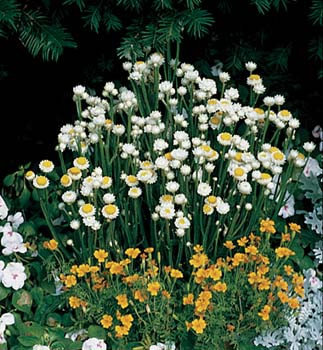
Site: prefer a sunny location; the main and ornamental forms are light- and warmth-loving.
Soil: prefers loose, sandy, sufficiently fertile soil, but easily tolerates poor, loamy soils.
Care: one week after transplanting seedlings, it is advisable to apply nitrogen fertilizers, and another 2 weeks later — a complex fertilizer.
Propagation: by seeds.