
Indoor plants
Aloe or the Century Plant
Aloe, Aloë
Aloe (Aloë) — a genus of succulent plants of the family Asphodelaceae (Asphodelaceae), containing about 400 species. The name of the genus comes from the Arabic language, and in translation it means «bitter». The Russian name for plants of the genus Aloe is sometimes the word «century plant».
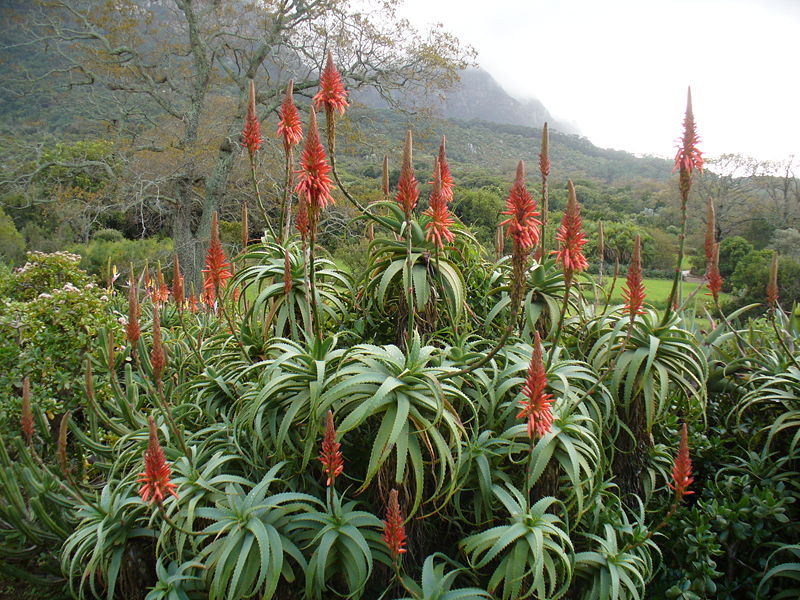
Plants native to Africa are widely distributed in the territory of South Africa, the mountains of tropical Africa, Madagascar and the Arabian Peninsula.
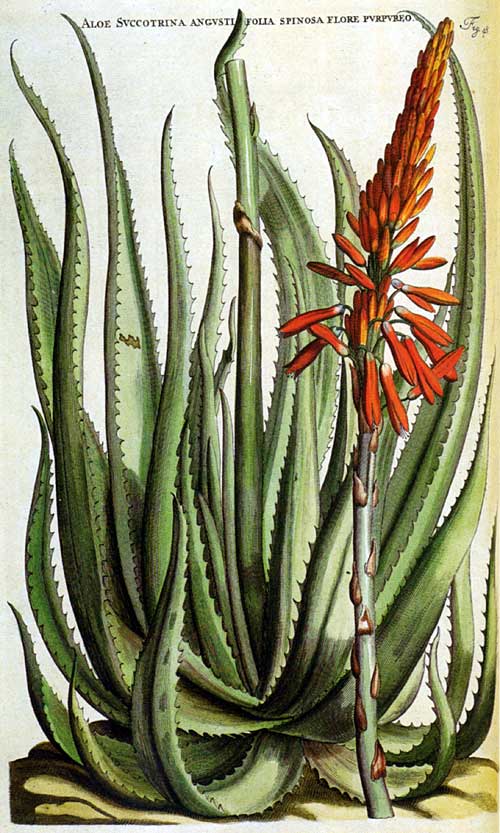
The genus Aloe includes perennial leafy herbaceous, shrubby or tree-like succulents with thick fleshy lance-shaped leaves gathered in dense rosettes and arranged spirally within them. The leaf margins can be smooth or toothed, set with sharp spines or soft cilia along the edge. The leaf pulp is divided into characteristic cells that retain moisture reserves during drought. Flowers are small, tubular, white, red, yellow or orange, borne on a long scape in an apical many-flowered raceme.
In cultivation:
Tree aloe - Aloe arborescens
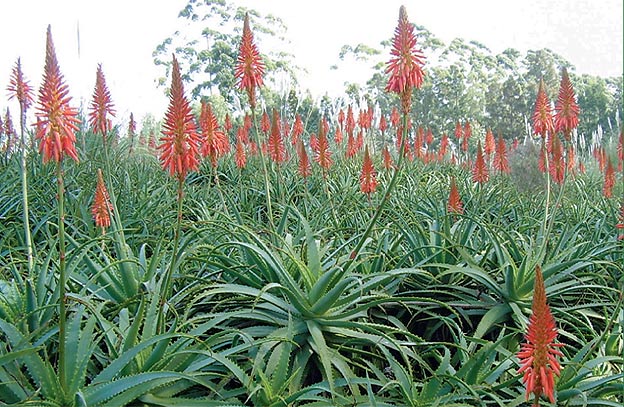
It is the most widely distributed medicinal plant in our country. Native to the Cape of Good Hope, South Africa. Under indoor conditions in a temperate climate this plant flowers very rarely, and it is because of this characteristic that its folk name — the century plant — arose, as if it blooms once in a hundred years; however, with good care it can bloom every year. In a pot tree aloe produces numerous lateral shoots and spreads well in height and width. Leaves are bluish-green or greenish-glaucous, smooth, matte, succulent, linear-lanceolate with a spiny-sharply-toothed margin, forming dense rosettes up to 80 cm in diameter. The flowers are large, pale orange or scarlet, bell-shaped, tubular, gathered in racemose inflorescences growing on long scapes. Fruit — a blunt three-angled, almost cylindrical capsule. Seeds numerous, grayish-black. It grows very quickly, reaching heights of 30–100 cm (in nature up to 3 m). Tree aloe is very decorative and is easily propagated by cuttings.
Plicate aloe - Aloe plicatilis
It is a small tree or shrub. Height 3—5 m. Stems are forked. The leaves have an unusual form for aloes: on the branches they are arranged in 2 ranks like a fan, each with 10—16 leaves. Leaf color is dull green, length about 300 mm, width about 40 mm, elliptical in shape, flat, with barely noticeable toothed edges. The inflorescence is a raceme 50 cm long, containing 25—30 flowers. The flower is 4.5—5 cm long, bright red with a greenish-yellow tip. The perianth is cylindrical. Flowering occurs in May–June. Distributed in South Africa.
Aristate aloe - Aloe aristata
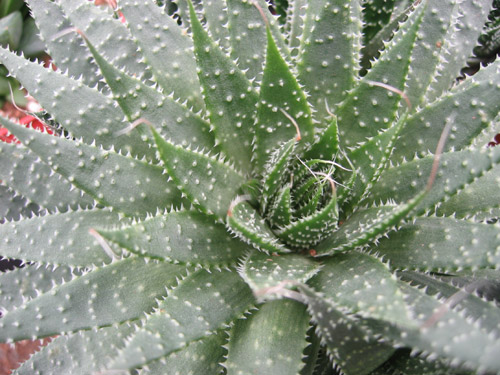
It is often confused with Haworthia — numerous thick leaves that bear whitish-translucent soft spines on the lower surface. The plant has no stem. Leaves are arranged in a basal rosette 8-10 cm in diameter. A white toothed margin runs along the leaf edge. It flowers easily in spring and summer under indoor conditions.
Variegated aloe - Aloe variegata
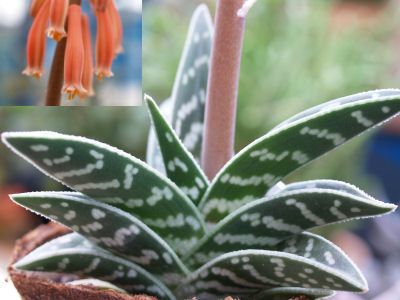
The plant grows 20—30 cm tall, with 18—24 leaves arranged in 3 ranks. Leaves are juicy green with uneven light-green patches. Leaf length 10—15 cm, width at the base about 3—6 cm. Leaf shape triangular. Depending on injury, amount of water and age, the outer leaves die off, acquiring a golden-brown color. It reaches maturity in 3—7 years; much depends on space, sunlight and water. Flowers are orange, borne in a cluster 20—30 cm high. Flowering occurs in March or April.
Also attractive and suitable for indoor cultivation are Dessouan aloe — with triangular variegated leaves; many-leaved aloe — with an almost round rosette of sharply triangular greenish-glaucous leaves; pearl aloe — with green leaves arranged in a rosette and covered on both sides with sparse pearl-like white warts; and checkered aloe, which has spirally arranged olive-green leaves covered on the upper side with a checkered white pattern.
Temperature: In winter keep in a bright, cool room (12-13°C). In summer it is best kept outdoors. In warm and dark rooms aloes grow quickly, become leggy and pale.
Light: In summer it prefers a sunny spot, but it should be acclimated to the sun gradually, shading it on particularly hot days.
Watering: Moderate, especially in winter. Misting should be done carefully with the finest spray, since water getting into the leaf axils can cause rotting.
Fertilizer: From May to August aloes are fed every two weeks with a balanced mineral fertilizer for cacti and other succulents.
Repotting: Soil for aloes – 2 parts clayey turf, 1 part leaf mold, 1 part humus and 1 part coarse sand. Repot in spring. Young plants are repotted annually, older ones every 2-3 years.
Propagation: By seeds, cuttings, basal offsets and individual whole leaves. Cutting rootings succeed almost year-round, but spring and summer are best. Cuttings must be dried: in summer for about 5 days, in winter for a week or longer.