
Flowers for the garden
Perennial hollyhock, stock-rose
Alcea rosea
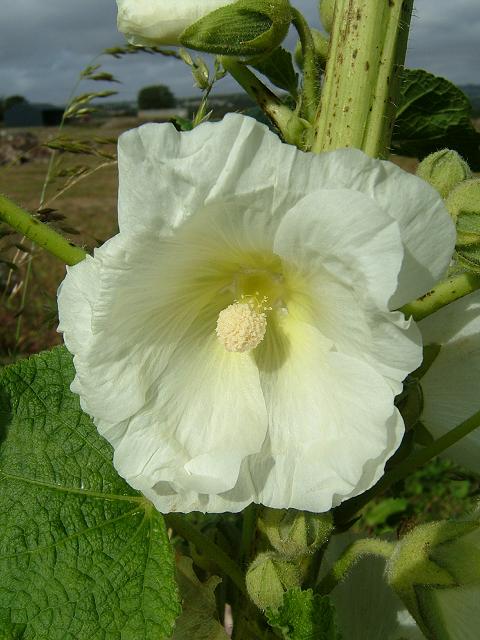
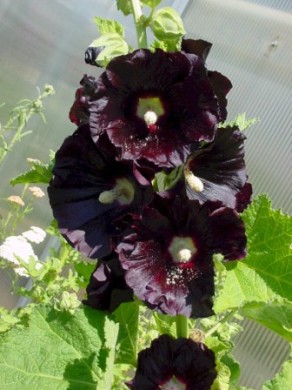
A large biennial or perennial plant of the mallow family (Malvaceae). Native range - Europe and Asia. Reaches 80—250 cm in height. Hollyhocks can be white, yellow, from light pink to almost black.
In the first year the perennial hollyhock forms a leaf rosette; in subsequent years it produces flowering shoots up to 2 meters high. Lower leaves are rounded and lobed with 5–7 segments. Stem leaves decrease toward the shoot tips. Large simple funnel-shaped, semi-double or double (depending on the cultivar) flowers are gathered in long racemose inflorescences. In single forms the flower diameter is 6–12 cm, with five petals, the color fading toward the center. In double forms the flowers with many petals resemble hemispherical, almost black cushions. The inflorescence begins at about 1 m above the ground; flowering starts in June and usually continues until September. The fruits are compound; unripe ones appear as a green ring surrounding the remains of the pistil, while ripe ones fall apart into a large number of segments, each of which is kidney-shaped, almost round, and surrounded on the outer edge by a slightly toothed membrane.
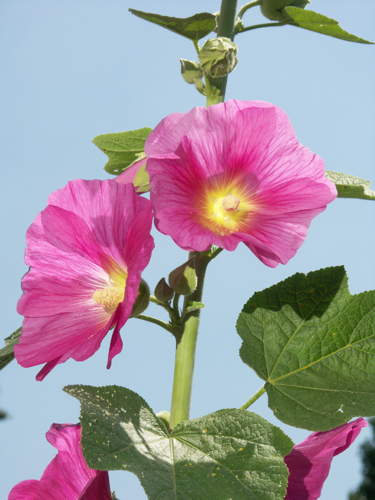
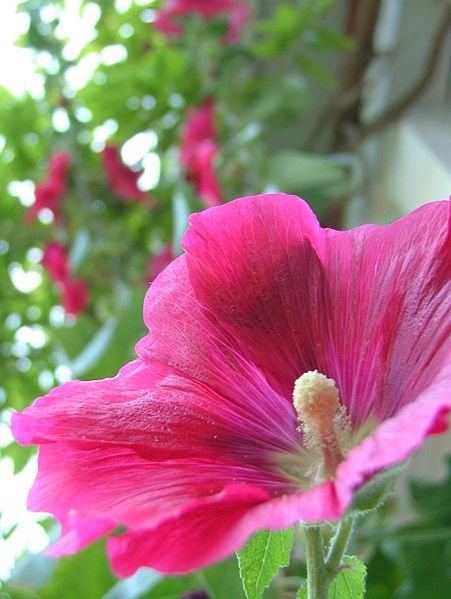
Perennial hollyhock is one of the few plants for which it is not recommended to cut back the faded stems in autumn - they retain snow and protect the clumps from freezing. At least, do not cut the stems lower than 60–70 cm above the ground; it is better if they remain above the usual snow level. Remaining stems are cut only in spring, and not right at the ground but 3–4 cm above it, since new shoots grow from the root collar.
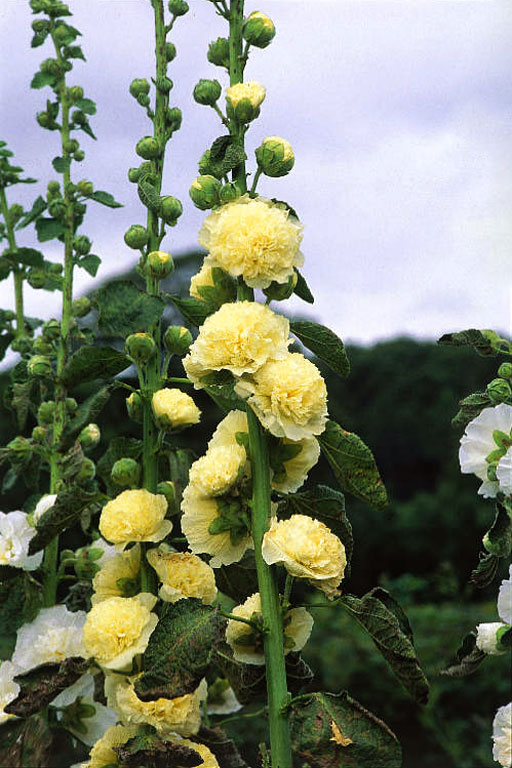
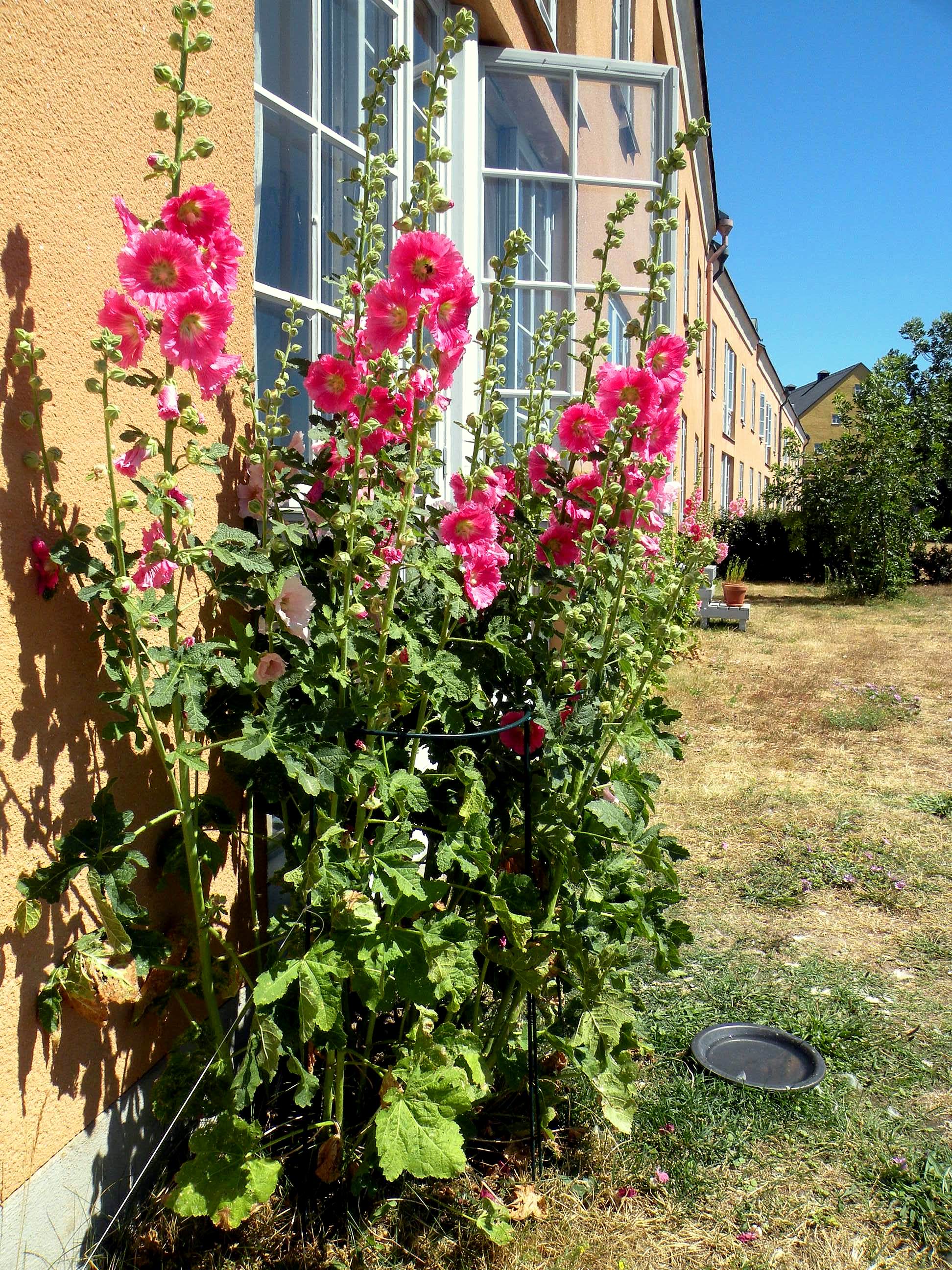
Location: tolerates partial shade, but achieves full flowering only in a sunny spot. Not demanding regarding moisture, but needs watering in very hot weather.
Soil: undemanding, but if you plan to keep it in one place as a perennial, it is better to prepare the soil specially: add to the planting hole for each bush one or two matchbox-sized portions of a top flower mineral mix and at least half a bucket of compost or well-rotted manure.
Diseases and pests: susceptible to rust; to prevent the disease, treat with a colloidal sulfur solution (follow the instructions).
Propagation: by seed; old hollyhock clumps can be propagated by division. Hollyhock seeds remain viable for about 5 years. Even specially bred double-flowered forms of hollyhocks produce only about 40% plants with double flowers, so it is better to sow more and select the best.
Uses: commonly used in group plantings in sunny locations to decorate flower beds, to adorn walls of houses and buildings, fences and other unsightly tall structures. Grown for cut flowers. Cut stems harvested at the bud stage open in water. A large number of hollyhock flowers are used by the food industry, where a harmless red food dye is made from hollyhock. The flowers of the perennial hollyhock contain a large amount of anthocyanin pigments, which give them their characteristic color, mucilaginous substances, a small amount of essential oil and tannins.
Source: www.zdravyshka.ru