Flowers for the garden
Ageratum or Flossflower
Ageratum
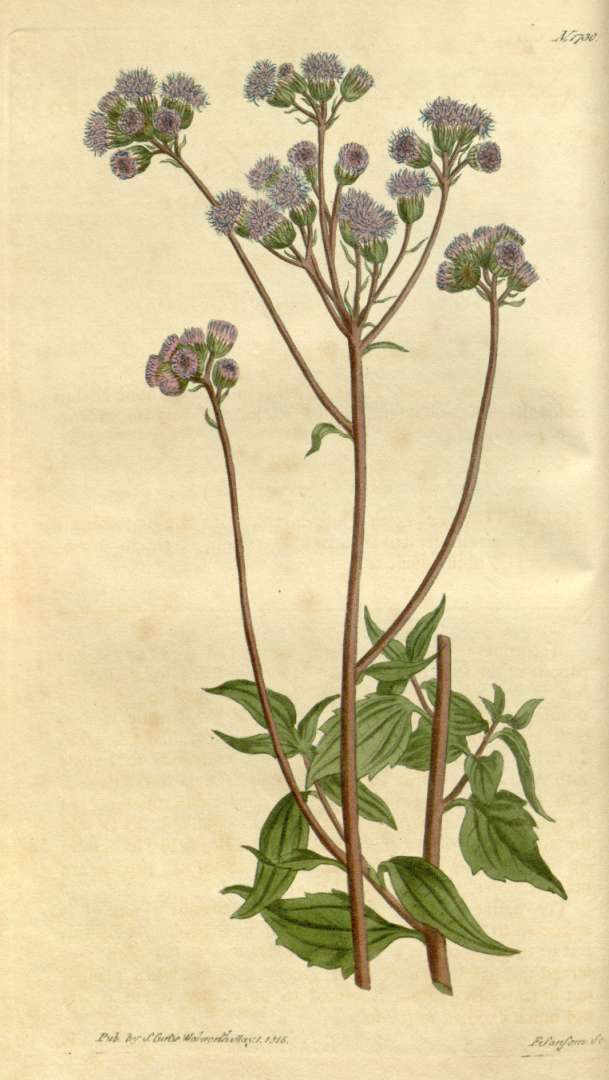
Ageratum Houstonianum, or Mexican Ageratum, or Flossflower (Agerátum houstoniánum) — a perennial herbaceous plant of the family Compositae (Compósitae). The generic name "ageratum", meaning unfading or ever-young — referring to the plant's ability to bloom for a long time and retain the color of its flowers — comes from the Greek particle α ("not") and the word meaning "old"; the specific name honors the English physician and botanist William Houston (1695—1733), a researcher of the flora of Mexico and South America. The Russian common name "flossflower" refers to the abundant flowering from early summer until the first frosts. The genus includes about 60 species growing in the tropical and subtropical regions of Central America.
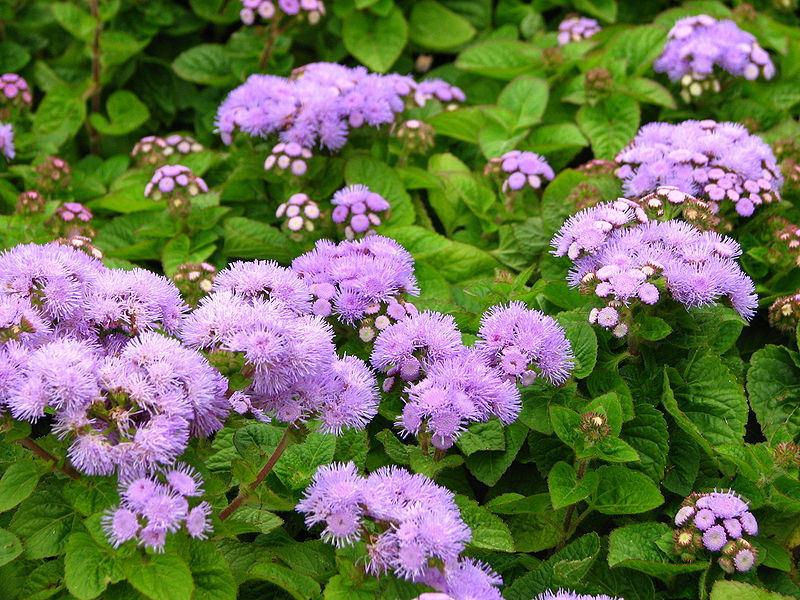
A perennial herbaceous or semi-shrubby plant, often grown as an annual. Stems numerous, strongly branched, erect or ascending, pubescent, 10–50 cm high. Leaves triangular, rhombic or oval, toothed at the margin, rough to the touch; lower and middle leaves opposite and petiolate, upper leaves alternate and almost sessile.
Flowers small, narrowly tubular, bisexual, fragrant, gathered into small inflorescences (capitula) 1–1.5 cm in diameter, which themselves are grouped into compound corymbiform inflorescences. The main decorative feature of the inflorescences are the two-lobed stigmas of the flowers, which are almost twice as long as the perianth and protrude well above it. The corolla and stigmas are the same color: blue, mauve-blue, blue, carmine-pink or white. Blooms very abundantly from June until the first frosts. Fruits set in early September. Achenes are five-angled with a membranous pappus and retain viability for 2–3 years.
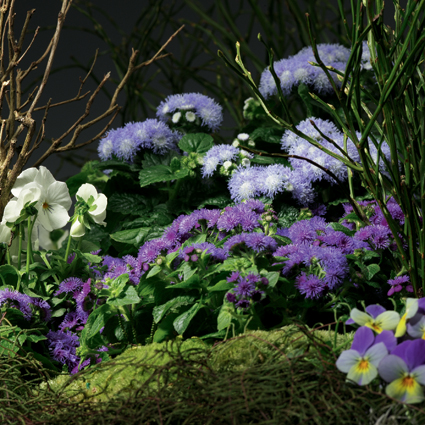
There are numerous cultivars that differ in flowering time, inflorescence shape and flower color, plant height and leaf shape. Medium-height cultivars (30 cm) are sold under the name 'nanum', dwarf ones (15 cm) as 'pumilum'. The most commonly used cultivars:
'Blaue Kappe' ('Blaue Kappe') — a low, compact, hemispherical plant, 20–30 cm tall. Shoots dark green, densely pubescent. Inflorescences loose, not large, 5–6 cm in diameter. Capitula 1–1.5 cm in diameter, mauve-blue, with short stigmas. A late cultivar. Flowers from mid-June to October.
'Blausternchen' ('Blausternchen') — a very low, 10–15 cm tall compact plant. Shoots thin, very branched, dark green with a purplish bloom, densely pubescent. Inflorescences loose, few-flowered; capitula small, 0.9–1 cm in diameter, blue with a mauve tint, buds dark purple. An early cultivar. Flowers from early June to October. Not very drought-tolerant. Used in carpet beds, low borders, and bedding.
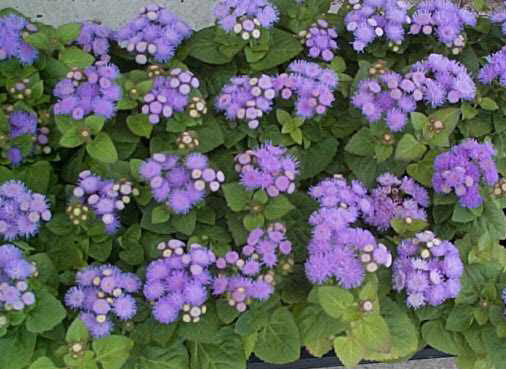
'Blue Ball' ('Blue Ball') — a low, 15–18 cm high, compact, almost spherical plant. Shoots sturdy, thick, densely pubescent. Leaves large, pubescent on the underside. Capitula dense, large, 1.5–1.7 cm in diameter; styles long, dark mauve-blue. A late cultivar. Flowers from mid-June to October. Drought-tolerant. Used in flower beds, borders, and container culture.
'Blue Mink' ('Blue Mink') — plants 20–25 cm tall, compact, columnar. Shoots sturdy, thick, upright, with long internodes and sparsely leafy. Leaves large, rounded, pubescent. Inflorescences dense, large, 1.7–2.1 cm in diameter, mauve-blue; some capitula about 1.5 cm in diameter. Flowering time medium, from mid-June to October. Drought-tolerant. Recommended for beds, borders, and for decorating balconies and windows.
'Blue Perfection' ('Blue Perfection') — a compact, strongly branched, almost globular plant, 25–30 cm high, with sturdy, densely pubescent shoots showing a purplish tint on the sunny side. Leaves large, on long petioles. Capitula 1.5–1.7 cm in diameter, mauve-blue. Inflorescences moderately dense, many-flowered. An early cultivar, flowering from early June.
'Little Dorrit' ('Little Dorrit') — low plants, 15–20 cm tall, compact, hemispherical. Shoots sturdy, slightly pubescent. Leaves small, rounded-rhombic, on long petioles. Inflorescences loose, many-flowered. Capitula 0.8–1.3 cm in diameter, light blue. Stigmas short. An early cultivar, flowering from early June. Not very drought-tolerant. Recommended for beds, borders, balcony planting and container culture.
'Summer Snow' ('Summer Snow') — plants up to 45 cm high, with white capitula in dense corymbiform inflorescences; flowers very abundantly.
'Fire Pink' ('Fire Pink') — compact plants 20–30 cm high. Leaves small. Inflorescences loose, dark pink, buds bright mauve, 4–5 cm in diameter, individual capitula small, about 1 cm in diameter.
Location: requires open, sunny sites and will stretch, bloom unevenly, and be less showy if even slightly shaded.
Soil: grows rapidly and develops well on light, neutral, fertile soils; on very rich soils it develops excessive vegetative mass and flowering intensity decreases. Does not tolerate wet, stony soils!
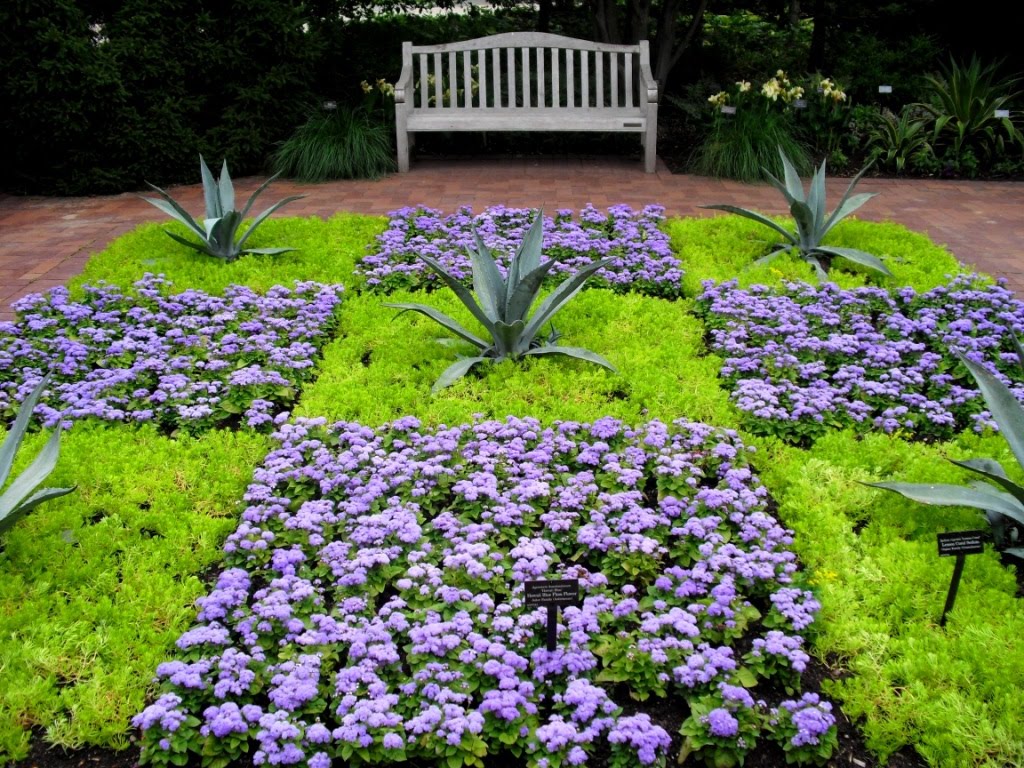
Care: generous but not excessive watering; tolerates trimming and pruning well, after which it regrows quickly and blooms profusely again; the plant is warmth-loving and is damaged even by slight frosts. Regular weeding and loosening of the soil. Remove faded inflorescences regularly.
Diseases and pests: root rots, bacterial wilt, cucumber mosaic virus, foliar and root-knot nematodes, spider mite and cutworms. Also susceptible to whitefly. Yellow spots appear on affected leaves. Remove affected leaves and treat plants repeatedly with an infusion of insecticidal plants or an emulsion containing mineral oils (at weekly intervals).
Propagation: by seed and by cuttings.