
Indoor plants
Agapetes
Agapetes
Agapetes (lat. Agapetes) — a genus of evergreen shrubs in the family Ericaceae (Ericaceae), comprising about 190 species. Distributed from the Himalayas to northern Australia.
These are evergreen shrubs with the stem thickened at the base. Leaves alternate or arranged in whorls, ovate to oblong-ovate, leathery. Petiole short, glandular. Flowers borne in racemes, in umbels or solitary, pink, scarlet-red, sometimes white with pink.
Agapetes is used as an ornamental flowering plant in cool interiors and greenhouses. It can also be grown as a trailing (hanging) plant.
Agapetes serpens - Agapetes serpens
An evergreen shrub - an epiphyte 1-3 meters tall with a tuberous swelling at the base of the stem. Shoots flexible, curved, pendulous, covered with brown glandular bristles. Leaves small, with short petioles, almost sessile, obovate, pointed at the apex, glossy, leathery, 1-1.3 cm long.
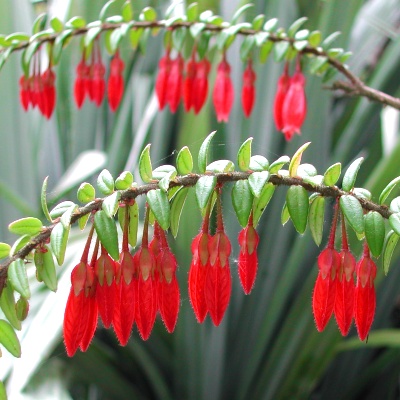
Flowers 1-2 in the leaf axils, up to 2 cm long; corolla petals fused into a five-ribbed corolla with a short five-toothed limb, orange-red. On the outer side of the corolla there is a repeating V-shaped pattern. Flowering begins in November–December and continues for 4-5 months. Fruit is a fleshy, spherical, bluish berry about 1 cm in diameter. It rarely fruits indoors. Native to western China and the Himalayas.
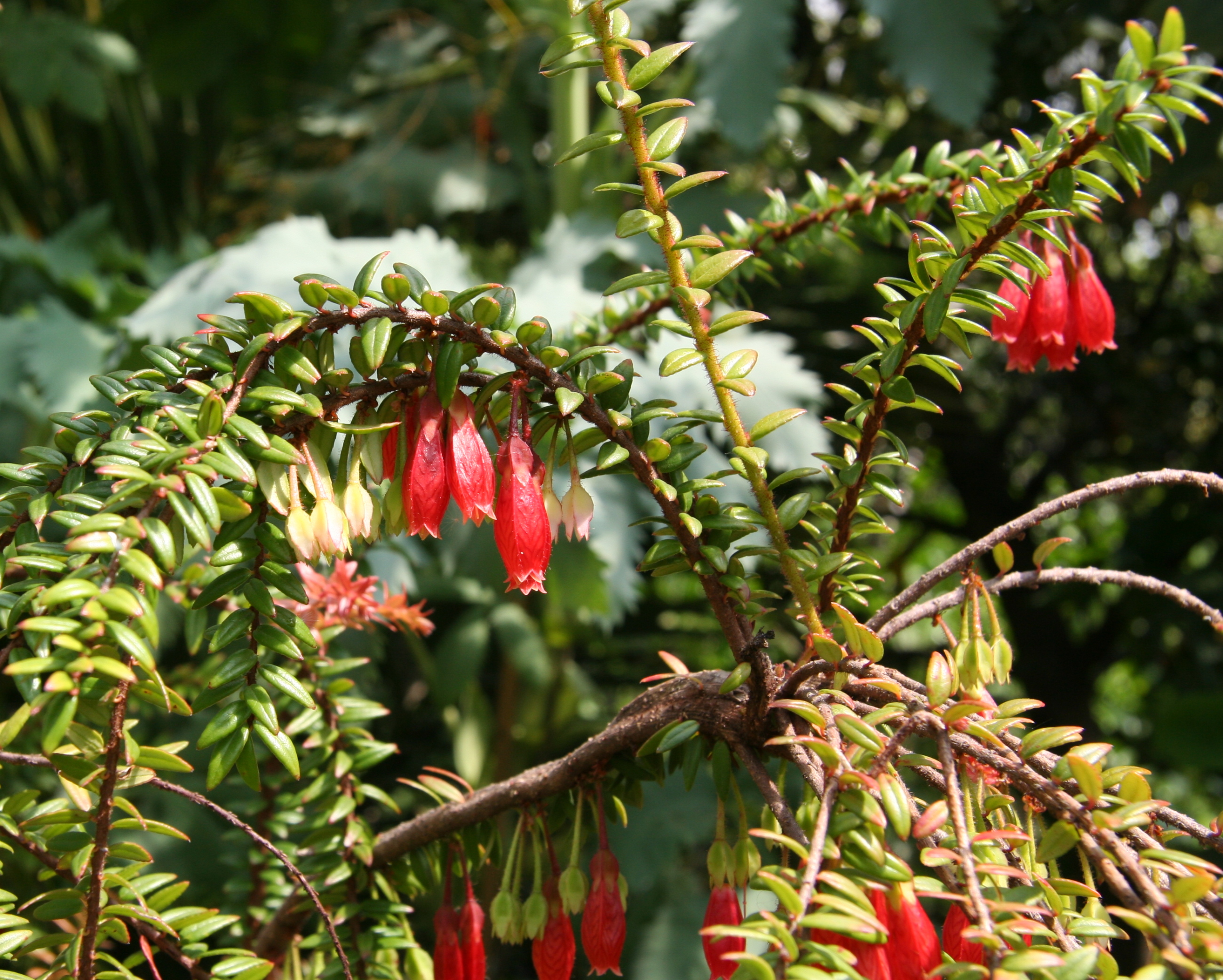
There is a variety with white flowers, Agapetes var. alba
Agapetes buxifolia - Agapetes buxifolia
A shrub up to 1.5 meters tall, branches flattened, broad, pendulous.
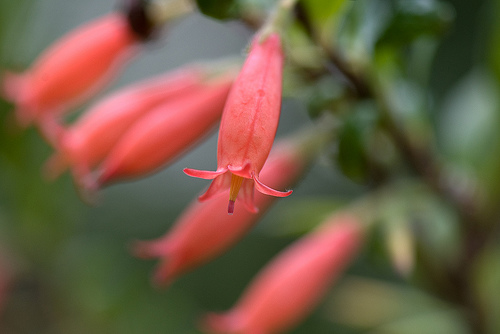
Leaves obovate, up to 3 cm long, 1.2 cm wide, serrate along the margins in the upper part, dense, glossy, green. Flowers one or two in the axils, up to 2.5 cm long, cylindrical, bright red. Flowering usually occurs from March to May, blooming abundantly for about two months.
Temperature: moderate; optimal in summer 18-20°C, winter temperatures of 8-12°C are necessary for ripening flower buds and more abundant flowering.
Light: bright, diffused light; tolerates some direct sunlight.
Watering: regular in summer; in winter reduce watering, ensuring the substrate dries somewhat between waterings.
Fertilizer: feed with a houseplant fertilizer from May to August every two weeks.
Humidity: requires high humidity during the spring-summer period.
Repotting: annually in spring, only when the roots have filled the pot.
Propagation: mainly by division or by layering.
Source: www.floralworld.ru