Flowers for the garden
Agapanthus
Agapanthus
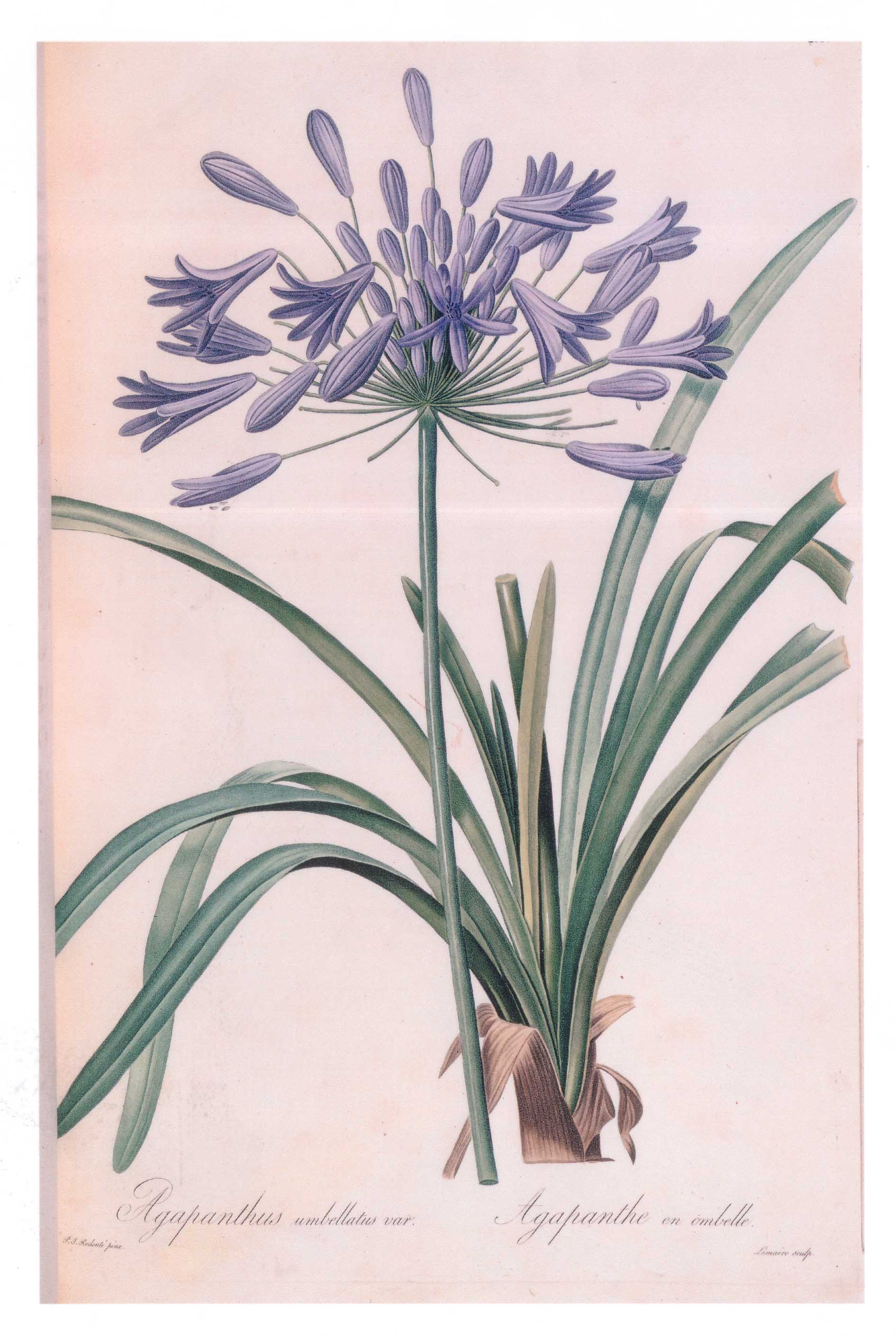
Agapanthus (lat. Agapánthus) — a genus of perennial herbs of the family Agapanthaceae (Agapanthaceae). The name comes from Greek αγαπη — «love» and ανθος — «flower».
The natural range is Central and Southern Africa.
Perennial herbaceous plants with fleshy rhizomes.
Leaves are dense, strap-shaped, reaching 50-70 cm in length. Leaf blades form a basal rosette. Even when the plant is not in flower, it still attracts attention with lush, green foliage.
During flowering the agapanthus produces a long scape, which can reach 1 m in height. The flowers of this plant are gathered in large umbel-like inflorescences, colored white, blue or blue-lilac. It blooms from July to September, and with good care — abundantly.
Agapanthus africanus - Agapanthus africanus
This species is also called the African or Nile lily.
Leaves are strap-shaped, up to 40 cm long, green, gathered in a rosette. The scape is up to 70 cm long (the dwarf form Albus Nanus does not exceed 40 cm; in the 'Lilliput' group the scapes are only 10 cm long) and bears a globular inflorescence up to 20 cm in diameter, consisting of 20-30 flowers. In the typical form they are blue-violet, however there are garden forms, for example 'Albidus' with white perianth segments and purple spots at their tips. Flowering occurs in the second half of summer.
Agapanthus umbellatus - Agapanthus umbellatus
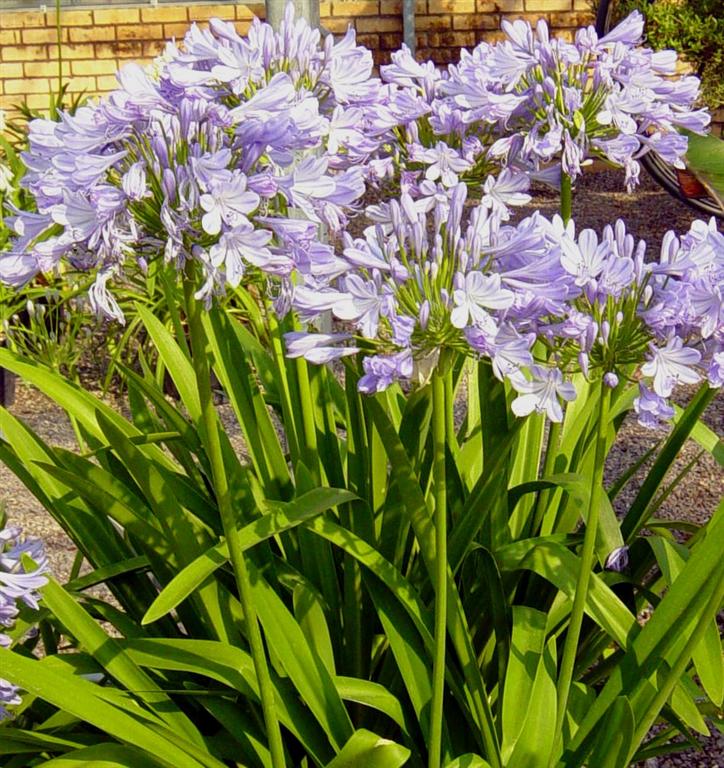
It is also called the African lily and even the Abyssinian beauty.
Leaves strap-shaped, dark green to light green, 40-60 cm long, arranged in a rosette. The scape is about 1 m long. The inflorescence is umbel-like, 30-40 cm in diameter, comprising up to 30 flowers. Flowers are funnel-shaped, bluish-violet with a darker center. Flowering occurs in the second half of summer.
Location: the plant is very light-loving. With insufficient light the plant slows in growth and may not flower. Sensitive to frost. Cultivated as a pot plant. Not demanding to soils, but grows better in moist and fertile ones.
Care: requires application of fertilizers (chicken manure, cow manure) and timely watering. For winter the plant is dug up and stored in cool, dark rooms until spring. In southern regions it can overwinter with good shelter.
Propagation: by dividing the rhizome before planting, less often by seeds. Seedlings flower after 5-7 years.