
Climbing plants
Actinidia arguta
Actinidia arguta
Synonyms: Actinidia Siebold et Zucc. Planch, Actinidia ex Miq., actinidia ostraya
Actinidia arguta – a species of woody vines in the genus Actinidia (Actinidia) of the family Actinidiaceae (Actinidiaceae). In the wild it grows in coniferous and mixed forests in Japan, Korea, China and the Russian Far East. In cultivation since 1874. Under favorable conditions it can live more than 100 years.
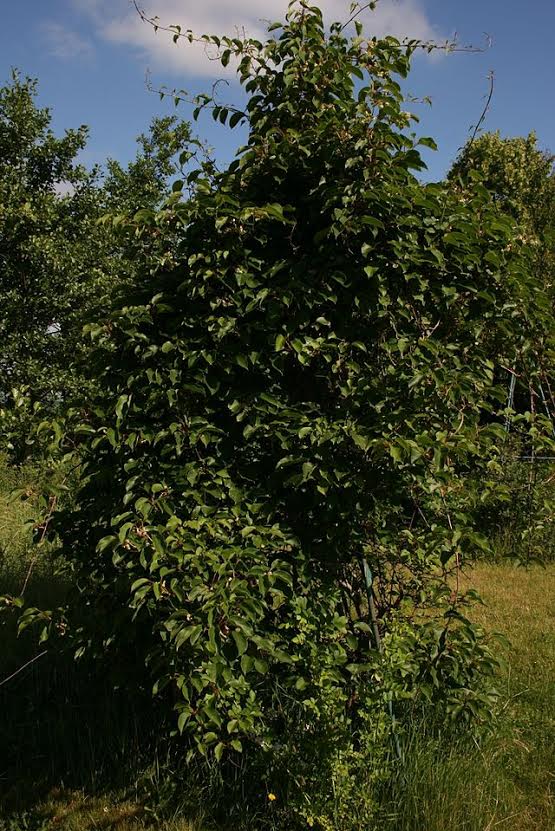
It is the largest climber in the genus Actinidia. It can reach up to 30 m in height, with a trunk diameter of 15 cm. It vegetates for about 150 days, from early May until early October. The vine climbs to the top of its support and develops a dense crown there. In the wild it can spread from one tree to another. The bark peels longitudinally, light brown with a bluish bloom. Shoot tips are herbaceous, with reddish hairs.
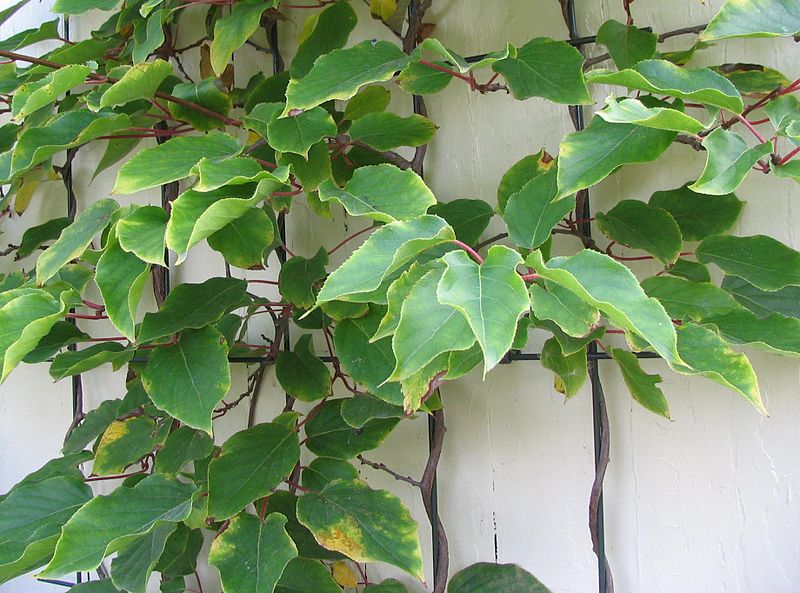
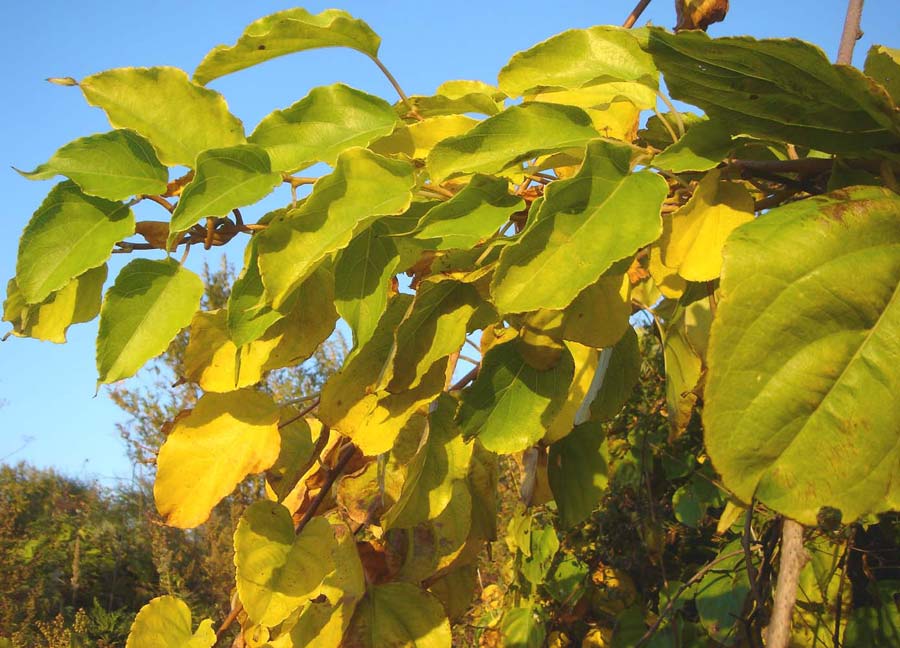
Leaves decorative, rounded-ovate, large, up to 16 cm long and 13 cm wide, glabrous, very firm, glossy, dark green above, with a cuneate base and drawn out into an acuminate apex. Leaf margins finely serrate, less often entire. In autumn they turn yellow or light yellow. Petioles are curved, dark red.
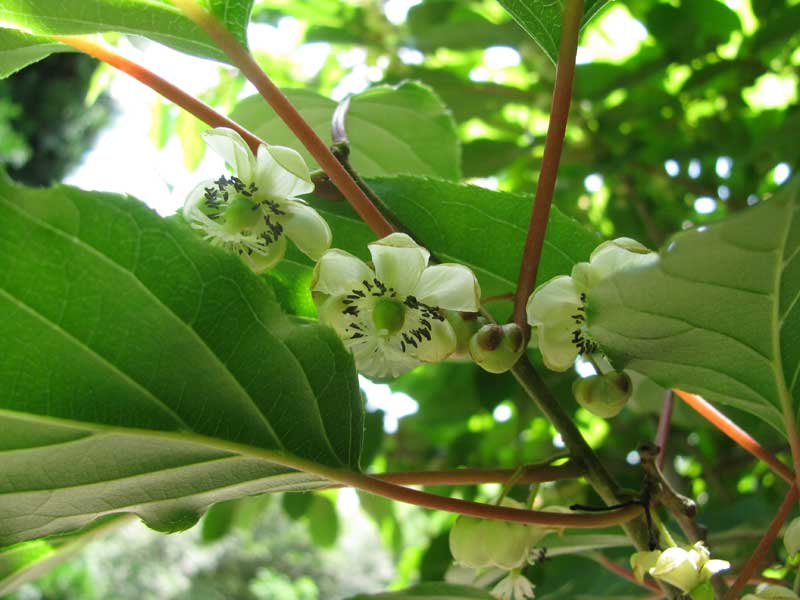
Flowers dioecious, greenish-white, fragrant. Male flowers are double, up to 20 mm in diameter, arranged in umbels, with black stamens, up to 50 per flower. Female flowers occur solitary or in groups of three in leaf axils, reaching 16 mm in diameter. The ovary is glabrous, superior, many-celled. Flowering lasts for 7-10 days.
Fruits – globose or cylindrical berries, 15-30 mm long and 12-27 mm wide, with a blunt or pointed apex, dark green in color, sometimes with a reddish blush, containing numerous seeds. The skin is thin. The weight of a ripe berry is 1.5–10 g. When fully ripe the aroma is varied: apple, pineapple, banana and others. The flesh is tender, juicy, meaty, slightly acidic or cloyingly sweet, with a flavor reminiscent of fig.
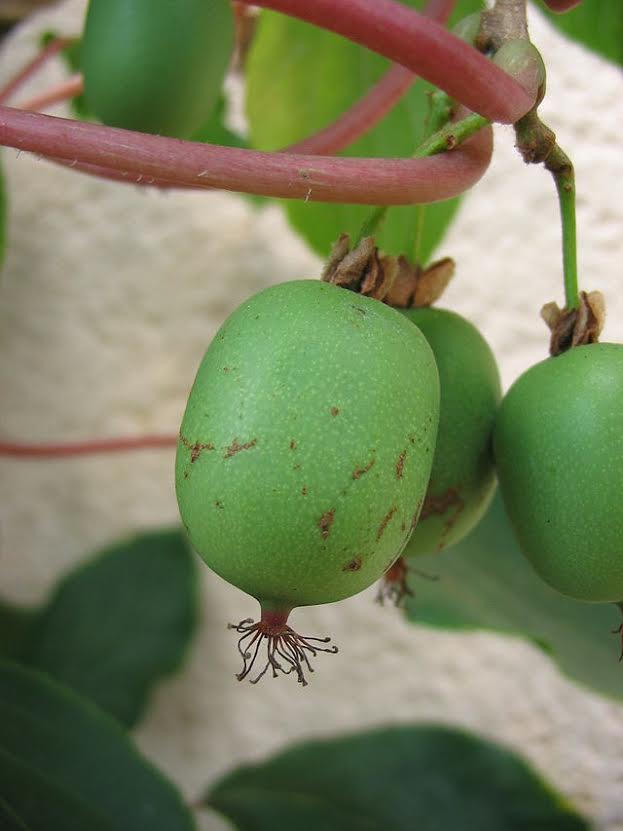
Cultivars: Balsam, Bureyanka, Ganiber, Zolotaya Kosa, Karavaevaya Urozhaynaya, Kiev Hybrid-10, Kiev Large-fruited, Red-brown, Raspberry Flower, Original, Ruby, Fig-shaped, Rimma.
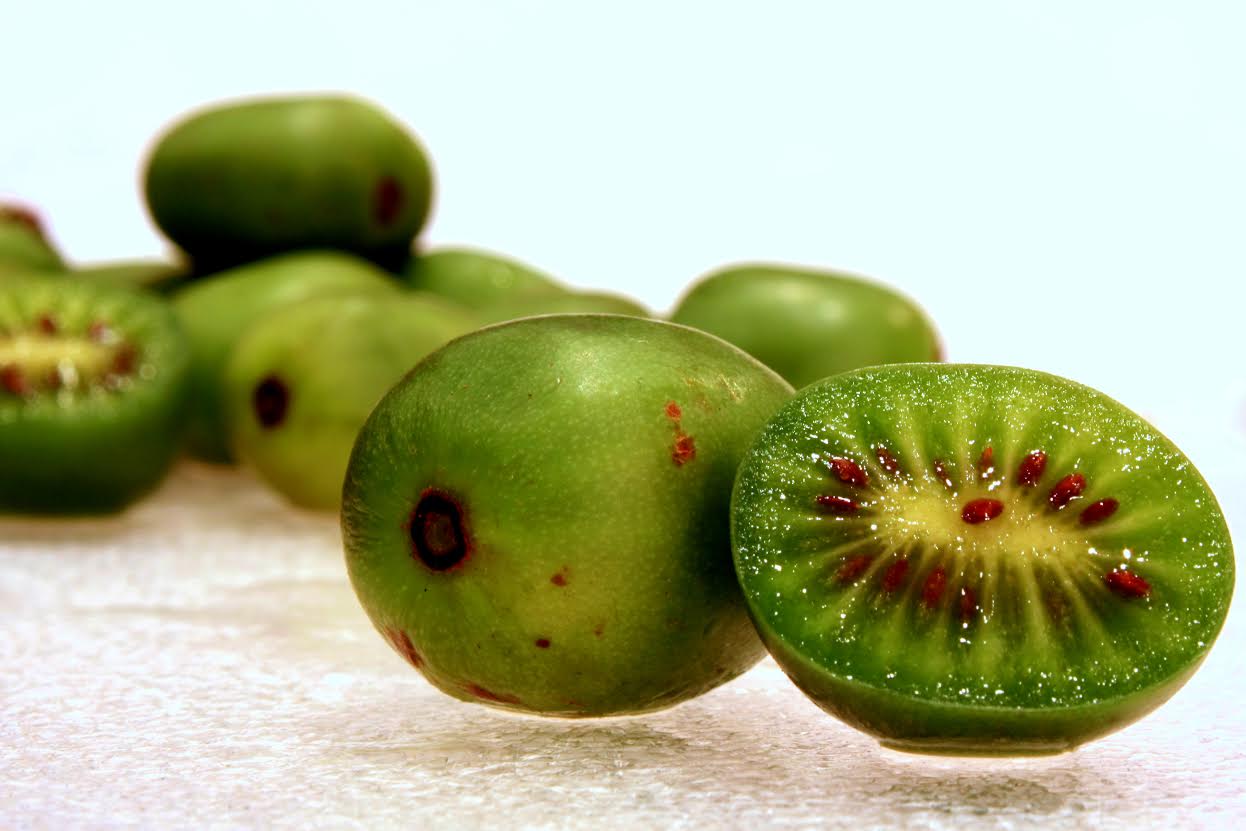
Hardiness zone: zone 4a. Flowers are damaged at temperatures of -3–2 °C.
Location: prefers well-drained, fertile soils with neutral reaction. Does not tolerate waterlogging or shallow groundwater. A sunny site away from large trees is best. Does not tolerate proximity to apple trees, but can be planted near currants. Poorly tolerant of calcareous soil. Does not like dry soil and air. Grows poorly with insufficient light. Suffers from spring scorch.
Care: in the second year after planting it is necessary to install a trellis at least 2–2.5 m high. Vines should be tied to the trellis in a single vertical plane. In the third year all young shoots growing from the main canes should be tied vertically so that they do not intertwine. During hot periods spraying can be done in the morning and evening. In Ukrainian conditions the plant can remain on the trellis over winter.
Planting: recommended in early spring. Optimal seedling age is 2–3 years, but not older than 4 years. Planting hole dimensions: 50–60 cm x 40–50 cm. Place drainage—stones, gravel or broken brick—at the bottom. Crushed construction stone is not recommended because it contains a lot of lime. When planting, add 8–10 kg of peat, compost or humus and a mixture of mineral fertilizers – 200–300 g superphosphate, 100–150 g ammonium nitrate, 30–40 g potassium sulfate (wood ash). Chlorine-containing fertilizers must not be used. On top of the drainage pour fertile soil, then a mound of the fertilizer-soil-sand mixture. After planting, water the plant with 2–3 buckets of water. Recommended spacing between plants is at least 2 m.
Pruning: In the second year after planting leave 2 main shoots and cut out all other shoots. Crown thinning is carried out in summer or late autumn. Do not prune in late winter or spring because sap flow is strong then. In the 4th year one of the old vines should be cut out, replacing it with a new main vine.
Propagation: propagated by seeds or softwood summer cuttings with three buds. For cutting in June (before and at the beginning of flowering) take cuttings at the semi-lignified stage and at the beginning of browning. Cuttings root 100% even without treatment with rooting stimulants.
Dry seeds can be stored in hermetically sealed containers for 2–3 years with a slight loss of germination. Germination in laboratory conditions is 70%, in open ground – 56%. To improve germination seeds are stratified for 2–3 months. Sowing is done in March–April. Seed sowing depth is 0.7 cm. Seedlings require shading.
Pests: in the first years vines may be damaged by cats that like to lick the plant sap. Leaves are also damaged by the caterpillars of the currant pug moth, as well as leaf beetles, ladybirds, and bark beetles.
Diseases: May be affected by leaf spot (Phyllosticta) and powdery mildew.
Uses: the mature plant is very decorative. Can be used for vertical greening. Fruits can be eaten fresh and are also suitable for processing. A good honey plant.