
Deciduous trees
Freeman maple
Acer x freemanii
Synonyms: Freeman maple
Freeman maple (Acer x freemanii) – a hybrid of the genus Maple of the Maple family. The hybrid was obtained from crossing red maple and silver maple (A. Rubrum х A. Saccharinum) in 1933, when Oliver M. Freeman made the first cross between these species at the U.S. National Arboretum. In 1969 Edward Murray named the hybrid in honor of Oliver Freeman. Crosses between these species occur not only in laboratories but also in nature.
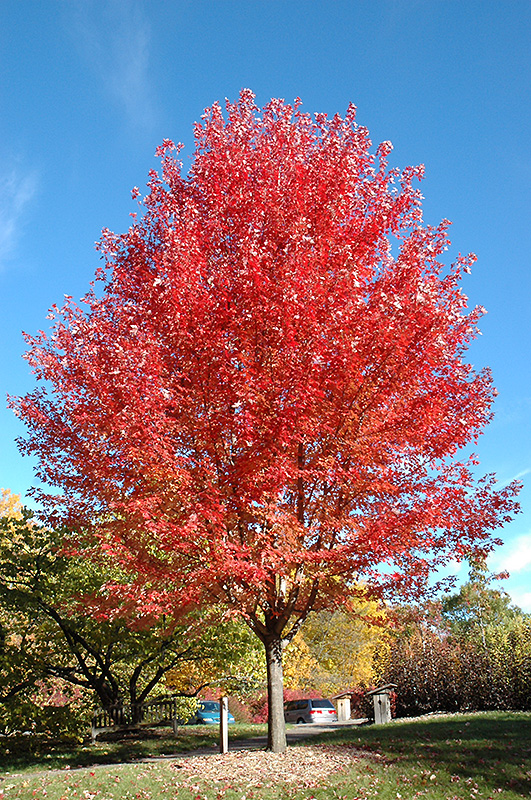
It is a deciduous tree 15-20 m tall, with an upright, conical crown that later becomes broadly oval. The trunk is covered with smooth gray bark, which with age becomes dark gray and fissured. Grows quickly.
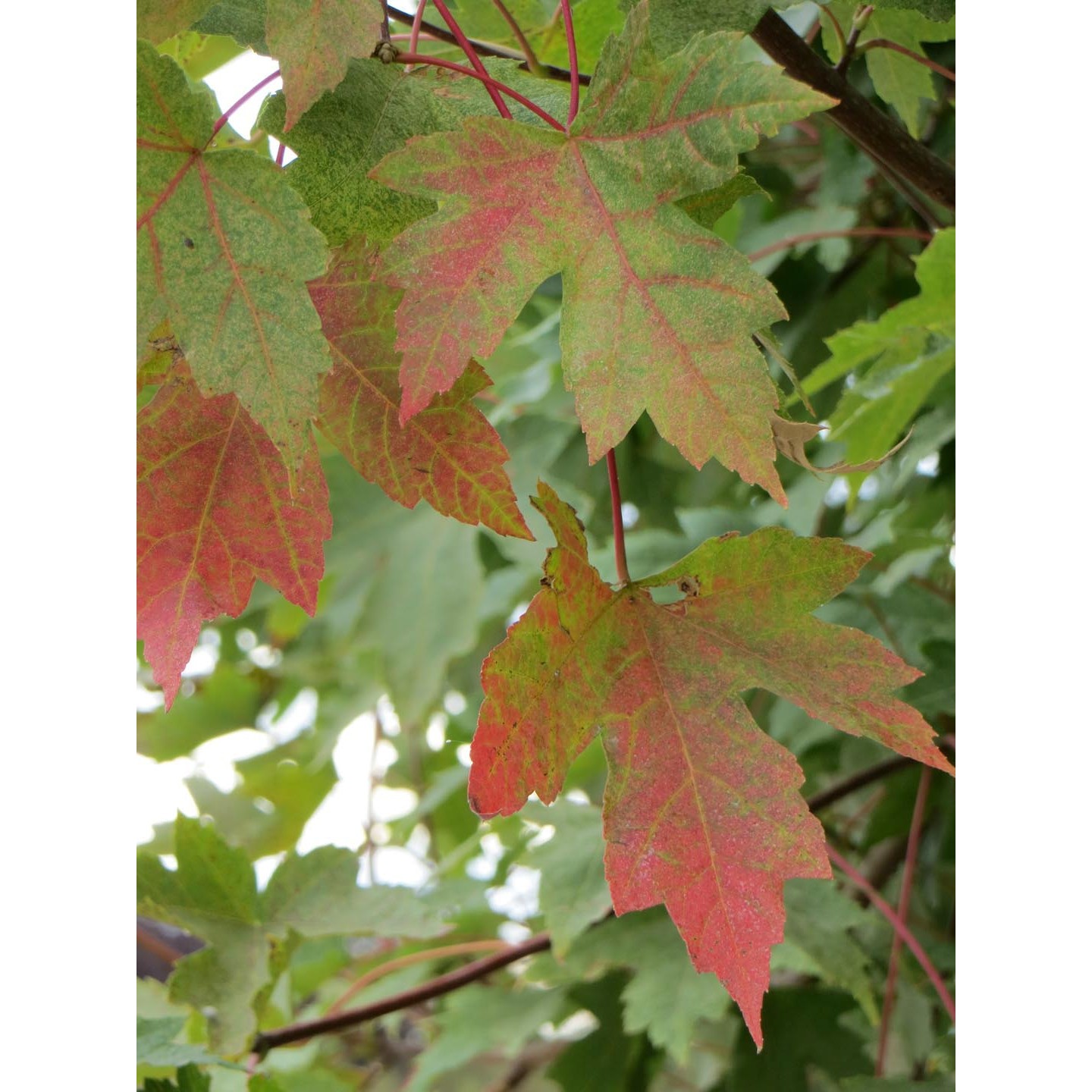
Leaves large, up to 10 cm long, bright green, simple, 3-5 lobed, opposite. In autumn the foliage takes on orange-red and purple tones. Leaves remain on the tree for a long time.
The flowers are of different sexes, present on the same tree; female flowers are bright red, with five petals and five sepals, gathered in a raceme. Male flowers are represented only by yellow stamens protruding from dwarf twigs on the branch. Young trees may bear flowers of only one sex. Blooms rather rarely, in early spring, before the leaves appear.
Fruits are samaras, consisting of 2 wings with a seed. Each wing is 3.5—5 cm long and up to 12 mm wide. Most cultivars are sterile.
Cultivars: 'Armstrong', 'Celebration'('Celzam'), 'Autumn Blaze' ('Jeffersred'), 'Marmo', 'Morgan', 'Scarlet Sentinel' ('Scarsen').
Hardiness zone: 5a (-29°C).

Location: Tolerates urban conditions well. It is desirable to plant in places protected from wind. Shade-tolerant; with good light it develops better color.
Care: requires virtually no care.
Pruning: Tolerates pruning well. Upper lateral branches compete with the leading stem; shortening them is recommended. Pruning is recommended early in spring, before sap flow begins, with treatment of wounds.
Pests and diseases: Resistant to pests and diseases.
Propagation: propagated by seeds; when they get into the soil, they germinate immediately.
Uses: in single, group and row plantings; for creating alleys, screens, tree-shrub groups and seasonal compositions. Recommended for urban landscaping of wide streets, squares, residential courtyards and urban yards, playgrounds and school gardens, and hospital gardens.