
Conifers
Numidian fir
Abies numidica de Lannoy ex Carrière
Synonym: Algerian fir
Numidian fir (Abies numidica de Lannoy ex Carrière) – a species of coniferous trees in the genus Abies of the Pine family (Pinaceae). The species was first described in 1866 by the French botanist Elie-Abel Carrière in his work «Rev. Hort. (Paris) 37:106, 168».
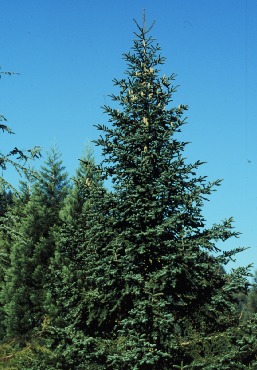
It is endemic to the Babors and Tababort mountains (Algeria). Grows in humid mixed forests on steep southern and eastern limestone slopes. The climate is cold and humid, average precipitation – 2500 mm, mainly as snow during the winter period. Summer is typical of a Mediterranean climate – maximum temperature +18 °C to -1 °C, with frosts of -8 to -10 °C. It ascends to elevations of 1800-2000 m above sea level. Mostly grows on summits, where it forms pure populations.
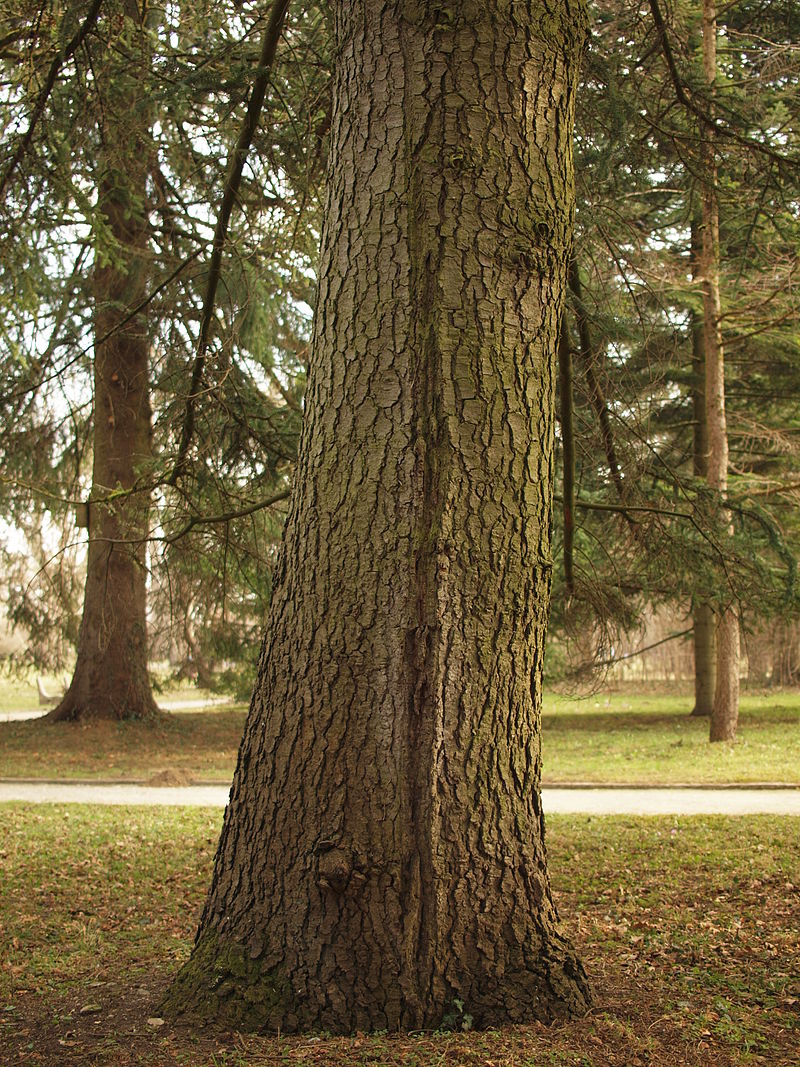
Источник: Википедия. Автор: Orjen
A tall tree, up to 25 m in height, trunk up to 1 m in diameter. Bark on young trees gray and smooth, later becoming peeling and fissured with age and brownish-gray. Crown conical, dense, and branched. Branches are horizontal. Shoots range from yellow-green to brown, glabrous, shiny. Buds ovoid, large, dark brown, not resinous or almost non-resinous.
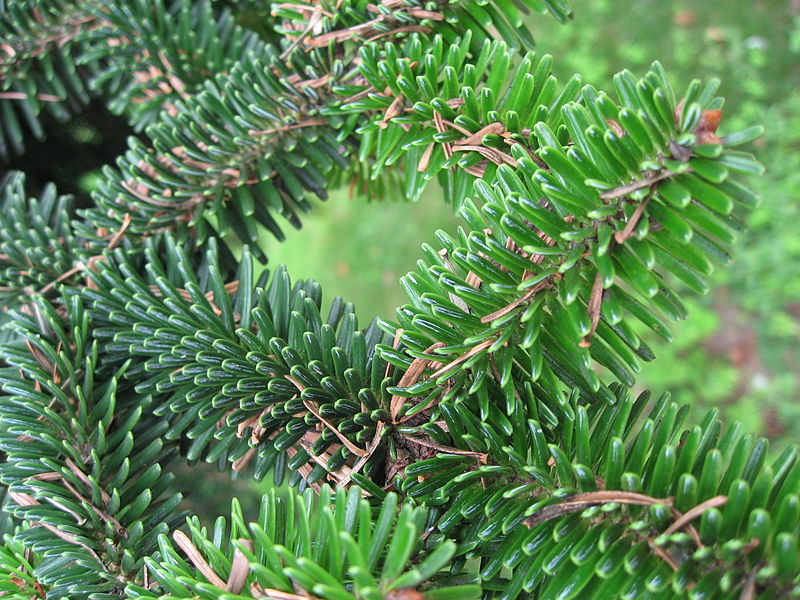
Источник: Википедия. Автор: Liné1
Needles are densely arranged, 15-20 mm in length, 2-3 mm in width, thick, stiff, dark green, beneath with 2 greenish-white lines, tips usually pointed, less often slightly notched.
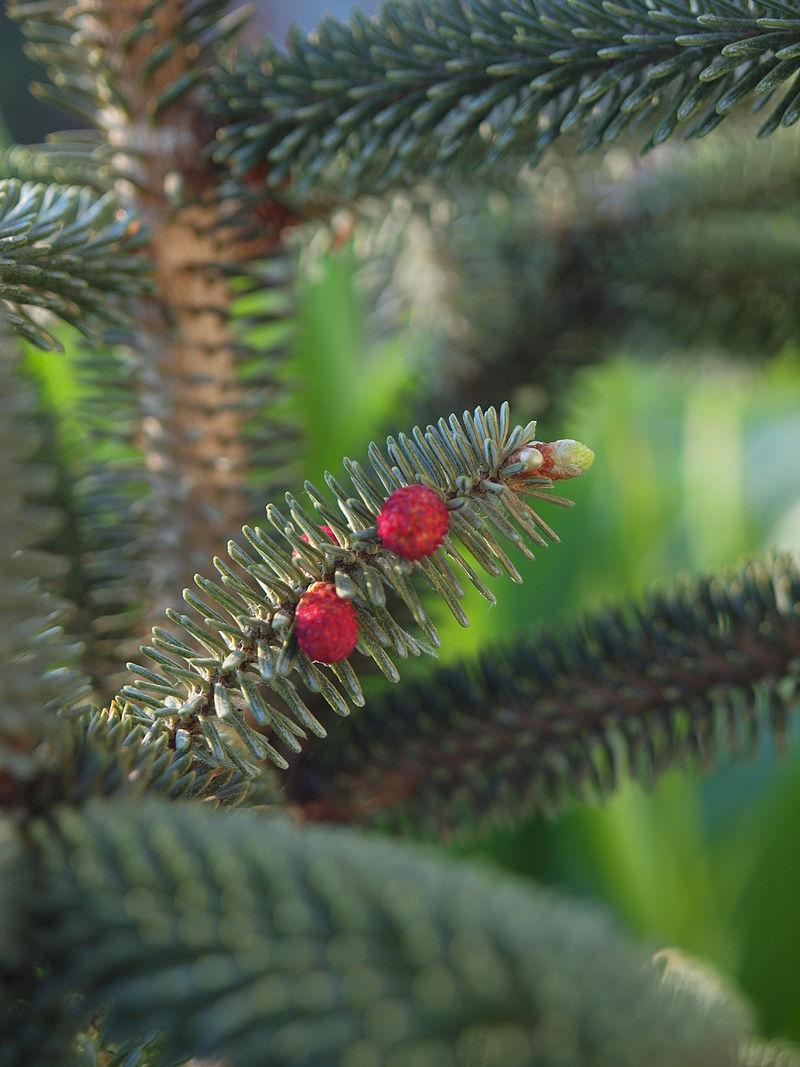
Источник: Википедия. Автор: Pavle Cikovac
Cones are grey-green with a pink or purple tint, turning brown after ripening, cylindrical in shape, 15-20 cm long, 3.5-5.5 cm wide. Seeds 12-14 mm long, wings longer than the seed. Weight of 1000 seeds = 70 g.
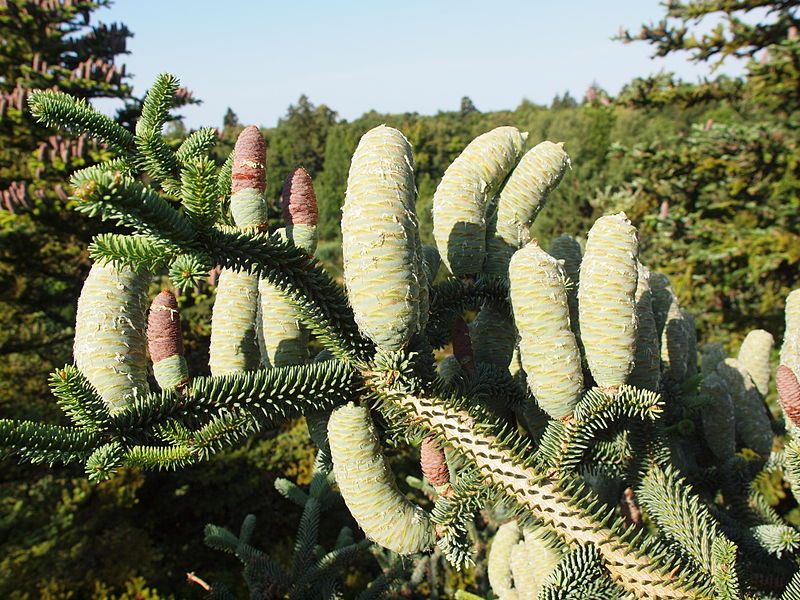
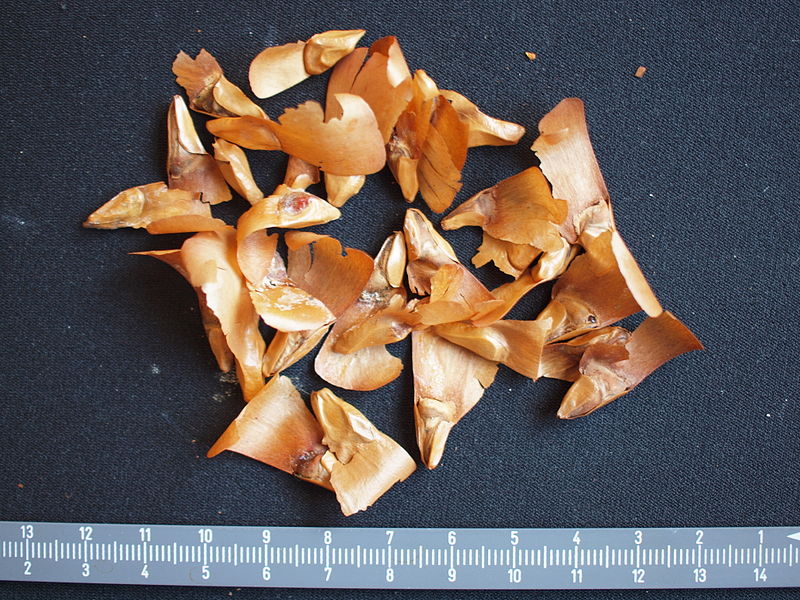
Источник: Википедия. Автор: Pavle Cikovac
Forms: ‘pendula’, ‘glauca’.
Hardiness zone: zone 2a (-45°C).
Location: shade-tolerant, but develop better in full sun, requiring partial shade in the first years of life. Wind-resistant. Very demanding of high air humidity. Sensitive to air pollution by smoke and gases.
Soil: prefers fertile, moist and well-drained soils.
Planting: in avenue plantings the spacing between plants is 4 - 5 m, in loose groups 3 - 3.5 m, in dense groups up to 2.5 m. Planting time: spring - April, autumn - late August - September. Seedlings aged 5 to 10 years establish better.
Care: 2-3 years after planting it is advisable to apply "Kemira Universal" 150 g/m2 in spring. Watering of the fir, as a moisture-loving species, is 2 - 3 times per season at a rate of 15 - 20 L per tree; in dry summer periods sprinkler watering (spraying) is recommended once every 2 weeks.
Excessive waterlogging of the soil is not tolerated by firs. Loosening and mulching are mandatory in young plantings to a depth of 25 - 30 cm, simultaneously with weed removal. Mulch with sawdust, wood chips or peat in a layer of 5 - 8 cm near the stem circles of young plants. In spring remove dead branches. Crown shaping, only if necessary, is carried out in early spring before sap flow. Cultivars of subalpine fir in young age can be shaped by pruning shoots damaged by late spring frosts at the end of May, giving the plant a more compact form. Many firs and their ornamental forms grown in Europe and the temperate zone of Russia are frost-hardy and are not damaged in severe winters. However, young plants in the first year after planting are better covered with conifer boughs to protect them from late spring frosts (the one-colored fir, whose needles redden). With age, the winter hardiness of firs, as with other conifer species, increases and the need to cover the stem circles with dry leaves or peat disappears.
Propagation: by seeds, which are harvested at the beginning of cone ripening. Sowing is done in autumn, or in spring after 30-40 days of stratification or exposure to snow. Seeds under normal conditions are stored up to one year. It is also possible to propagate by one-year cuttings with an apical bud. Roots on cuttings form only after 8—9 months. The crown develops naturally.
Uses: cultivated as ornamental trees in parks and large gardens.