
Deciduous trees
Smith's willow
Smithiana Willd.
Synonyms: Salix caprea x viminalis, Salix x geminata Forbes, Salix x sericans Tausch ex A. Kern., Salix caprea x viminalis (S. x sericans) Tausch ex A.Kerner, Helygen Sidanddail, Helygen Smith.
Smith's willow (Salix x smithiana Willd.) – a spontaneous hybrid of Goat willow and Osier (Salix caprea L. × Salix viminalis L.), a species of the genus Willow (Salix) of the family Salicaceae. The species was first described by the German botanist Carl (Karl) Ludwig Willdenow. The native range is in Northern Europe. Introduced to the USA, Canada, and Russia. Grows in groups with goat willow or osier, less commonly solitary.
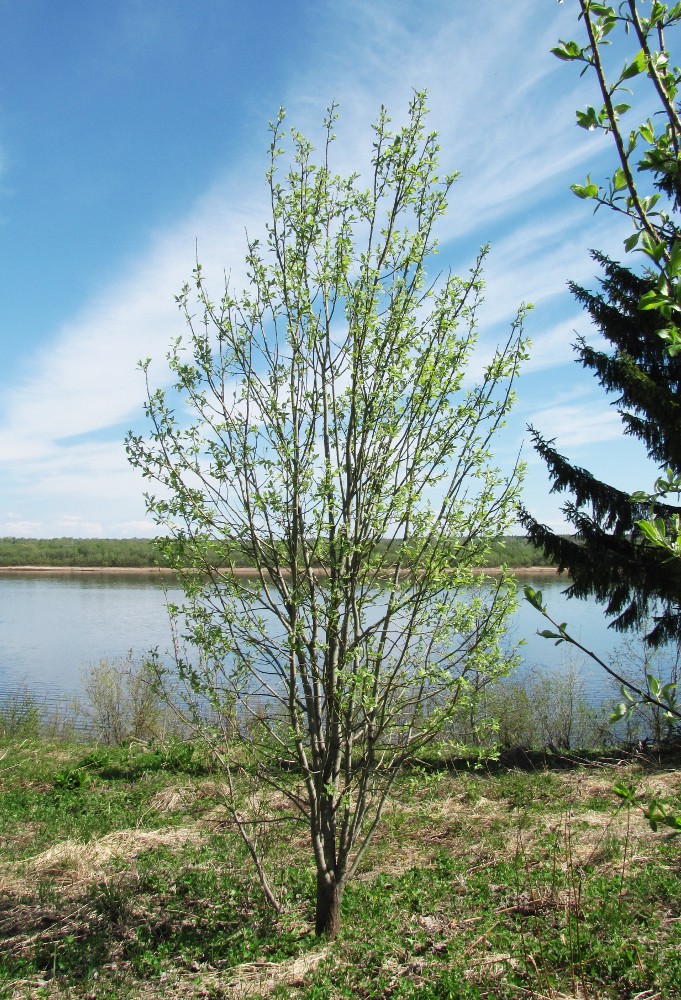
A fast-growing shrub, rarely a tree, 2-7 (10) m in height. Crown oval. Young shoots pubescent, light green, later brown. Annual shoots thick, rigid.
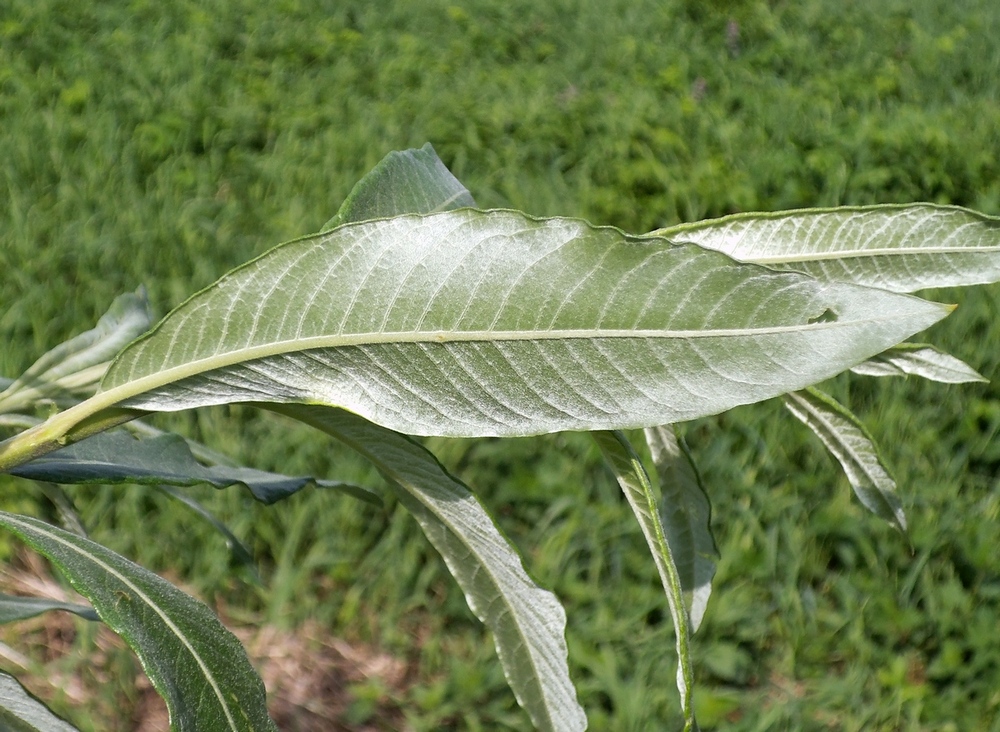
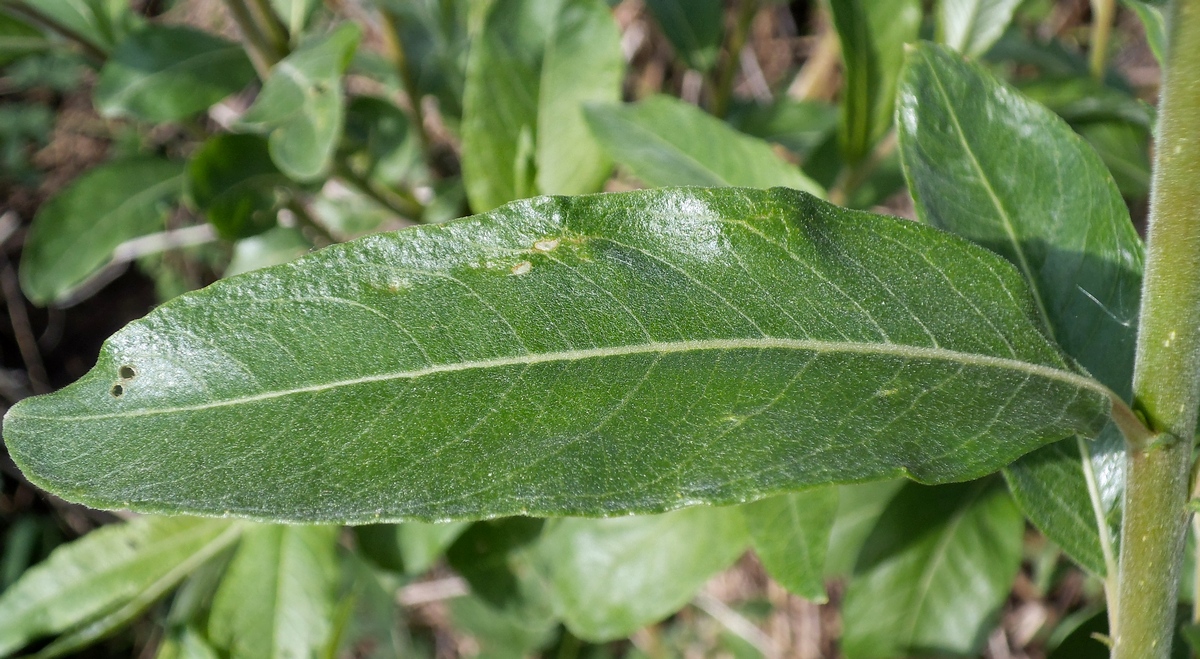
Leaves simple, alternate, entire, lanceolate or elliptic in shape, 6-13 cm long and 2-4 cm wide, with a revolute and slightly undulate margin, slightly pubescent when unfolding, later glabrous, glossy, dark green above, silvery-green beneath, slightly pubescent, on short sparsely pubescent petioles.
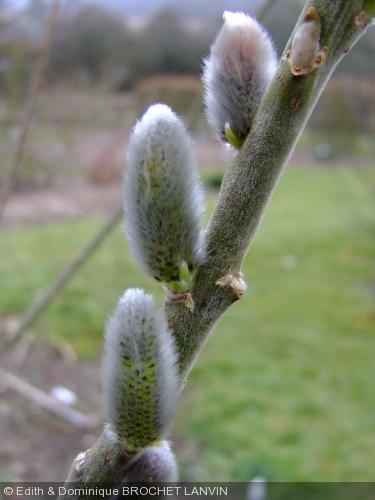
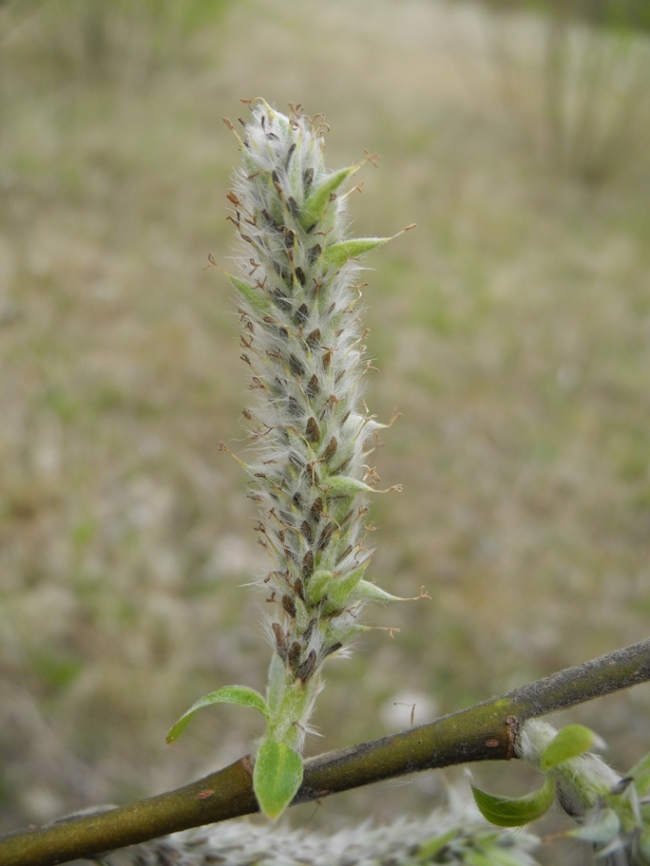
Flowers in April-May. Male catkins light green, sessile, oblong-ovoid, with yellow anthers. Female catkins dense, cylindrical, borne on short stalks.
Hardiness zone: 5a (-29°C).

Location/exposure: light-loving but tolerates partial shade. Grows well in urban conditions. Not demanding regarding growing conditions. Requires a site protected from strong winds.
Soil: not demanding; grows on any sufficiently moist soil with good drainage. Prefers fertile soil, though can grow on poor and dry soils.
Planting: It is best to plant in spring before budburst. When establishing a willow plantation ("ivnyak") it is recommended to work the soil in autumn to a depth of 30-80 cm, depending on its fertility and dryness. The topsoil layer should be turned upside down. Recommended spacing between seedlings should be no less than 0.6-2 m, depending on the species. Planting depth – 40-70 cm. Transplanting is recommended up to 3-4 years of age. On heavy soils a drainage layer of crushed stone or sand 20-30 cm thick is recommended.
Pruning: tolerates cutting and pruning well.
Care: practically requires no maintenance.
Propagation: propagated by summer and hardwood cuttings.
Pests: longhorn beetles, willow leaf beetle (Lochmaea caprea), Crepidodera aurata, sawfly larvae (Trichiosoma sibiricum), lepidopteran caterpillars (Acleris cristana, Teleiodes notatella, etc.).
Diseases: affected by fungal diseases – fungi of the genera Melampsora, Rhytisma, Erysiphe, Phytophthora ramorum.
Uses: used in solitary and group plantings. Used for creating avenues, in parks, squares, along roads, in wet sites, near water bodies. Shoots can be used for weaving coarse products. It is a good forage resource for bees.