
Deciduous trees
Spearleaf Willow 'Wehrhahnii'
Salix hastata Wehrhahnii
Synonyms: Verkhani willow, Engadine willow
Spearleaf Willow Wehrhahnii (Salix hastata L.) – a popular cultivar of Spearleaf Willow. It was found in the Engadine mountains (Switzerland) in the 1930s. The cultivar received the RHS AGM (Award of Garden Merit).
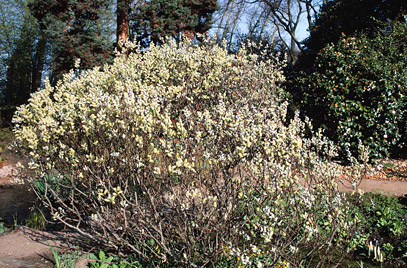
It is a deciduous, slow-growing shrub with a broad, spherical crown. It reaches up to 1.5 m in height and up to 1 m in diameter. One-year shoots are light brown to almost black, bare, matte, less often glossy and sparsely pubescent, arched.
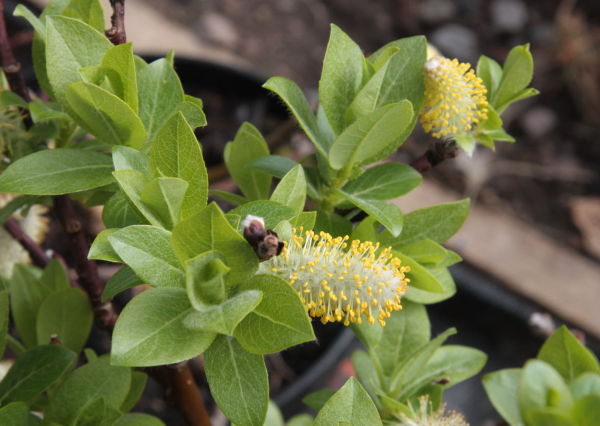
Leaves are oval or ovate, up to 6 cm long, at first gray-green and hairy, later becoming matte and dark green, with a finely toothed margin. In November they acquire pale yellowish tones.
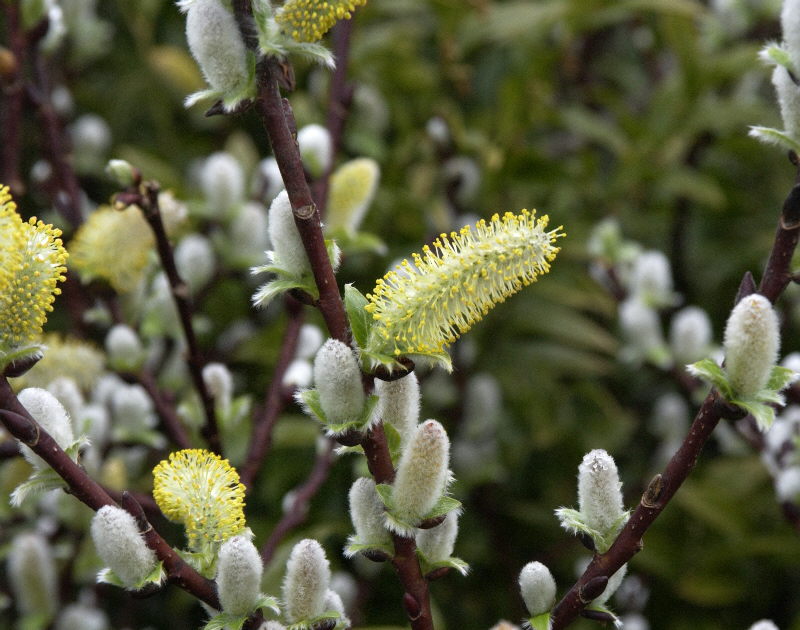
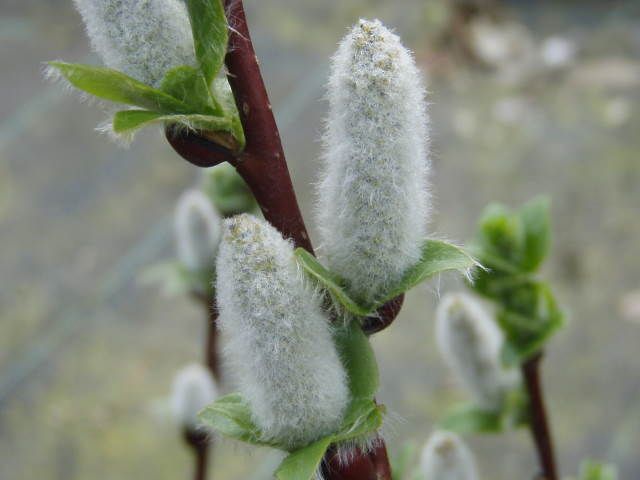
Blooms in late April – early May. Catkins are male only, numerous, long, silvery-gray, silky, with yellow stamens. They have a barely perceptible scent.
Hardiness zone: 5b (-23°C)

Site: light-loving but shade-tolerant, moisture-loving, tolerates waterlogging and temporary flooding, can grow on boggy soil. Undemanding and very hardy, tolerates urban conditions well.
Soil: does not like calcareous soils. Prefers acidic, poor podzolic or sandy soil.
Planting: Planting is best carried out in spring before budburst. When establishing a willow stand («osier»), it is recommended to cultivate the soil in autumn to a depth of 30-80 cm, depending on its fertility and dryness. The topsoil layer should be inverted. The recommended spacing between seedlings should be at least 0.6-2 m, depending on the species. Planting depth – 40-70 cm. Transplanting is recommended up to 3-4 years. On heavy soils, drainage of rubble or sand 20-30 cm thick is recommended.
Pruning: tolerates trimming and pruning well. Regular removal of dead shoots and shaping of the trunk and crown is recommended.
Care: practically requires no maintenance.
Propagation: by cuttings and seeds. Seeds lose viability after 10 days. Winter cuttings almost do not root; green cuttings treated with Kornevin root 100%. Pests: Cecidomya saliciperda, Cecidomya salicis, Tortrix (Helias) Chlorana, Agrotis vallugera, Bombyx Salicis, Curculio crux, Phratora vulgarissima, Phratora vitellinae, Galer ucacapreae, Galer lincola, Arvicola terrestris.
Diseases: affected by fungal diseases – fungi of the genera Melampsora, Rhytisma, Erysiphe.
Uses: used in single and group plantings, near water bodies, as a specimen on the lawn, in compositions with other shrubs, annuals and perennials. Can be grown on a standard (trained trunk).