
Deciduous shrubs
Wild blackberry
Rubus fruticosus L.
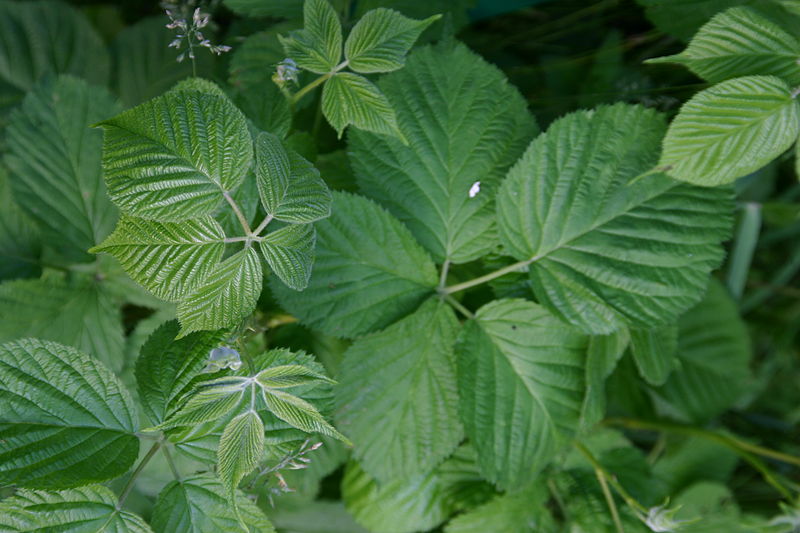
Blackberry (lat. Rubus fruticosus) is a deciduous semi-shrub of the Rose family (Rosaceae) that reaches 3 m in height. Shoots and stems are covered with thorns (thornless cultivars also occur), very flexible, prostrate or arching. Shoots have a two-year development cycle: in the first year shoots grow and buds are set on them; in the second year they fruit and die. Leaves consist of 5 or 7 leaflets.
Flowers are white or pink, 2 cm in diameter, flowering from June to July.
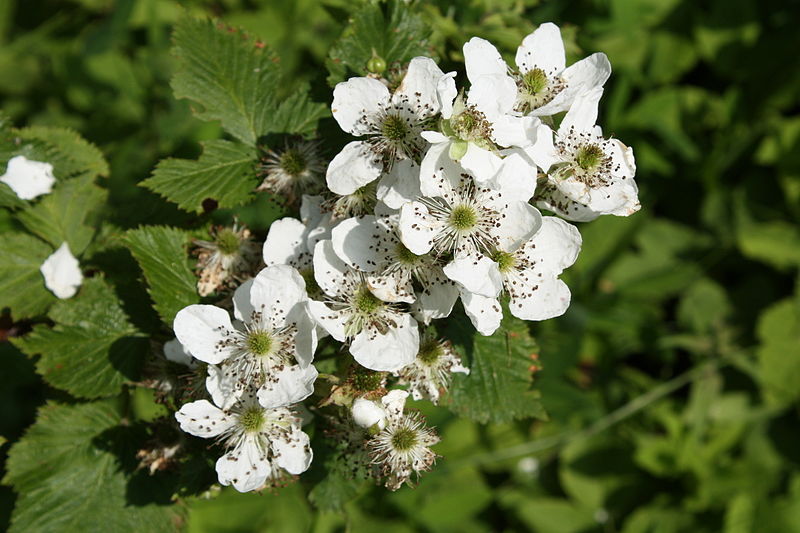
A good forage source for bees.
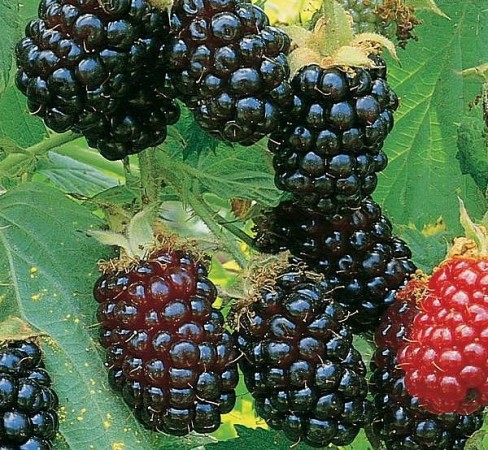
The fruits are glossy black or purple-black drupes, edible, with a slightly tart-sweet flavor, large, 5-20 g. Fruits ripen from the second half of July - mid-August and until mid-autumn. Berries have good transportability.
An important pioneer plant that greatly improves the soil for any dry or moist poorly developed soils. Particularly suitable for stabilizing sandy wastelands, slopes and embankments and, thanks to its tolerance to industrial air pollution, for landscaping spoil heaps and gravelly areas. Drought-tolerant.
Сорта: Дойл, Рубен, Лох-тей, Торнфри, Карака блек, Трипл краун, Полар, Честер, Лох Несс, Честер Навахо, Эдриэн, Гигантский Бедфорд, Агаван, Блек бьют, Гай, Дито, Бекингемская тайберри.
Hardiness zone: 5b.

Location: prefers sunny, well-warmed sites protected from cold eastern and northern winds. Not demanding to soil, but will grow and fruit well on fertile, well-drained loams with neutral to slightly acidic pH (5.5-6.5). Likes moist but not waterlogged sites. Excess moisture leads to root dieback due to lack of oxygen, reduces shoot growth and delays tissue ripening, which contributes to reduced fertility, winter hardiness and flavor quality of the berries. Adequate moisture is especially important during the initial growth period (April–June). Does not like soils with an elevated amount of calcium carbonate (limestone), where the plant may suffer from chlorosis.
Planting: depending on winter hardiness, blackberry is planted in autumn or spring. Varieties with weak winter hardiness should be planted in spring, and those with high hardiness in autumn and covered for the winter with a 15 cm layer of humus or peat.
Blackberries are planted in holes sized 40x40x50 cm. Into the planting hole add half a bucket of compost (5-6 kg), which is mixed with 30-40 g of superphosphate, 15-20 g of potassium salt or 30-40 g of ash. On acidic soils, add 100 g of lime in advance. Mix the fertilizer with the topsoil and cover the rootstock (bury the root collar 2-3 cm). Erect varieties are planted in rows 0.8-1 m apart, with row spacing 1.8-2 m. Trailing varieties – 2-3.5 m in the row, with row spacing 2-2.5 m.
Diseases and pests: blackberry is practically not affected by diseases and pests. Diseases: chlorosis, rust, anthracnose, purple and white leaf spot, gray rot, powdery mildew, botrytis. Pests: малинная орехотворка, малинная стеблевая галлица, побеговая малинная галлица, spider mite, blackberry aphid.
Care: requires watering, especially in the spring period. Drip irrigation is preferable. The soil surface around the bushes should be mulched to help retain moisture, suppress weeds and protect from overheating on hot days. Requires annual nitrogen and phosphorus-potassium fertilization. Per bush you need 7 kg of compost, 60 g of ammonium nitrate, 100 g of superphosphate, 30 g of potassium fertilizer and a half-liter jar of wood ash. Requires rejuvenation pruning (after harvest, two-year-old shoots are cut off). In spring, prune frosted and diseased shoots. In early June remaining shoots are pinched for additional branching (shoots are pinched in autumn when they reach about 1 m length), and the grown side shoots are shortened to 50 cm. Blackberries need tying; trellises and fan training are preferable. Non-hardy varieties should be covered for winter. For this use sawdust, leaves or coniferous branches; in cold winters plastic film or special nonwoven material can be used.
Propagation: Blackberry is propagated by seeds, root suckers and layering. Upright varieties are propagated by root suckers, trailing ones by rooting layers. For this, at the end of August a shoot is buried in a trench 15 cm deep, leaving 10 cm of the shoot above the surface. Water and mulch. The following year rooted shoots are cut off and transplanted.
Uses: berries are consumed fresh, used for making liqueurs, wine, marmalade, juice. Leaves are used in medicine.