
Deciduous trees
Magnolia
Magnolia L.
Synonyms: Manolia, Alcimandra Dandy, Aromadendron Blume, Buergeria Siebold & Zucc., Dugandiodendron Lozano, Elmerrillia Dandy, Kmeria (Pierre) Dandy, Manglietiastrum Y.W.Law, Michelia L., Pachylarnax Dandy, Parakmeria Hu & W.C.Cheng, Paramichelia Hu, Talauma Juss., Tsoongiodendron Chun.
Magnolia (Magnolia L.) is a genus of flowering plants in the family Magnoliaceae. It was named by the French botanist Charles Plumier in honor of the French botanist Pierre Magnol in 1703. In 1753 this name was used by Carl Linnaeus in the book «Species Plantarum». In Russian the genus was initially called «Маньолия», but later transformed into «Магнолия» (Magnolia). Magnolia belongs to the ancient angiosperms. Representatives of the genus grew at a time before bees existed and are pollinated by beetles. Another important feature is the absence of clearly distinct sepals and petals. Fossilized plants related to this genus have been found dating to about 95 million years ago.
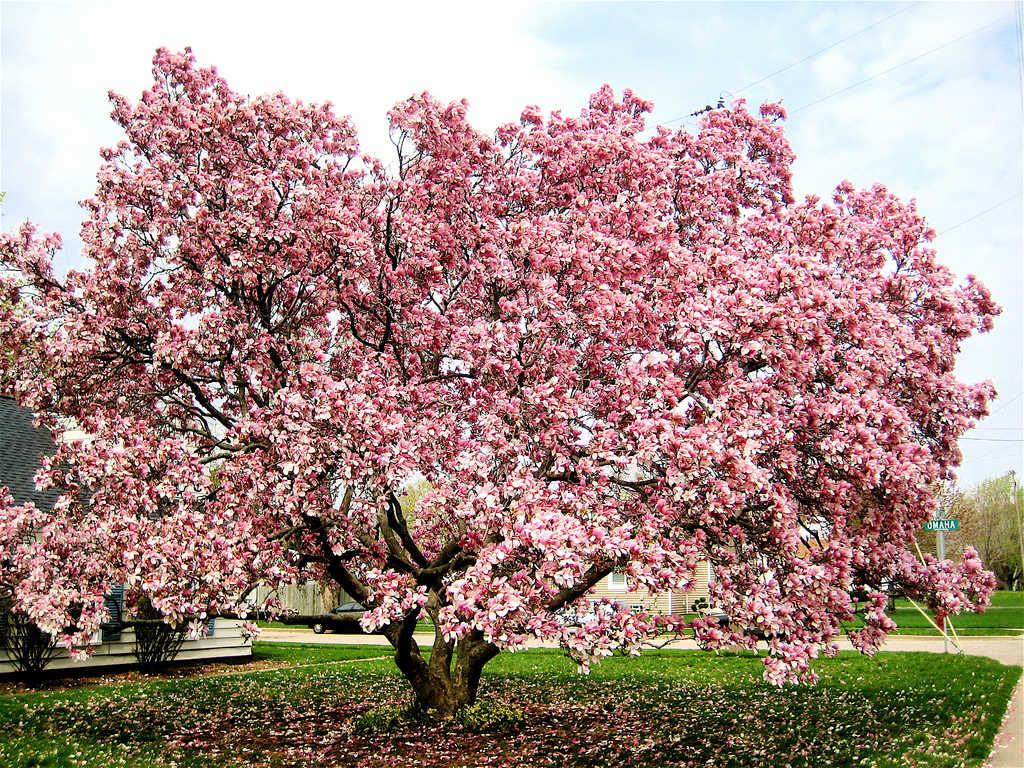
In nature it occurs in North America, East Asia (China, Japan, Korea), and also in the Russian Federation (Kunashir Island).
Magnolia tripetala
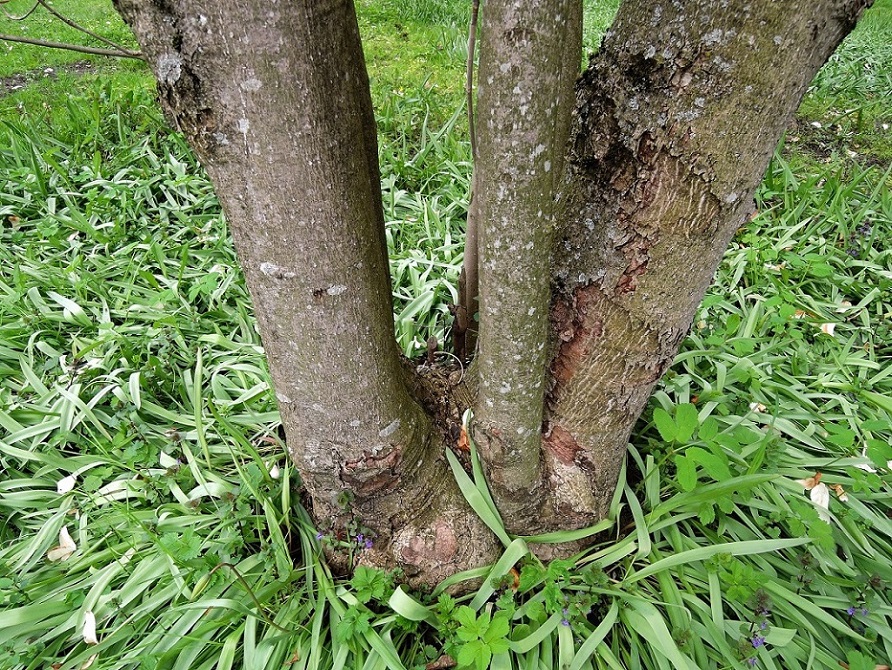
These are evergreen or deciduous trees or shrubs with ash-gray or brown, smooth, scaly or furrowed bark. Shoots have large leaf scars and narrow ring-like stipule scars.
 |
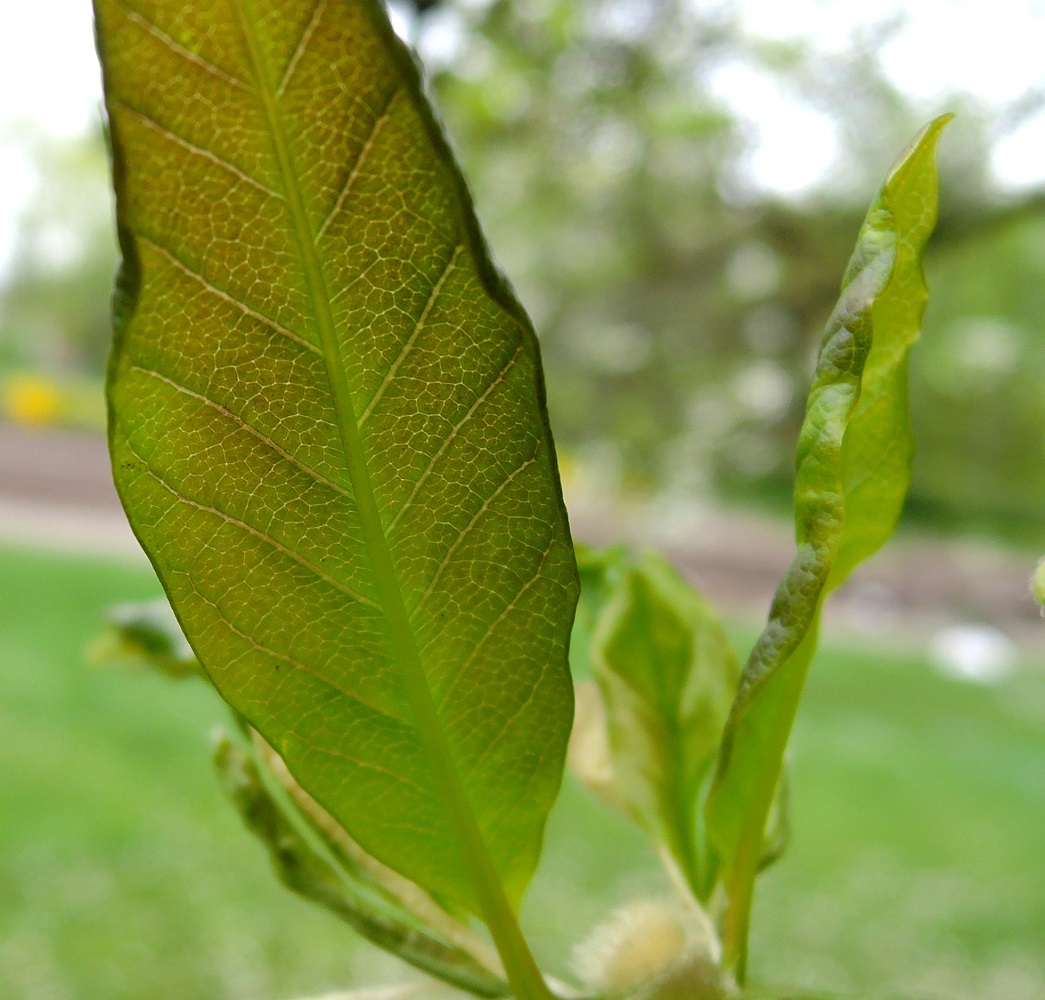 |
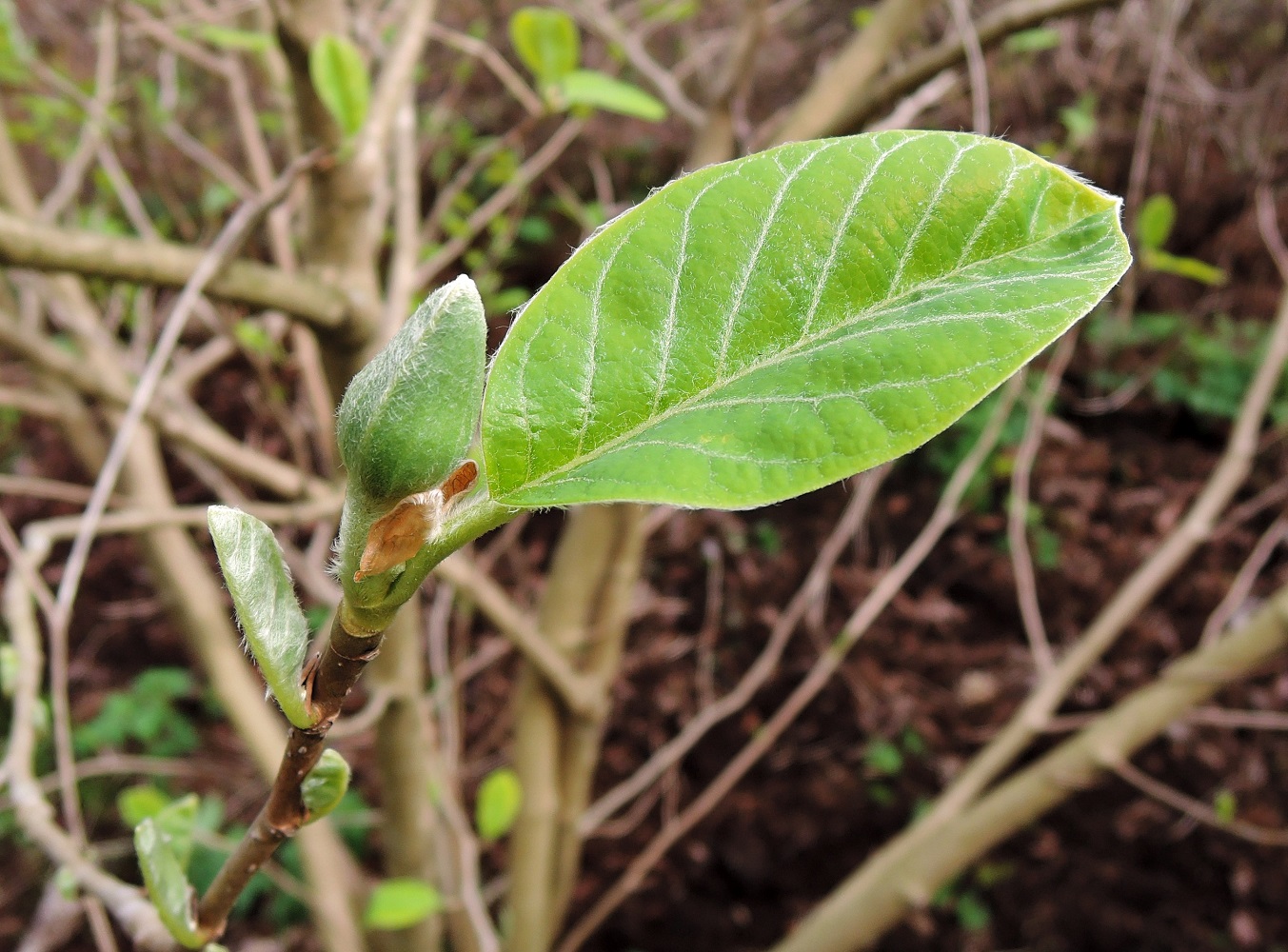
| Magnolia sieboldii | Magnolia × loebneri |
Buds are large, narrowly conical or spindle-shaped, with 1 or 2 scales. Leaves are large, petiolate, mostly elliptic or obovate, with entire margins and pinnate venation; secondary veins anastomose without reaching the leaf margin. Stipules enclose young leaves.
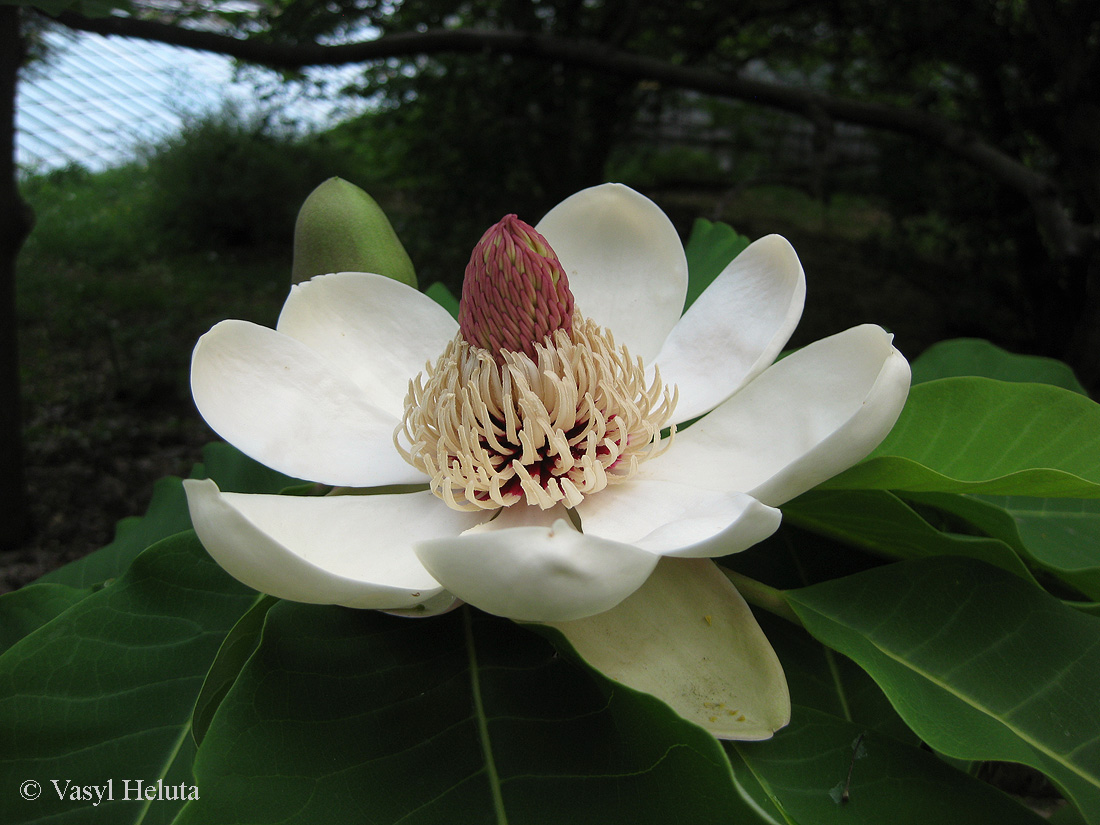
Magnolia hypoleuca
Flowers are bisexual, often very large, fragrant, solitary, borne at the ends of branches. The perianth consists of a 3-segmented calyx and 6—9—12 petals that overlap like shingles and are arranged in 2, 3, or 4 whorls. Carpels and stamens are numerous, borne on an elongated spindle-shaped receptacle. Pollen is elongated, monosulcate. In most species the flowers are adapted for beetle pollination; stigmas of the carpels can be receptive while still in the bud. Flowering occurs from May to September.
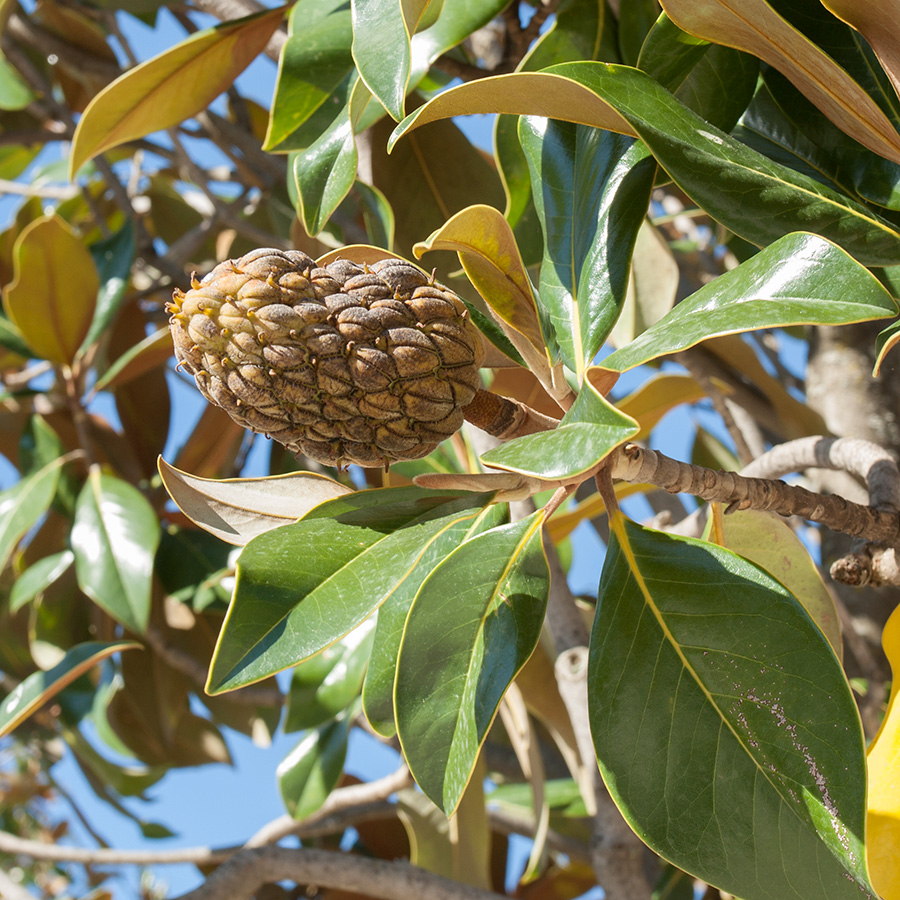
Magnolia grandiflora
The fruit is a cone-like aggregate of follicles, consisting of numerous 1-2-seeded follicles that open along the dorsal suture. Seeds are wedge-ovoid or triangular, black. The embryo is small, embedded in oily endosperm. The aril is fleshy, red or pink. Seeds hang on thin seed threads.
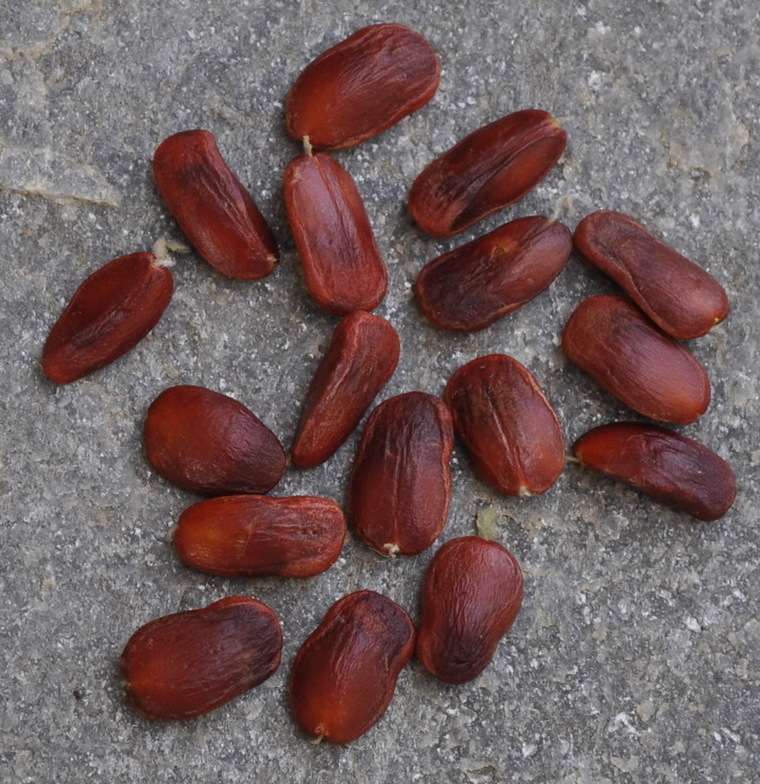
Magnolia grandiflora
Classification: the genus is divided into 3 subgenera:
Subgenus Magnoliastrum D. C - buds with a single cap-shaped scale, flowers appear after leafing, cone-like infructescences of cylindrical form.
Section Magnolia
- Magnolia grandiflora - large-flowered magnolia
- Magnolia guatemalensis
Subsection Magnolia virginiana
- Magnolia virginiana – type species, Virginia magnolia
Section Gwillimia
Subsection Gwillimia
- Magnolia albosericea
- Magnolia championii
- Magnolia coco - coco magnolia
- Magnolia delavayi – Delavay magnolia
Subsection Blumiana
- Magnolia gigantifolia
- Magnolia hodgsonii
Section Talauma
Subsection Talauma
- Magnolia allenii
- Magnolia amazonica
- Magnolia mexicana
- Magnolia sellowiana
Subsection Dugandiodendron
- Magnolia argyrothricha
- Magnolia calimaensis
- Magnolia magnifolia
- Magnolia yarumalense
Subsection Cubenses
- Magnolia cacuminoides
- Magnolia cristalensis
Section Manglietia
- Magnolia aromatica
- Magnolia blaoensis
- Magnolia conifera
- Magnolia tibetica
- Magnolia utilis
- Magnolia yuyuanensis
Section Kmeria
- Magnolia duperreana
- Magnolia kwangsiensis
- Magnolia thailandica
Section Rhytidospermum
Subsection Rhytidospermum
- Magnolia obovata - obovate magnolia
- Magnolia officinalis
- Magnolia officinalis ssp. biloba
- Magnolia rostrata
- Magnolia tripetala - three-petaled magnolia
Subsection Oyama
- Magnolia globosa
- Magnolia sieboldii - Siebold's magnolia
Section Auriculata
- Magnolia fraseri
Section Macrophylla
- Magnolia macrophylla - large-leaved magnolia
Subgenus Yulania
Section Yulania
Subsection Yulania
- Magnolia amoena
- Magnolia biondii
- Magnolia campbellii - Campbell's magnolia
- Magnolia cylindrica
- Magnolia dawsoniana
- Magnolia denudata - Yulan magnolia (naked magnolia)
- Magnolia kobus - Kobushi magnolia
- Magnolia liliiflora - lily-flowered magnolia
- Magnolia salicifolia - willow-leaved magnolia
- Magnolia × soulangeana - Saucer magnolia
- Magnolia stellata - star magnolia
Subsection Tulipastrum
- Magnolia acuminata - cucumbertree magnolia (long-pointed magnolia)
Section Michelia
Subsection Michelia
- M. x alba
- Magnolia angustioblonga
- Magnolia microcarpa
- Magnolia xanthantha
Subsecció Elmerrillia
- Magnolia platyphylla
- Magnolia pubescens
- Magnolia tsiampacca
Subsection Maingola
- Magnolia annamensis
- Magnolia carsonii
- Magnolia pealiana
Subsection Aromadendron
- Magnolia ashtonii
- Magnolia elegans
Subgenus Gwillimia Root. – buds covered by 2 scales, flowers appear before leafing, infructescences curved.
Section Gynopodium
- Magnolia kachirachirai
- Magnolia yunnanensis
Section Manglietiastrum
- Magnolia pleiocarpa
- Magnolia praecalva
- Magnolia sinica
About 40 species are used in ornamental horticulture, of which 6 are hybrids.
Hardiness zone: 5b (-23°C)

Location: the optimal planting site is sunny and sheltered from northerly and easterly winds. Shading is acceptable only in the southern regions. Moisture-loving, tolerates waterlogging easily. Some species are drought-tolerant. During dry periods watering is necessary. Mulching the root circle with peat, peat-compost, or wood chips 8-12 cm thick is recommended.
Soil: does not require very fertile soil. It can grow on ordinary garden soil, but is most decorative on fertile, moist, loose, neutral or slightly acidic loamy or sandy-loam soils.
Planting: soil mix – leaf mold, peat, sand in ratio 3:2:2. Place drainage of crushed stone or coarse sand 15-20 cm thick at the bottom of the planting hole. Transplanting should be done carefully since thick and fleshy roots can be easily damaged. It is recommended to buy plants with a container-grown root system and plant them outdoors in spring.
Pruning: sanitary pruning is recommended.
Care: young plants need winter protection with conifer boughs or non-woven material; trunks are wrapped with burlap.
Propagation: propagated by seed, grafting and cuttings. Seeds should be sown immediately after collection in the ground or stratified in a cool place in sand. Before sowing seeds are recommended to be rubbed with sand to remove the fleshy coat and washed in water. Sow in March-April in seedling boxes kept at +15+18°C. After the appearance of the 3rd leaf seedlings are pricked out to beds.
Pests: common web mite (Tetranychus urticae), broad mite (Hemitarsonemus latus), field slug (Deroceras agrestis and Limax maximus), grove snail (Cepaea nemoralis), edible snail (Helix pomatia), greenhouse aphid (Aulacorthum circumflexum or Neomyzus circumflexum), green peach aphid (Myzus persicae), rose thrips (Thrips fuscipennis, Haliday), cabbage moth (Mamestra oleracea), ivy scale (Aspidiotus hederae), mealybug (Pseudococcus maritimus), eastern May beetle (Melolontha hippocastani), western May beetle (M. melolontha).
Diseases: bacterial leaf spot (Pseudomonas syringae), damping-off of seedlings (Pythium ultimum, Fusarium spp., Rhizoctonia solani), powdery mildew (Erysiphe magnifica), dieback of shoots (Botrytis cinerea, Botryospheria sp.), scab (Elsinoe magnoliae), gray mold (Botrytis cinerea), sooty mold (Cladosporium sp.).
Uses: a highly ornamental tree or shrub that looks impressive in solitary and group plantings and for creating alleys. Shrub-form magnolias can be grown in containers. Can be used for urban landscaping. The wood is used for making furniture, joinery, knife handles, and packing boards.