
Conifers
Cryptomeria
Cryptomeria
Synonyms: Cupressus japonica Thunb. ex L.f., Cryptomeria fortunei Hooib, Cryptomeria japonica var. sinensis Miq., Cryptomeria kawaii Hayata., Japanese cedar.
Japanese cryptomeria (Cryptomeria japonica (Thunb. ex L.f.) D.Don) – the only species of the genus Cryptomeria (Cryptomeria D.Don) of the family Cupressaceae. It was first described in 1839 by the English botanist David Don in the «Transactions of the Linnean Society of London.» In cultivation since 1842.
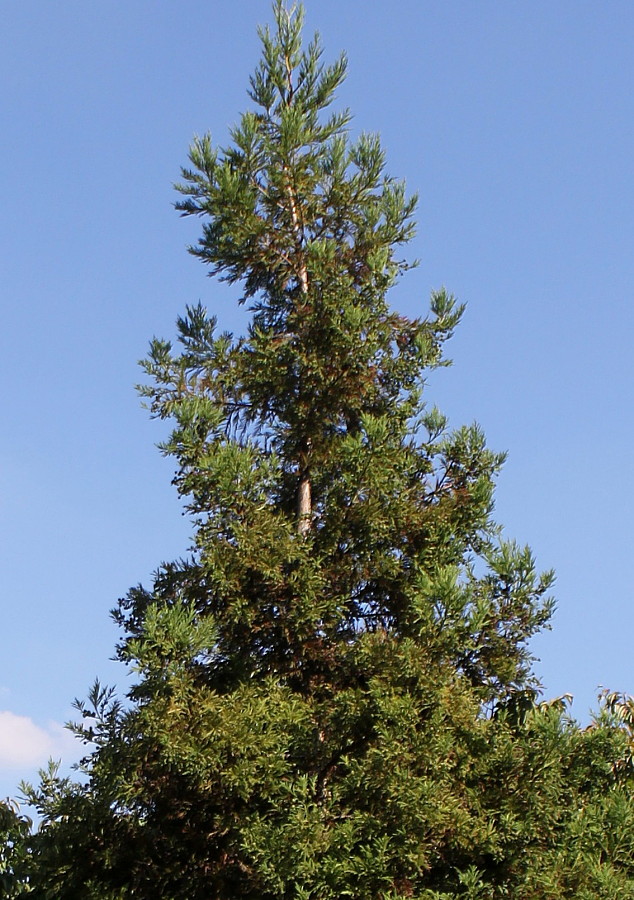
Photo by V. Kudelya
Occurs naturally in Japan and China (Hubei). In the mountains it rises to 2050 m above sea level. In the mountains it forms pure stands.
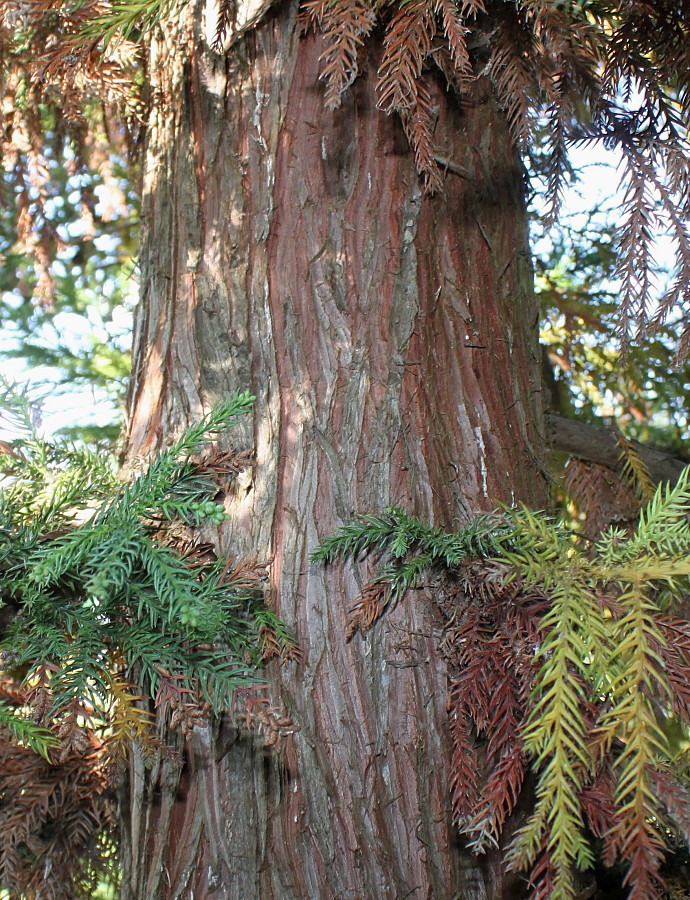
Photo by V. Kudelya
It is an evergreen coniferous tree up to 50-70 m tall with a narrow, dense crown. Grows quickly. Bark is brownish-red, fibrous. Trunk cylindrical, up to 4 m in diameter.
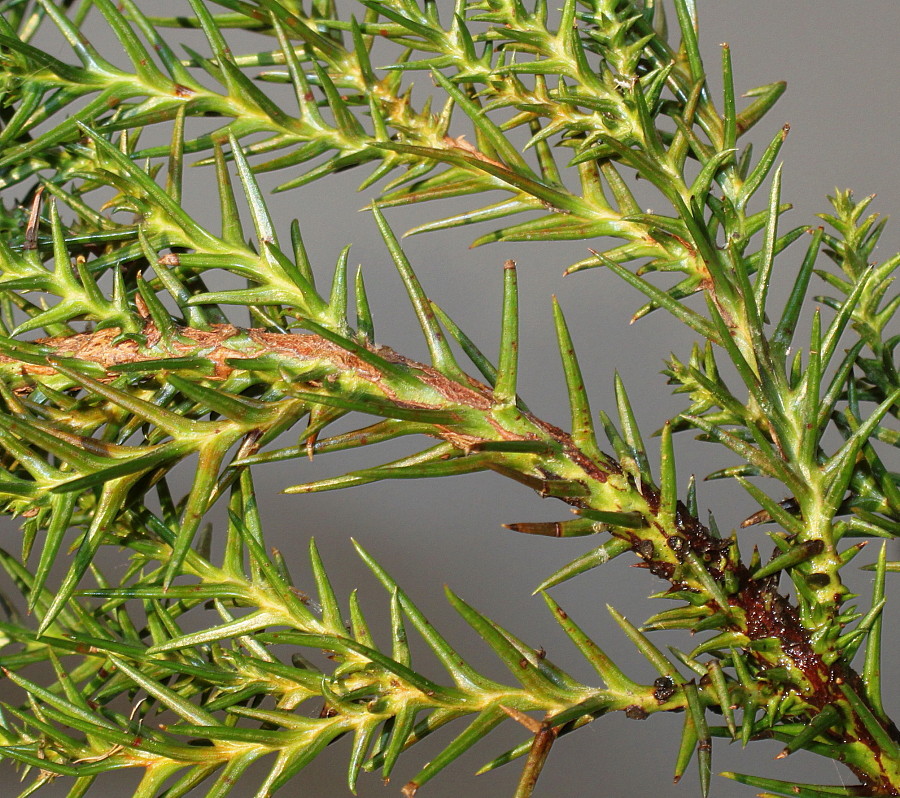
Photo by V. Kudelya
Leaves are arranged spirally and densely, light green, linear-acicular, curved at the base, up to 2.5 cm long, laterally compressed, three-angled, blunt in cross-section, and persist on the tree for up to 7 years. In winter they become yellowish.
Male flowers are solitary, located in the axils, gathered in clusters on young shoots, oval up to 6 mm long; stamens are scale-like, arranged spirally on the axis of the spike (twisted) with 3-5 pollen sacs on the lower side; pollen without air bladders. Female flowers are solitary, grow at the tips of shoots, rounded, surrounded at the base by scaly leaves; the bracts and seed scales are almost completely fused at the base (to the middle of the cone); under each scale there are 2-5 ovules.
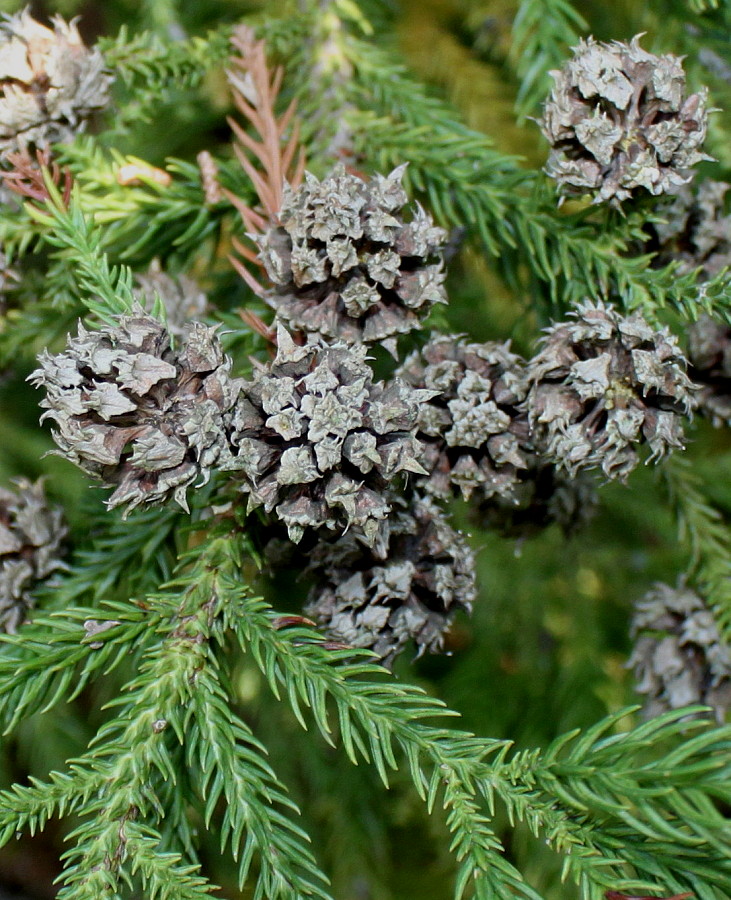
Photo by V. Kudelya
Seed cones are nearly globular, up to 2 cm in diameter, brownish, solitary, and have 20-30 wedge-shaped woody scales. Cones mature in the first year and remain on the branches after seed shedding until the next summer. The bracts are fused to the seed scales from the underside to the middle. Seeds up to 6 mm long, ovate-elongated, three-angled with a light whitish spot at the base; along the edges narrowly longitudinally winged and flattened (2-3 narrow wings).
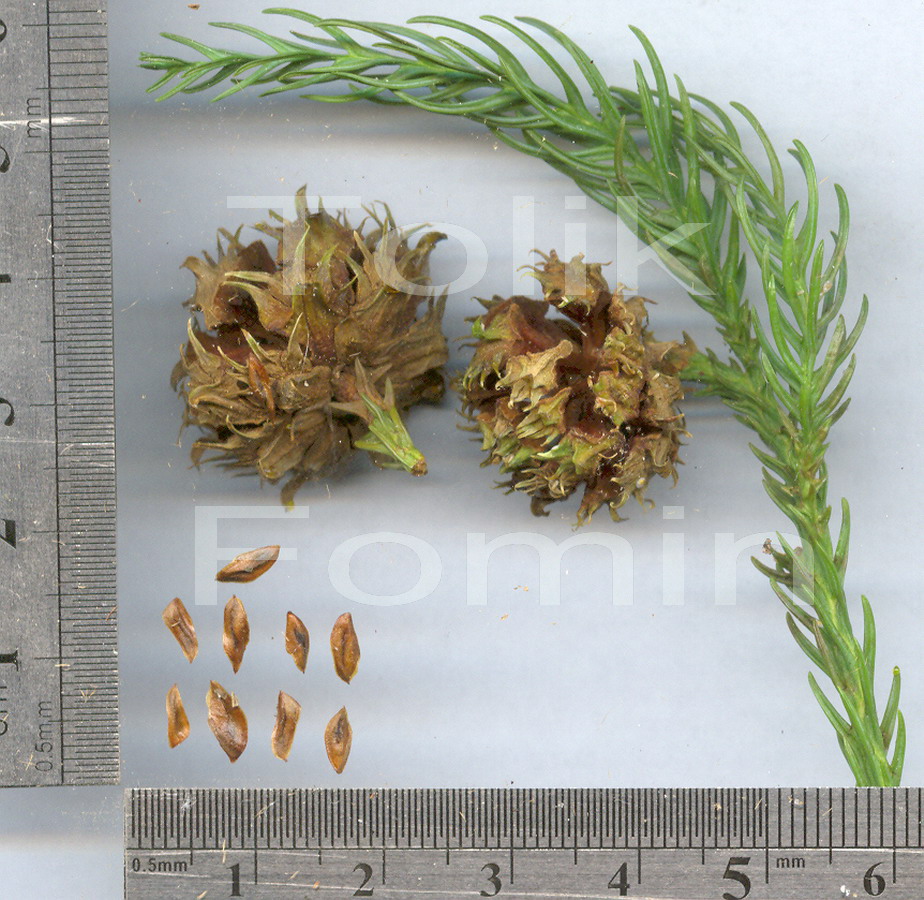
Photo by T. Fomin
Forms: «var. sinensis «Lobbi», Аraucarioides», «Dacrydioides», «Bandai-sugi», «Gracilis», Globosa», «Globosa nana», «Vilmoriniana», «Compressa», «Сristata», «Spiralis», «Yoresugi», «Еlegans», «Еlegans compacta», «Моnstrosa», «Nana albospica».
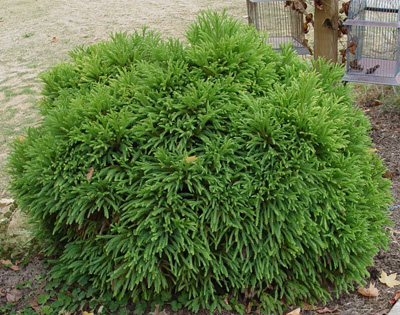
Hardiness: 5b (-12°C)

Location: shade-tolerant; in bright winter sun the foliage scorches. Requires humid air and soil. Does not like poorly drained sites. Prefers soil with a small amount of lime. Poorly tolerates air pollution.
Planting: when transplanting it is better to use root-ball transplanting, as it has a sensitive root system.
Care: requires almost no care.
Pruning: needs only sanitary pruning.
Diseases: chlorosis
Pests: not affected
Propagation: by seeds and cuttings with a terminal bud, by layering; produces suckers from the stump. Seed germination is high, seeds germinate in 2-3 weeks. Garden forms are propagated by grafting.
Uses: used in solitary and group plantings, for rock gardens, on streets, rocky sites, in rooftop containers, for creating borders, on slopes.