
Deciduous trees
Warty birch or pendulous birch
Betula pendula Roth
Pendulous birch (Betula pendula Roth) – a species of deciduous plants of the genus Betula (Betula) in the birch family (Betulaceae). The species was first described by the German botanist Albrecht Wilhelm Roth in 1788 in Tentamen Florae Germanicae 1: 405.
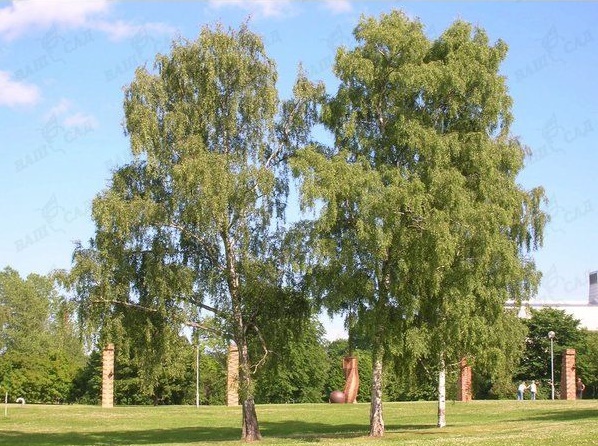
In nature it occurs throughout Europe (except the Iberian Peninsula), in North Africa, and in Western and Central Asia. It forms small-leaved forests across all climatic zones (except the tundra). It rises into mountains up to 2100–2500 m above sea level. It has been introduced worldwide in temperate climates.
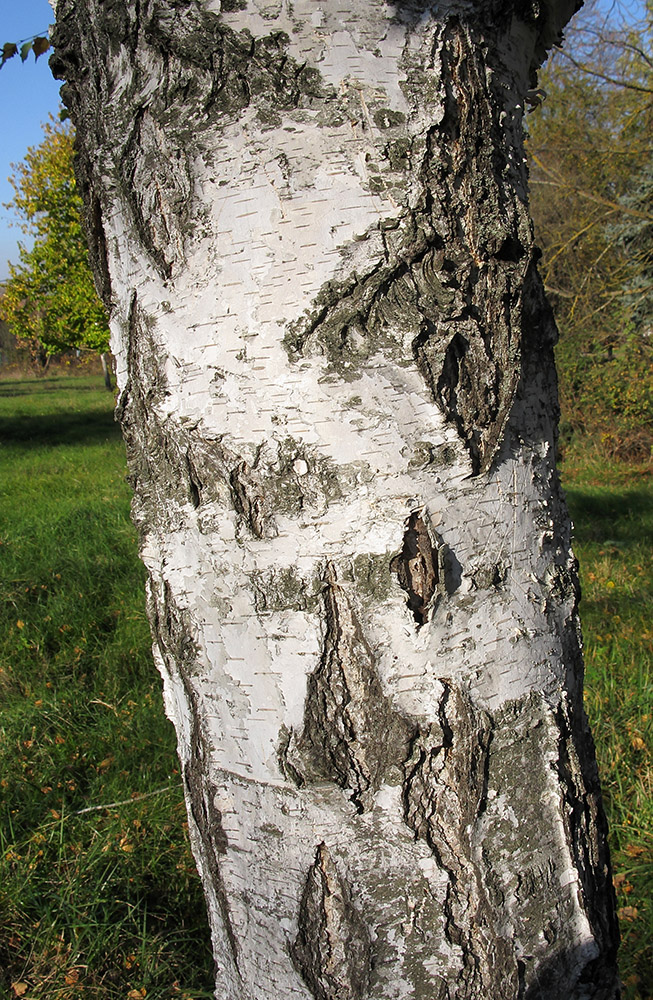
Photo T. Vinokurova
It is a deciduous tree reaching 25–30 m in height, with a trunk diameter up to 80 cm. It lives up to 120 years. The root system is shallow but well developed (trees are susceptible to windthrow). Young trees have brown bark, mature trees have white bark, and old trees have black, cracked bark on the lower trunk. The wood is yellowish-white, dense and heavy. Branches are reddish-brown, glabrous, covered with numerous densely scattered resinous glandular warts (hence the name warty birch). Young shoots are pendulous, the crown is not dense, branched, with sympodial branching. Terminal and lateral buds are formed on the current year shoots in summer and open in spring. Buds are sessile, pointed, sticky, covered with imbricate scales.
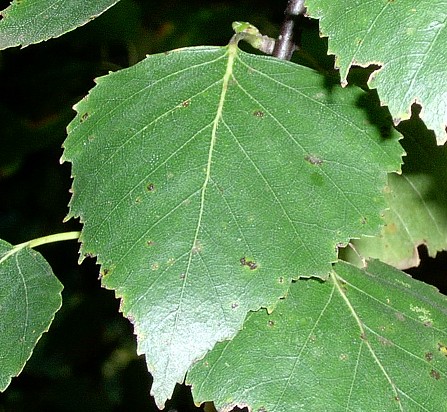
Photo Brosen
Leaves are alternate, from rhombic-ovate to triangular-ovate in shape, 3.5–7 cm long and 2–5 cm wide, base broadly cuneate or almost truncate, apex acute, glabrous, sticky after unfolding, with double-toothed margin. Petioles glabrous, 0.8–3 cm long.
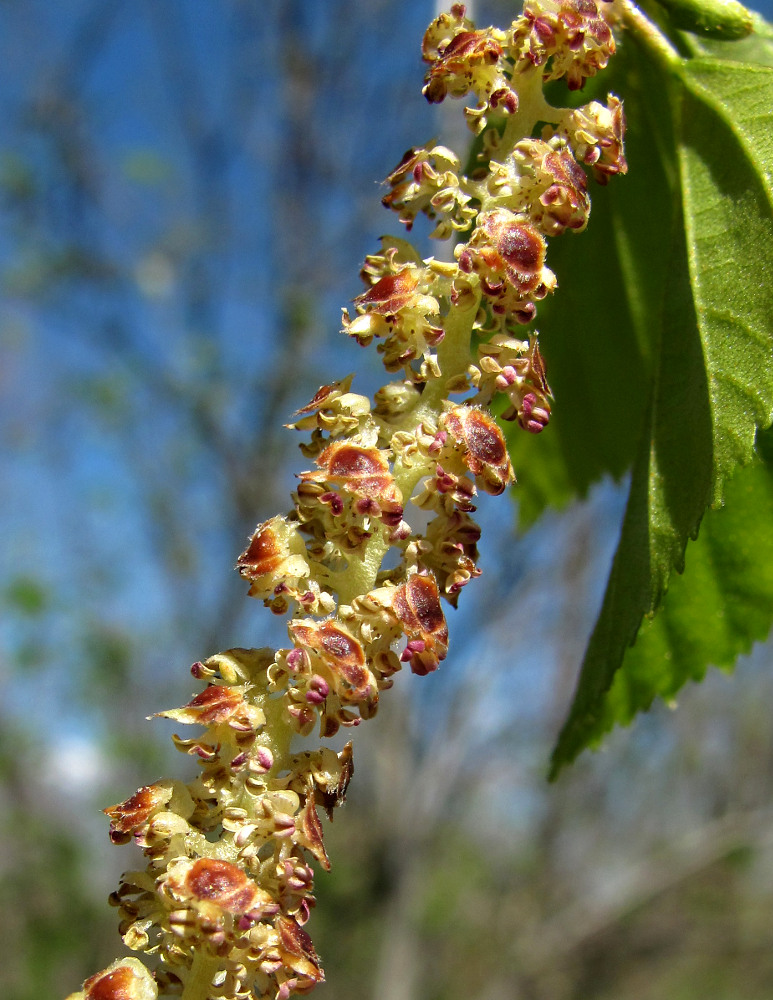
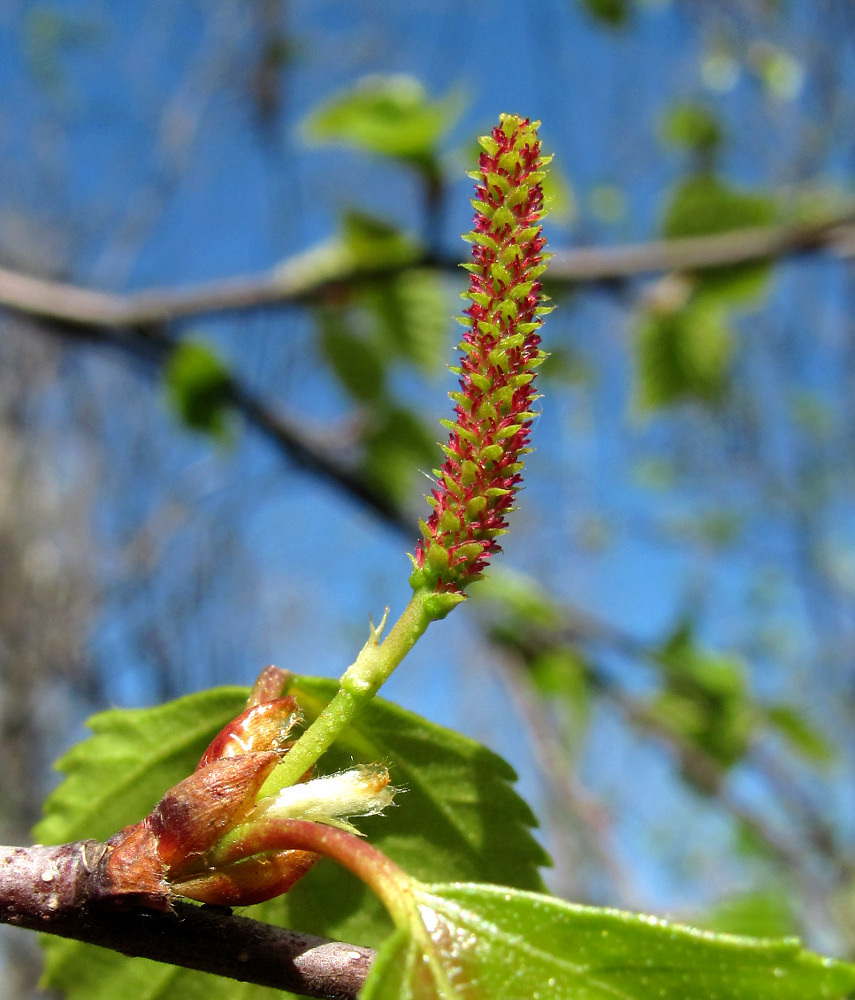
Photo of male and female flowers. Author G. Okatov
Flowers are small, regular, inconspicuous, unisexual, arranged in sessile, pendulous catkins that grow at the ends of twigs. They flower before leafing (or during leafing). Male flowers on short pedicels are arranged in threes (only one more developed), dichasially in the axils of reddish-brown bracts, forming on the ends of elongate shoots of the previous year 2–4 hanging male catkins up to 5–6 cm long. The perianth is simple, one- or two-leaved. There are 2–4 stamens with bifid anthers positioned opposite the perianth scales. Female flowers lack a perianth, have 2 bracts and a fused three-lobed bract scale. They are gathered in fives in dichasia, grow on shortened lateral shoots and form short, cylindrical green female catkins. When ripe they become rigid and fall off with the fruits. The gynoecium is formed by 2 fused carpels. The ovary is inferior, with one ovule. Styles are filiform, long, exserted, often brightly colored.
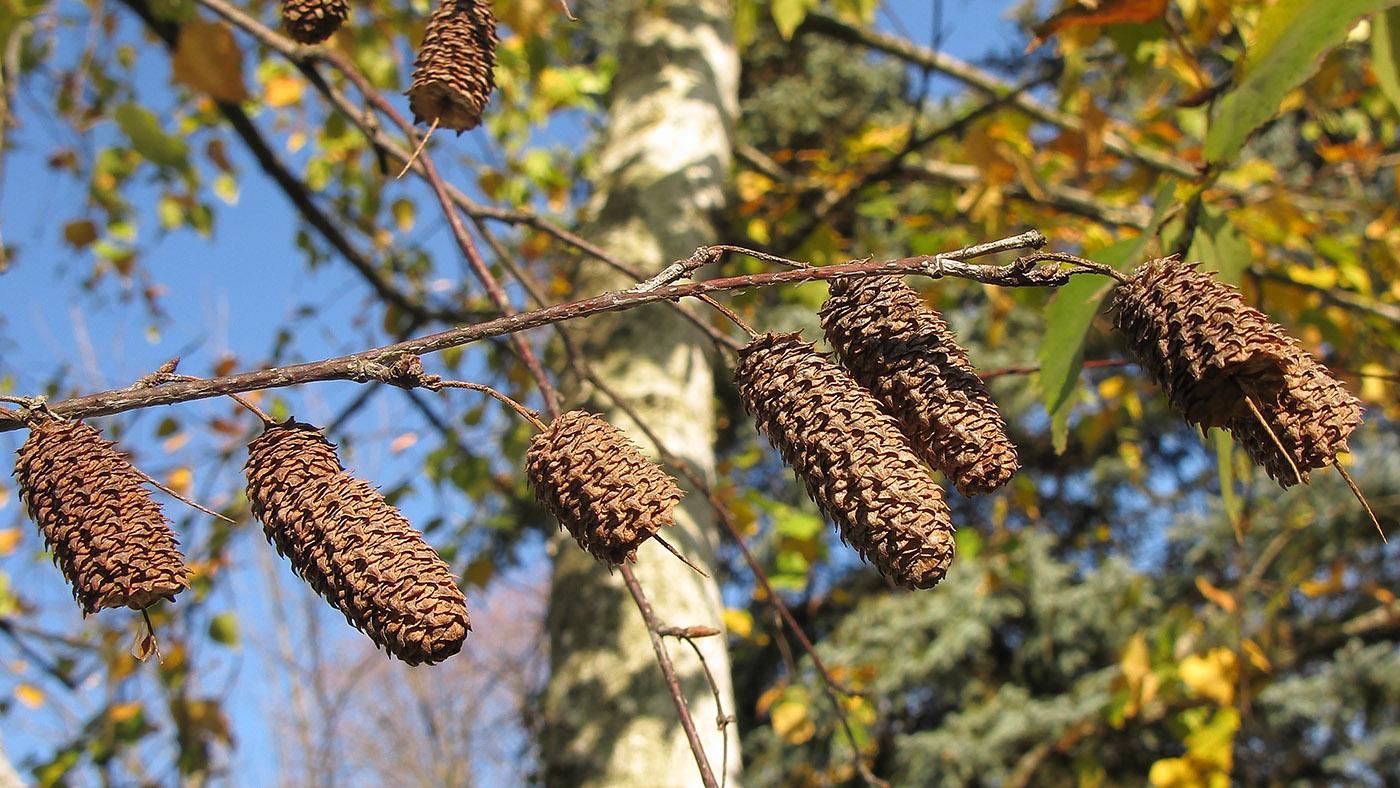
Photo T. Vinokurova
Fruits are small, laterally compressed nutlets with two membranous wings and two dried styles at the top. It fruits annually from age 10, in plantations from 20–25 years. Fruiting occurs from July until late autumn (depending on weather). Seeds are dispersed in autumn and winter. Weight of 1000 seeds - 0.17—0.22 g.
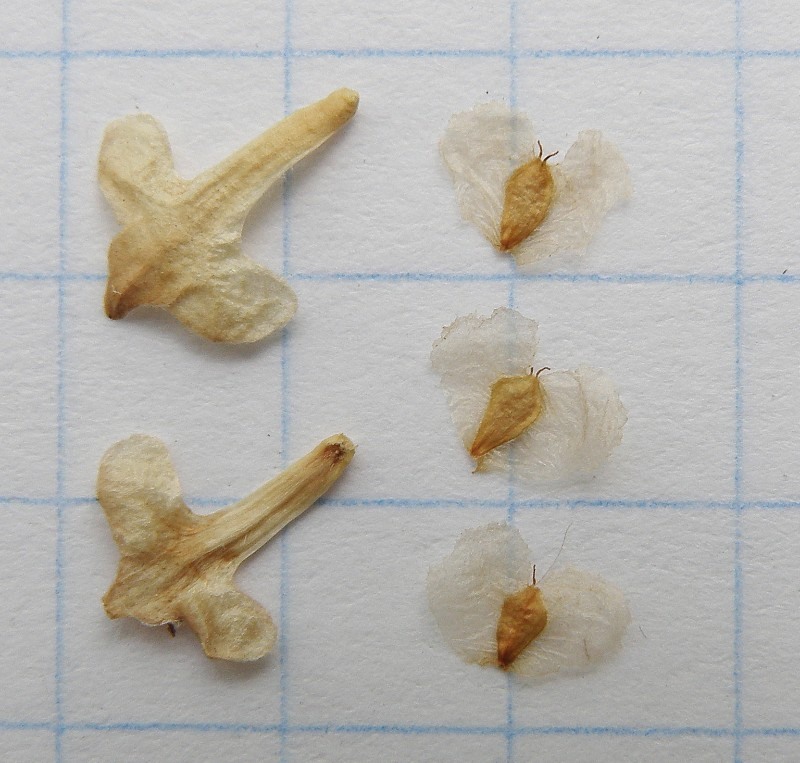
Photo A. Lyubchenko
Forms:
- 'Dalecarlica' (Betula pendula f. dalecarlica (L.f.) C.K.Schneid.) — Dalecarlian birch;
- 'Laciniata'
- 'Purpurea'
- 'Trost’s Dwarf'
- 'Youngii'
- 'Gracilis'
- 'Fastigiata'
- 'Tristis'
Hybrids:
- with Betula nana L. – Betula × bottnica Mela
- with Betula pubescens Ehrh. – Betula × aurata Borkh.
Hardiness zone: 3b (-30°C)

Location/exposure: very light-loving. Prefers moderately moist and not very compacted soil. Grows on any soil except calcareous soils. Prefers moist, loose, slightly acidic, humus-rich soils.
Planting: Planting is done in autumn or spring; planting in winter with a frozen root ball is also possible. Planting mix: garden soil, sand, humus and peat in the ratio 2:1:1:1. In spring, add complex fertilizer to the planting hole (150–200 g), and in autumn use phosphorus-potassium fertilizers. Watering is mandatory at planting and during the following 3–4 days. After watering, loosen the soil around the tree to a depth of no more than 3 cm.
Care: During dry periods it requires additional watering - 1 bucket per 1 sq.m of crown projection. In early spring and summer it is necessary to feed the plants with a nitrogen-containing fertilizer (per 1 bucket of water: 1 kg cow manure, 10 g urea, 20 g ammonium nitrate). In autumn feed with nitroammophoska or Kemira Universal.
Pruning: Preventive and formative pruning is performed in early spring before the onset of sap flow. Produces abundant stump shoots.
Diseases and pests: the fungus "chaga" (Inonotus obliquus (Pers.) Pilat.), May beetles and their larvae, borer beetles.
Propagation: well propagated by seeds. Seeds require stratification in spring (2 months at 0+5 °C). In autumn without stratification. Germination decreases significantly during storage. Self-seeding propagates well. Cuttings are practically not effective (rooting up to 10%).
Uses: has an inhibitory effect on neighboring trees. Associates well with young spruces and wild rose. In landscape design it is used as solitary plantings on lawns, as well as in mixed groups, for creating avenues along roads, groves or protective screens, in large parks, near water bodies, and in small gardens.