
Deciduous shrubs
Aucuba japonica 'Variegata'
Aucuba japonica 'Variegata'
Synonyms: golden tree, sausage tree, Japanese laurel, Aucuba vivicans W.Bull
Aucuba japonica variegated (Aucuba japonica var. variegata Dombrain) – a form of woody plants of the species Aucuba japonica of the genus Aucuba (Aucuba) in the family Garryaceae (Garryaceae). The form was found in Japan in 1861.
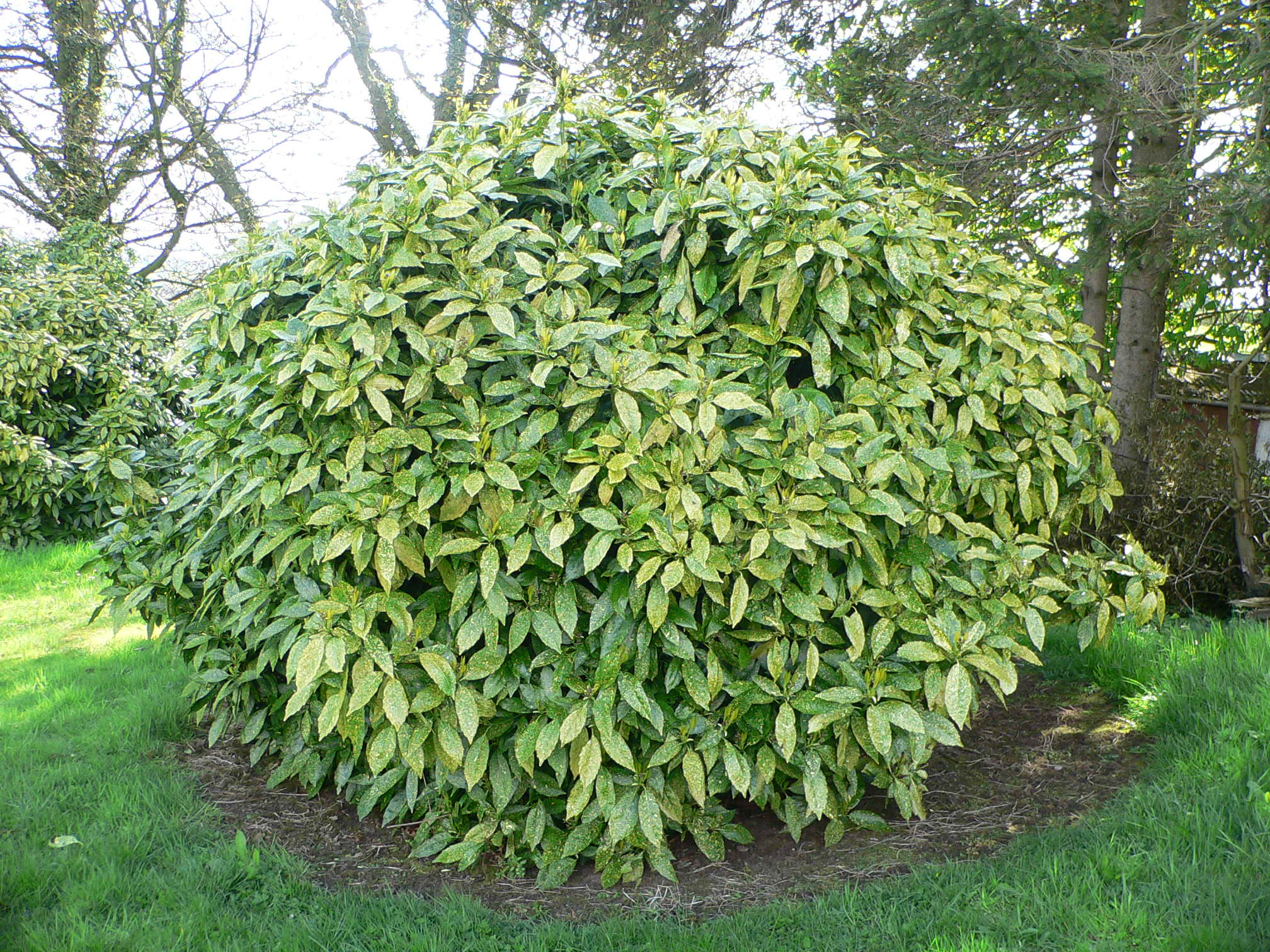
It is an evergreen shrub 1-3 m high. Shoots erect, well-branched, woody, light green.
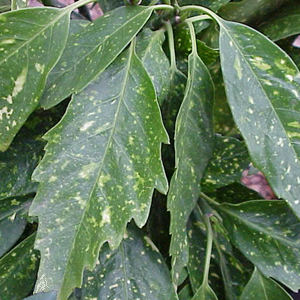
Leaves opposite, leathery, oblong-oval, glossy, up to 20 cm long and 6 cm wide, with a rounded or broadly cuneate base and an acute apex, dark green with yellow speckles of various sizes. In the upper part of the leaf there are often 2-4-6 pairs of spines. Stipules absent.
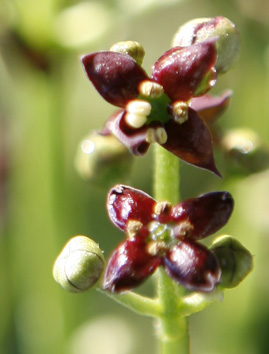
Flowers small, inconspicuous, gathered in hairy panicles, 4-parted, unisexual, dioecious, reddish. Staminate inflorescences paniculate, 7-10 cm, pubescent, petals broadly ovate or ovate-lanceolate, 3.5-4.5 × 2-2.5 mm, with an acute apex. Pistillate flowers violet or dark red, petals broadly ovate or elliptic-lanceolate. Blooms in March-April.
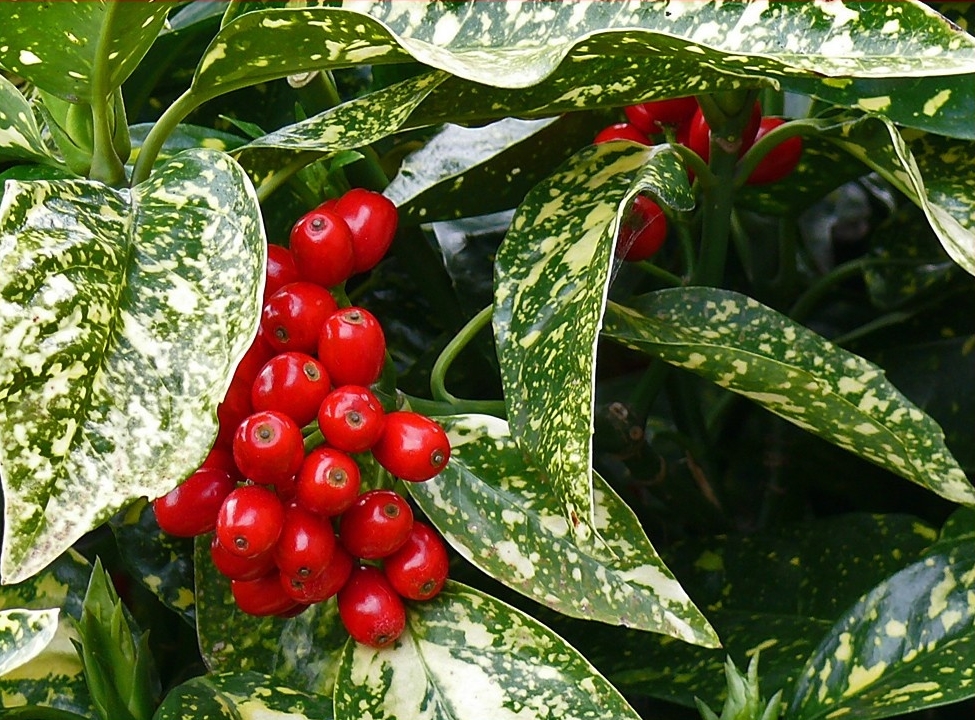
Fruits – ovoid red berries 2 cm long and 5-7 mm in diameter.
Hardiness zone: 5b (-25°C)

Temperature: recommended temperature for keeping - in summer no higher than 20°C, in winter 5-10°C.
Humidity: tolerates dry air, but responds well to spraying, especially when heating is on.
Light: prefers diffused light, should not be placed on a south-facing window as it does not tolerate direct sunlight. Easily endures low-light conditions, however growth rate is reduced. Varieties with dark green leaves are more shade-tolerant.
Soil: light soil is best. Soil mix: 1 part topsoil, 1 part coarse sand or perlite, 1 part moist peat or humus (leaf mold). Good drainage and a hole in the pot are required.
Repotting: young plants are repotted every 1-2 years in spring, and mature ones every 2-3 years. Do not repot too often.
Watering: moderate is recommended, in summer no more than once a week, in winter once every 2 weeks. The soil should dry slightly between waterings.
Fertilizer: from spring to August every 3-4 months with a soluble mineral or organic fertilizer. Granular fertilizers may be used.
Pruning: requires regular pruning
Propagation: propagates well from tip cuttings with 1-3 leaves, which are planted in a mixture of peat and sand at the end of winter or early spring, temperature 20-22°C. The tips of cuttings are pinched immediately to encourage branching. It can be propagated by seeds by sowing them in a peat and sand mixture under polyethylene film, but the resulting plants grow slowly.
Pests: scale insects, spider mite, mealybug, whitefly.
Uses: in Ukraine it is grown as a houseplant.