
Climbing plants
Actinidia
Actinidia
Actinidia – a genus of woody vines in the Actinidiaceae family (Actinidiaceae). It is distributed in the Himalayas and Southeast Asia. The kiwifruit is the fruit of the cultivated species from this genus, «Actinidia deliciosa».
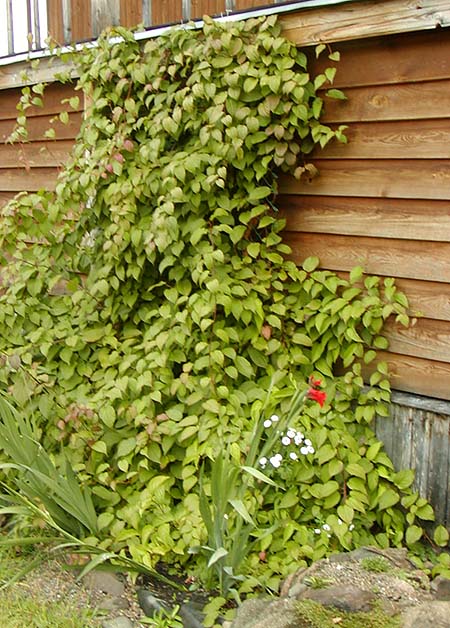
Actinidia kolomikta
It is a shrubby climber with deciduous leaves. Buds are partially or completely hidden in leaf scars. Shoots are reddish or dark brown.
Leaves are entire, alternate, with toothed or serrated margins, without stipules, oval, green or red-bronze.
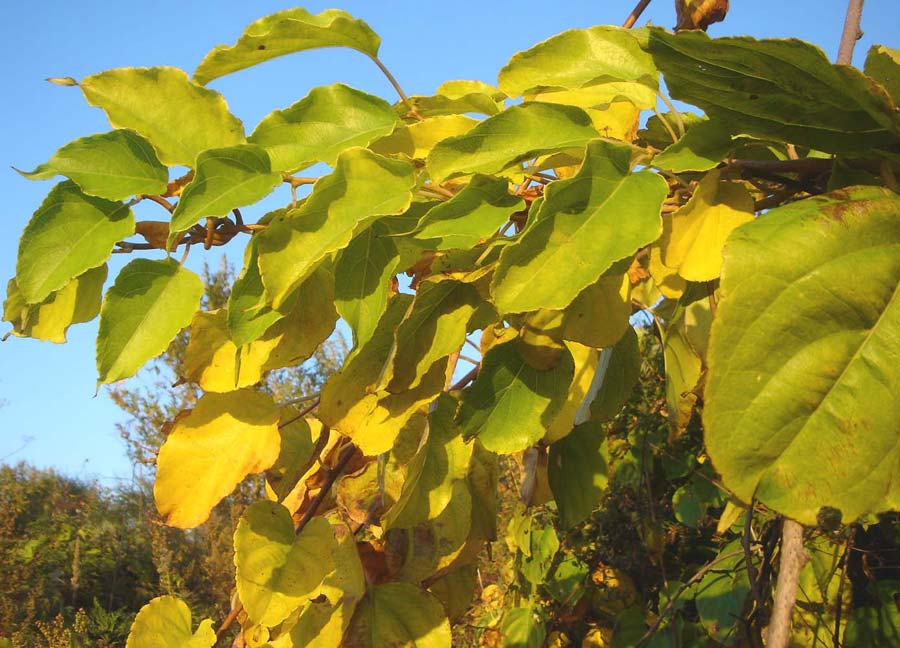
Actinidia arguta
The plant is dioecious or monoecious. Flowers vary in size, 1-3 cm in diameter, with a double 4-5-part perianth, borne in the leaf axils singly or in groups of three. The corolla is cup-shaped, white, more rarely golden-yellow or orange. Most species have non-fragrant flowers. There are 8-10 stamens and 8-15 carpels. The styles are filiform, fused at the base and bent outwards.
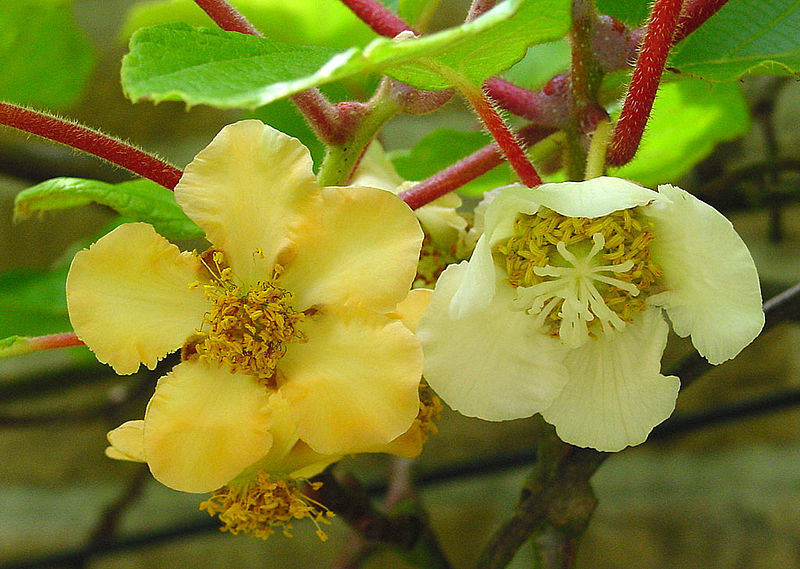
Actinidia chinensis. Male and female flowers.
Fruits – elongated berries of yellow-green or light orange color, fragrant, edible in some species.
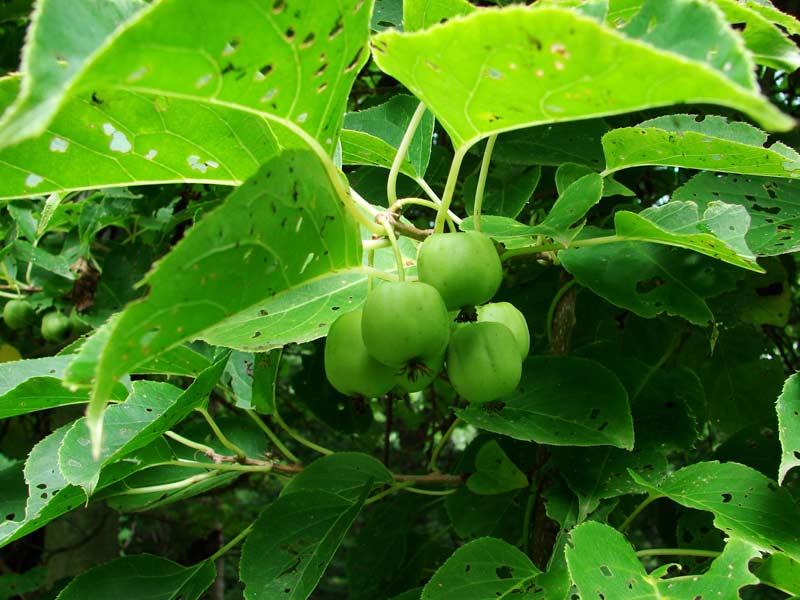
Actinidia giraldii (Actinidia giraldii Diets)
Some species:
- Actinidia arguta — Actinidia arguta (hardy kiwi)
- Actinidia deliciosa — Actinidia deliciosa or Kiwifruit
- Actinidia giraldii — Giraldi's Actinidia
- Actinidia gracilis — graceful Actinidia
- Actinidia grandiflora — large-flowered Actinidia
- Actinidia indochinensis — Indochinese Actinidia
- Actinidia kolomikta — Actinidia kolomikta
- Actinidia polygama — polygamous Actinidia
- Actinidia purpurea — purple Actinidia
Hardiness zone: zone 4a

Location: prefers well-drained, fertile soils with neutral reaction. Does not tolerate waterlogging or shallow groundwater. A sunny site away from large trees is best. Does not tolerate proximity to apple trees, but can be planted near currants. Poorly tolerates calcareous soil.
Care: in the second year after planting it is necessary to install a trellis at least 2–2.5 m high. Vines should be tied to the trellis in one vertical plane. In the third year, all young shoots growing from the main canes should be tied vertically so they do not become entangled with each other.
Planting: recommended in early spring. Optimal age of seedlings is 2–3 years, but not older than 4 years. Planting hole dimensions: 50–60 cm x 40–50 cm. Drainage such as stones, gravel or broken brick should be placed at the bottom of the hole. Construction rubble is not recommended as it contains a lot of lime. When planting, add 8–10 kg of peat, compost or well-rotted manure and a mix of mineral fertilizers – 200–300 g superphosphate, 100–150 g ammonium nitrate, 30–40 g potassium sulfate (or wood ash). Chloride-containing fertilizers must not be used. Place fertile soil on the drainage, then a small mound of the fertilizer-soil-sand mix. After planting, water the plant with 2–3 buckets of water. Recommended spacing between plants is at least 2 m.
Pruning: In the second year after planting leave 2 main shoots and cut out all other shoots. Crown thinning is carried out in summer or late autumn. Do not prune in late winter or spring, as sap flow is strong at that time. In the 4th year, cut out one of the old vines, replacing it with a new main one.
Propagation: easily propagated by seed and vegetatively (summer and winter cuttings, root suckers, grafting, air layering). For seed propagation, before autumn sowing the seeds should be mixed with sand and sown in cold frames or boxes and left covered for the winter. For spring sowing a two-month stratification is required.
Uses: most representatives of the genus produce tasty and valuable fruits. Almost all species are used in ornamental gardening for vertical greening.